

Last updated: October 2, 2026
Quick answer: Hall effect and TMR (tunneling magnetoresistive) joysticks eliminate stick drift by replacing physical potentiometer wipers with contactless magnetic sensors. Hall effect uses magnetic fields shifting electrical current across a conductor, drawing more power. TMR relies on quantum tunneling through an insulating barrier, delivering higher precision, lower power consumption, and direct compatibility with standard gamepad mainboards.
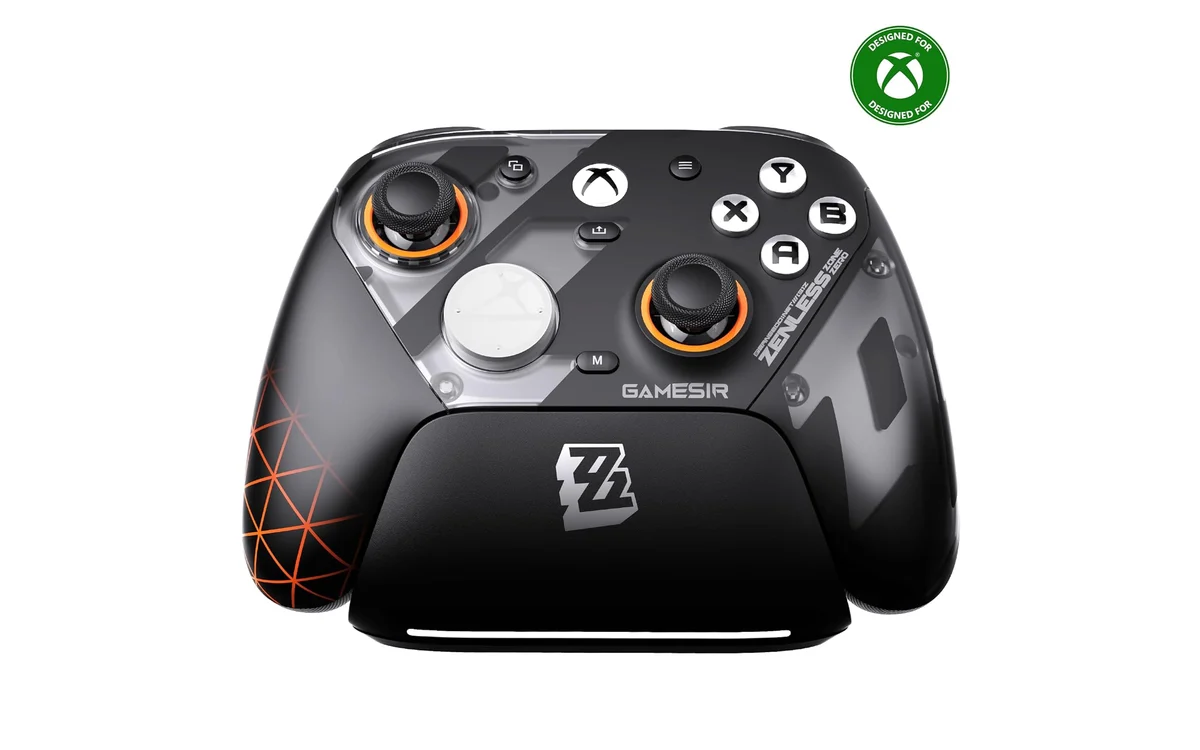
Short answer: Hall effect vs TMR joysticks compares two contactless magnetic sensor technologies used to eliminate mechanical wear and drift in gaming Controllers. Hall effect measures voltage differential caused by magnetic displacement. TMR measures electrical resistance via quantum mechanical tunneling through thin insulating layers. Gamers gain vastly longer hardware lifespan, zero wear-induced stick drift, and improved centering accuracy.
What Is Hall Effect Vs TMR Joysticks?
Hall effect and TMR (tunneling magnetoresistive) joysticks represent magnetic non-contact replacement technologies for traditional potentiometer-based analog thumbsticks. Potentiometers use mechanical carbon resistive tracks and physical metal wipers. Over operational cycles, the metal wiper physically abrades the carbon material. This generates debris, uneven resistance contact, and unwanted directional stick drift. October 2026 gaming gear standards prioritize magnetic alternatives to eradicate wear-induced drift completely.
Hall effect technology measures voltage changes across an electrical conductor when placed inside a shifting magnetic field. In contrast, TMR sensors use a magnetic tunnel junction (MTJ). An MTJ places a microscopic insulating layer between two ferromagnetic materials. Electrons pass through this physical barrier via quantum mechanical tunneling. The resistance changes based on the relative magnetic orientation of the layers, creating a sensor with significantly higher sensitivity, lower signal-to-noise ratios, and dramatically lower power draw than traditional Hall effect hardware.
Why Hall Effect Vs TMR Joysticks Matters
Thumbstick module architecture directly controls controller longevity, aiming consistency, and input accuracy. When choosing between Hall effect and TMR sensors, several operational hardware factors affect competitive gameplay, power efficiency, and long-term value.
The primary advantage over carbon potentiometers is the total elimination of mechanical contact wear. Because both Hall effect and TMR employ fixed sensors reading moving permanent magnets on the stick gimbal, neither component experiences friction degradation on its tracking elements. This eliminates deadzone expansion caused by worn contact paths. Gamers configure zero or near-zero inner deadzones inside competitive shooters without random unprompted input drift.
Power consumption marks a critical hardware difference. Hall effect sensors require steady operating current to establish an internal electrical path, often drawing 5 to 10 milliamperes (mA) per module. Standard wireless controller mainboards—such as Sony DualSense or Microsoft Xbox Wireless gimbals—were originally designed around analog potentiometers that draw microamperes. TMR modules operate efficiently at microampere ranges, matching carbon pot impedance and voltage drops directly. This permits drop-in replacement soldering without battery drain spikes or battery life penalties on wireless gamepads, making them the superior choice when evaluating the best pc controller options.
How Hall Effect Vs TMR Joysticks Works
Both sensor architectures translate the physical angle and displacement of a thumbstick gimbal into coordinate data for game engines. The exact physical phenomena used to measure magnetic field position differ fundamentally between the two technologies.
Hall Effect Architecture
Hall effect sensors apply the physical principle discovered by Edwin Hall in 1879. The module runs a steady electrical current through an integrated semiconductor plate. Permanent magnets sit mounted directly to the moving gimbal mechanism. When the player pushes the thumbstick, the attached magnet shifts position relative to the stationary semiconductor.
This displacement subjects the flowing electrons to a perpendicular magnetic Lorentz force. The force pushes charge carriers toward one edge of the plate, generating a measurable transverse voltage differential called the Hall voltage. An integrated analog-to-digital converter (ADC) reads this voltage level, converts it to an X or Y axis numerical value, and transmits the input to the controller microcontroller unit (MCU).
TMR (Tunneling Magnetoresistive) Architecture
TMR technology operates on magnetic tunnel junctions (MTJ) governed by quantum mechanics. An MTJ consists of two thin ferromagnetic layers separated by an ultrathin non-magnetic insulating barrier, typically magnesium oxide (MgO), measuring only a few nanometers thick.
One magnetic layer maintains a fixed magnetic orientation, known as the pinned layer. The other layer, known as the free layer, rotates its magnetization freely in response to the external magnetic field created by moving the stick gimbal. When the magnetic orientations of the two layers align in parallel, the quantum tunneling probability of electrons increases dramatically, dropping electrical resistance to its lowest point. When orientations oppose antiparallel, tunneling probability drops, driving resistance up. The sensor reads these substantial resistance fluctuations directly, yielding high output signal amplitudes with minuscule current requirements.
What to Look For When Buying
Evaluating joysticks requires looking beyond surface-level marketing claims. When researching controllers or replacement stick modules, prioritize the following hardware specifications:
- Sensor Technology: TMR provides better power preservation for wireless controllers. Hall effect serves wired controllers equally well without any practical latency differences.
- ADC Resolution and Bit Depth: Look for internal processing with at least 10-bit or 12-bit analog-to-digital resolution. Higher bit depth allows the controller to map thousands of distinct coordinates, preventing axis micro-stepping.
- Return-to-Center Error: Centering error measures stick return accuracy after release. High-quality Hall and TMR modules maintain return errors below 1.5%, permitting near-zero deadzones.
- Magnetic Shielding: Hall and TMR sensors use external magnets. Controller models must incorporate internal magnetic shielding around rumble motors and metal trigger mechanisms to prevent magnetic interference.
- Power Draw on Wireless Pads: When replacing sticks via soldering, choose TMR for battery-powered setups like standard DualSense, DualShock, or Xbox gamepads to avoid reducing overall battery life.
Common Mistakes to Avoid
Understanding magnetic joystick technologies requires avoiding several frequent technical misconceptions:
- Assuming Magnetic Sticks Never Break: Hall effect and TMR sticks never wear down their electrical sensors. However, mechanical springs, plastic housings, and internal metal gimbals can still fatigue, loosen, or snap mechanically over time.
- Equating High Polling Rate With Sensor Quality: Stick responsiveness depends on ADC conversion speed, deadzone calibration, and MCU firmware. A high controller polling rate does not compensate for poor sensor resolution or coarse calibration.
- Ignoring Calibration After Soldering: Dropping replacement Hall or TMR modules onto existing controller PCBs requires software recalibration. Magnetic variance between individual modules creates off-center defaults without manual firmware offsets.
- Assuming TMR Yields Lower Latency: TMR provides higher magnetic sensitivity and uses less power than Hall effect. However, the input reporting speed across USB or Bluetooth remains bounded entirely by the controller MCU cycle time and host polling frequency.
- Believing More Sensitivity Always Means Better Aim: TMR sensors offer immense theoretical sensitivity. Without clean firmware smoothing and correct linear response curves, raw high sensitivity can amplify hand tremor and mechanical vibration.
Quick Comparison
Review the physical and operational specifications distinguishing potentiometer, Hall effect, and TMR joysticks:
| Feature / Metric | Potentiometer Joysticks | Hall Effect Joysticks | TMR Joysticks |
|---|---|---|---|
| Operating Principle | Physical carbon track abrasion | Lorentz force voltage shift | Quantum magnetic tunneling |
| Electrical Contact | Frictional sliding wiper | Contactless magnetic | Contactless magnetic |
| Stick Drift Susceptibility | High (wear-induced) | Zero electrical wear drift | Zero electrical wear drift |
| Power Consumption | Microampere (μA) range | Milliampere (mA) range | Microampere (μA) range |
| Signal Output Sensitivity | Moderate (~10-20 mV/V) | Low to Moderate (~10-40 mV/V) | Very High (~100-300 mV/V) |
| Drop-in Modding Fit | Native standard | Often needs step-up/power tuning | Direct drop-in for standard PCBs |
Related Guides
Expand controller knowledge and wireless gaming setup performance with our related guides:
- How to connect a PS5 controller to PC via USB or bluetooth
- Best pc controller
- How to check mouse polling rate
- 2.4GHz vs bluetooth gaming mouse comparison guide
Why You Should Trust PCGearWiki
PCGearWiki produces transparent, engineering-focused educational hardware content. We evaluate hardware architectures by breaking down their underlying physics, component schematics, and functional engineering limits. Our analysis relies on verified technical documentation, published component datasheets, and established electrical standards. We do not use speculative benchmarks, vendor marketing claims, or unsupported ratings. Readers can learn more by checking How We Evaluate Products across our platform.
Final Thoughts
Both Hall effect and TMR joysticks permanently resolve the carbon track wear issue that plagues standard gaming controllers. If you are shopping for a factory-built wired controller, Hall effect modules deliver reliable, drift-free operation. If you are shopping for wireless gamepads or seeking replacement modules to solder onto existing DualSense or Xbox mainboards, TMR offers superior power efficiency, higher raw sensitivity, and drop-in impedance compatibility.
Frequently Asked Questions
Are TMR joysticks better than Hall effect joysticks?
TMR joysticks provide distinct advantages over Hall effect modules in power consumption and signal strength. TMR draws microamperes instead of milliamperes, making it ideal for wireless gamepads. It also yields a larger output signal without heavy amplification, allowing tighter signal-to-noise ratios. Both technologies completely eliminate carbon track wear-induced drift.
Can TMR and Hall effect joysticks still develop mechanical drift?
Yes. While both magnetic sensor types eliminate electrical wear drift, mechanical stick drift can still occur. If internal centering springs lose tension, if plastic pivot housings wear down unevenly, or if foreign debris jams the gimbal hinge, the physical stick may fail to return to absolute dead center.
Can I replace standard controller sticks with TMR joysticks?
Yes, but the installation requires desoldering existing analog potentiometer modules and soldering in pin-compatible TMR units. Because TMR modules mimic the low power consumption and resistance profiles of original carbon potentiometers, they integrate seamlessly with DualSense, DualShock 4, and Xbox controller PCBs. Software recalibration is mandatory after installation.
Do magnetic joysticks cause input lag?
No. The physical magnetic sensing in both Hall effect and TMR modules occurs at near-instantaneous speeds. Any input latency experienced on PC or console originates from analog-to-digital converter processing cycles, controller firmware scheduling, wireless transmission protocols, or USB polling limits, not from the magnetic sensors themselves.


Write Your Review
No reviews yet. Be the first to share your experience!