

Last updated: August 29, 2026
Quick picks
- Top Pick: Samsung 990 PRO 2TB NVMe PCIe Gen4 9.7 Outstanding
- Highest Score: Samsung 970 EVO Plus 2TB NVMe M.2 9.9 Outstanding
Quick answer: The best gaming SSD provides enough capacity for the active library, fits the PC or console interface, avoids thermal throttling, and carries a strong warranty. Gen4 NVMe drives are the practical value choice for many gaming PCs; Gen5 models make more sense when large file transfers or a specific workstation workload also benefits.
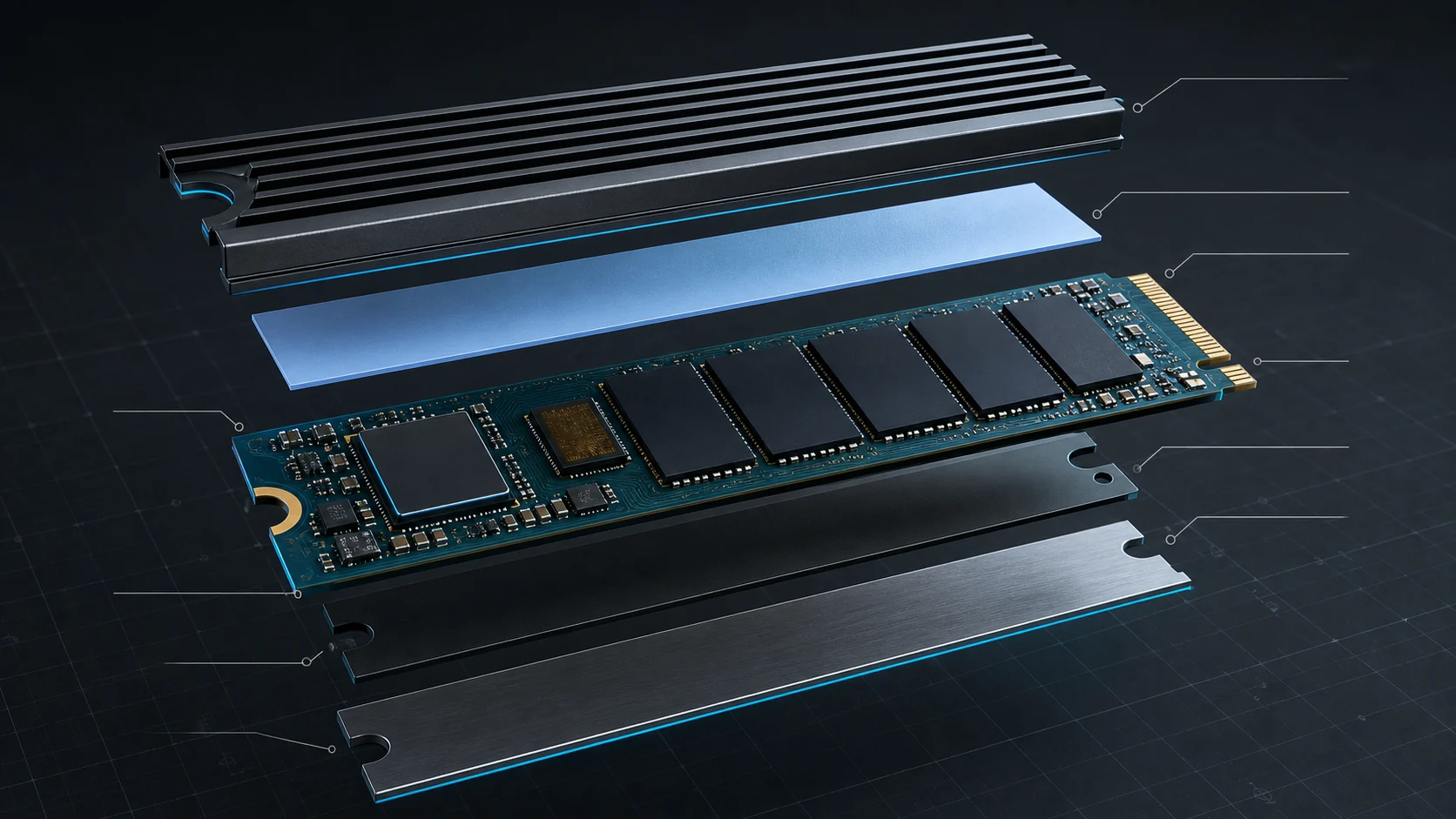
Gaming storage needs more than peak sequential speed
Game startup and level loading depend on the title, CPU, decompression path, operating system, and storage queue behavior, so the highest advertised sequential figure does not guarantee a proportional reduction in load time. Compare random access, latency, sustained behavior, firmware maturity, and thermal control alongside headline throughput. A drive that throttles under a motherboard cover or cramped GPU can lose its paper advantage.
Capacity is often the first practical decision. Leave working free space for updates, shader caches, recordings, and temporary files rather than filling the drive to its limit. Console buyers must follow the platform requirements for interface, physical size, and heatsink clearance. Desktop buyers should confirm M.2 lane sharing and decide whether the board heatsink or bundled drive cooler will be used.
| Decision area | What to compare | Important limitation |
|---|---|---|
| Capacity and platform | Library size, free-space target, PC or console support, and M.2 clearance | A fast drive is poor value if capacity is too small |
| Real workload behavior | Random access, load consistency, sustained writes, firmware, and thermals | Sequential peaks do not equal every game load |
| Reliability and value | Endurance, warranty, software, model consistency, and price per GB | Confirm the exact capacity and revision |
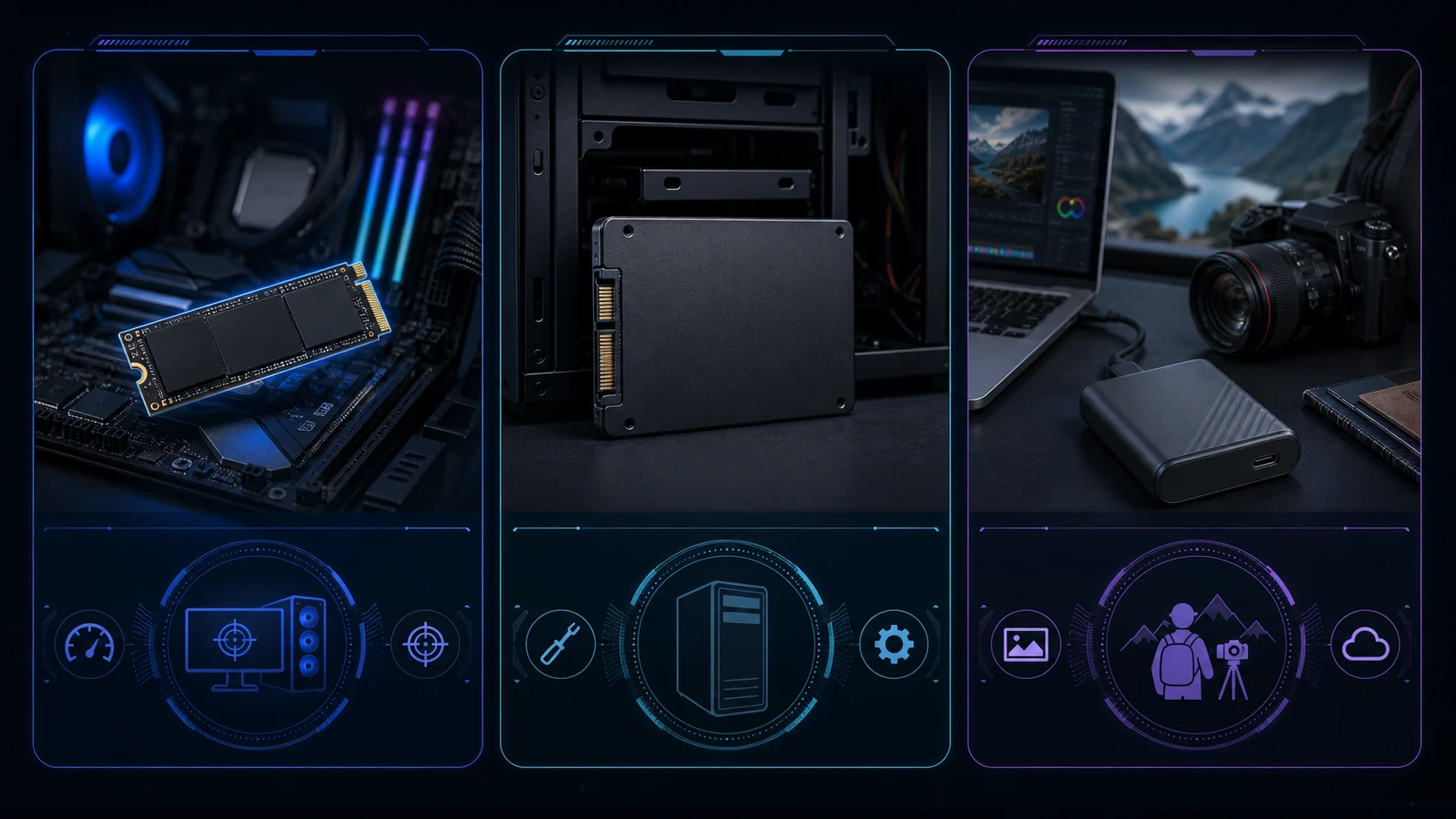
How PCGearWiki evaluated these options
We rank gaming SSDs by compatibility, capacity, controller and NAND evidence, load and transfer behavior, sustained performance, thermals, endurance, warranty, firmware support, availability, and price per gigabyte.
Continue your research: gaming SSD reviews, NVMe recommendations, and PS5 SSD guidance.
See the complete PCGearWiki Review Methodology for our evidence standards and scoring process.
Compare at a Glance
| # | Product | Editorial Score | Digital Storage Capacity | Hard Disk Interface |
|---|---|---|---|---|
| 1 | Samsung 990 PRO 2TB NVMe PCIe Gen4 | 9.7 Outstanding | 2 TB | PCIE x 4 |
| 2 | WD_BLACK SN850X 2TB NVMe SSD | 9.8 Outstanding | 2000 GB | PCIE x 4 |
| 3 | Predator GM7000 2TB NVMe SSD PCIe Gen4 | 9.4 Excellent | 2 TB | Solid State |
| 4 | Samsung 970 EVO Plus 2TB NVMe M.2 | 9.9 Outstanding | 2 TB | NVMe |
| 5 | Samsung 9100 PRO 1TB PCIe 5.0 M.2 | 9.9 Outstanding | 1 TB | PCIE x 4 |
| 6 | Samsung T7 1TB Portable SSD | 9.9 Outstanding | 1 TB | USB 3.0 |
| 7 | Kingston NV3 1TB NVMe PCIe 4.0 M.2 | 9.6 Outstanding | 1000 GB | PCIE x 4 |
| 8 | WD_BLACK SN8100 1TB PCIe 5.0 NVMe SSD | 9.8 Outstanding | 1 TB | PCIE x 4 |
| 9 | Lexar NM790 2TB Heatsink PCIe Gen4 NVMe | 9.9 Outstanding | 2000 GB | NVMe |
| 10 | MSI SPATIUM M470 PRO 2TB PCIe 4.0 | 9.7 Outstanding | 2 TB | PCIE x 4 |

Samsung 990 PRO 2TB NVMe PCIe Gen4 M.2 SSD 7450
Pros
- Exceptional sequential and random speeds for demanding workloads
- Strong power efficiency compared to prior models
- Broad capacity range suits gamers and professionals
- In-house controller aids thermal management
Cons
- Requires PCIe 4.0 hardware to reach advertised speeds
- Sustained loads may need additional cooling
- Fits only M.2 2280 slots
| Digital Storage Capacity | 2 TB |
|---|---|
| Hard Disk Interface | PCIE x 4 |
| Connectivity Technology | PCIe |
| Additional Features | 9.8 ft Drop Resistance, Read Speeds up to 1050 MB/s, Water and Dust Resistance, Write Speeds up to 1000 MB/s |
| Hard Disk Form Factor | 2.28 Inches |
| Compatible Devices | Desktop, Laptop |
| Specific Uses For Product | Gaming |
| Read Speed | 7450 Megabytes Per Second |
| Media Speed | 6900 Megabytes Per Second |
| Cache Memory Installed Size | 2 |
Best suited to shoppers comparing internal solid state drives products who specifically need accelerate game loads and data transfers with near-max PCIe 4.0 speeds, Improve system responsiveness through over 55 percent better random performance.
Before buying, compare the exact model’s compatibility, dimensions, core specifications, warranty, recurring owner feedback, and current price against other internal solid state drives options. Retailer availability and pricing can change after publication.

Pros
- Exceptional read and write speeds reduce load times in games and applications
- High capacity options support large collections of modern titles
- Includes monitoring and optimization tools via the dashboard
- Backwards compatible with PCIe Gen3 systems for broader use
- Adaptive thermal features help prevent performance drops under load
Cons
- Maximum speeds require a compatible PCIe Gen4 motherboard
- Dashboard software is available only on Windows systems
- Heatsink version adds an extra installation step for some builds
| Digital Storage Capacity | 2000 GB |
|---|---|
| Hard Disk Interface | PCIE x 4 |
| Connectivity Technology | NVMe |
| Additional Features | WD_BLACK Dashboard |
| Hard Disk Form Factor | 2.5 Centimeters |
| Compatible Devices | Laptop, Motherboards |
| Specific Uses For Product | Gaming |
| Read Speed | 7300 Megabytes Per Second |
| Media Speed | 6600 |
| Cache Memory Installed Size | 2 |
Best suited to shoppers comparing internal solid state drives products who specifically need achieve dramatically reduced game load times with sequential read speeds up to 7300 MB/s, Store extensive game libraries using capacities up to 8TB of….
Before buying, compare the exact model’s compatibility, dimensions, core specifications, warranty, recurring owner feedback, and current price against other internal solid state drives options. Retailer availability and pricing can change after publication.

Pros
- Exceptional sequential and random speeds for demanding workloads
- DRAM cache improves responsiveness during multitasking
- Built-in heat spreader aids thermal control under load
- Low idle power helps extend overall system efficiency
Cons
- Full speeds require PCIe Gen4 motherboard or console support
- Sustained heavy writes may need additional cooling in compact builds
- Software features limited to Predator-branded drives only
| Digital Storage Capacity | 2 TB |
|---|---|
| Hard Disk Interface | Solid State |
| Connectivity Technology | PCIe |
| Additional Features | PS5 Compatible |
| Hard Disk Form Factor | 2.5 Inches |
| Compatible Devices | Desktop, PC, Computer, Laptop, Netbook |
| Specific Uses For Product | Personal, Gaming, Business |
| Read Speed | 7400 Megabytes Per Second |
| Media Speed | 6700 Megabytes Per Second |
| Cache Memory Installed Size | 2 GB |
Best suited to shoppers comparing internal solid state drives products who specifically need achieve lightning-fast game load times with sequential speeds up to 7400MB/s, Maintain stable performance through efficient heat spreader and DRAM cache.
Before buying, compare the exact model’s compatibility, dimensions, core specifications, warranty, recurring owner feedback, and current price against other internal solid state drives options. Retailer availability and pricing can change after publication.

Pros
- Outstanding sequential speeds for demanding tasks
- Advanced heat control for consistent performance
- Comprehensive software suite for drive management
- Strong endurance with high TBW rating
- Multi-year warranty coverage
Cons
- Requires NVMe-compatible motherboard and M.2 slot
- Higher cost compared to SATA SSDs
- Best suited for high-performance builds rather than basic upgrades
| Digital Storage Capacity | 2 TB |
|---|---|
| Hard Disk Interface | NVMe |
| Connectivity Technology | NVMe |
| Additional Features | Backward Compatible |
| Hard Disk Form Factor | 2.5 Inches |
| Compatible Devices | Desktop |
| Specific Uses For Product | Gaming |
| Read Speed | 3500 Megabytes Per Second |
| Media Speed | 3300 megabits_per_second |
| Cache Memory Installed Size | 2 |
Best suited to shoppers comparing internal solid state drives products who specifically need experience faster application launches and file transfers thanks to exceptional read and write speeds, Sustain maximum performance levels with built-in thermal management that regulates….
Before buying, compare the exact model’s compatibility, dimensions, core specifications, warranty, recurring owner feedback, and current price against other internal solid state drives options. Retailer availability and pricing can change after publication.

Pros
- Leading sequential and random speeds suited to professional use.
- Compatible across PCs and laptops with PCIe 5.0 support.
- Enhanced power efficiency for sustained operation.
- Built-in software tools for drive health and firmware management.
Cons
- Full speeds require PCIe 5.0 hardware support.
- Maximum capacity options release later in 2025.
- May benefit from extra cooling during prolonged high loads.
| Digital Storage Capacity | 1 TB |
|---|---|
| Hard Disk Interface | PCIE x 4 |
| Connectivity Technology | NVMe, PCle 5.0 x4 |
| Additional Features | Hardware Encryption, Innovative Power & Thermal Control |
| Hard Disk Form Factor | 2280 Inches |
| Compatible Devices | Desktop, Laptop |
| Specific Uses For Product | Gaming, Multimedia, Personal |
| Read Speed | 14700 Megabytes Per Second |
| Media Speed | 13300 Megabytes Per Second |
| Cache Memory Installed Size | 1 GB |
Best suited to shoppers comparing internal solid state drives products who specifically need accelerate AI workloads and large file transfers with extreme sequential speeds., Double prior generation performance for faster game loads and video rendering..
Before buying, compare the exact model’s compatibility, dimensions, core specifications, warranty, recurring owner feedback, and current price against other internal solid state drives options. Retailer availability and pricing can change after publication.

Pros
- Fast transfer rates for efficient workflows
- Durable aluminum build for everyday mobility
- Broad device compatibility without extra adapters
- Compact size with high capacity options
Cons
- No dust or water resistance rating
- Maximum speeds require compatible USB 3.2 Gen 2 hosts
- May need reformatting on certain operating systems
| Digital Storage Capacity | 1 TB |
|---|---|
| Hard Disk Interface | USB 3.0 |
| Connectivity Technology | USB |
| Additional Features | 256-Bit AES Hardware Encryption, Read Speeds up to 1050 MB/s, Shock Resistant, Thermal Control, Write Speeds up to 1000 MB/s |
| Compatible Devices | Gaming Console, Mac, PC, Smartphone, Tablet |
| Specific Uses For Product | business, gaming |
| Read Speed | 1050 Megabytes Per Second |
| Media Speed | 1000 megabits_per_second |
| Cache Memory Installed Size | 1 |
| Data Transfer Rate | 10 Gigabits Per Second |
Best suited to shoppers comparing external solid state drives products who specifically need move large files rapidly with up to 1050 MB/s speeds to save time on transfers, Store extensive data in capacities up to 4TB within….
Before buying, compare the exact model’s compatibility, dimensions, core specifications, warranty, recurring owner feedback, and current price against other external solid state drives options. Retailer availability and pricing can change after publication.

Pros
- Strong Gen 4 speeds for fast access
- Low power consumption and heat output
- Compact single-sided design saves space
- Scales to high capacities for future needs
Cons
- Requires PCIe 4.0 slot for full speeds
- No included heatsink for high-load use
- Limited long-term user data available
| Digital Storage Capacity | 1000 GB |
|---|---|
| Hard Disk Interface | PCIE x 4 |
| Connectivity Technology | PCI-e |
| Additional Features | Shock Resistant |
| Hard Disk Form Factor | 2280 Inches |
| Compatible Devices | Desktop, Laptop |
| Specific Uses For Product | Multi-Purpose |
| Read Speed | 6000 Megabytes Per Second |
| Media Speed | 4000 |
| Cache Memory Installed Size | 1 |
Best suited to shoppers comparing internal solid state drives products who specifically need speed up file transfers and game loads with up to 6000 MB/s read performance, Reduce system heat and power use for efficient everyday operation.
Before buying, compare the exact model’s compatibility, dimensions, core specifications, warranty, recurring owner feedback, and current price against other internal solid state drives options. Retailer availability and pricing can change after publication.

Pros
- Exceptional sequential and random performance for demanding applications
- Strong power efficiency reduces heat and system load
- High endurance ratings support professional workloads
- Broad capacity range including 8TB options
- Useful software tools for migration and monitoring
Cons
- PCIe 5.0 performance requires a compatible motherboard and CPU
- High sustained speeds may still need adequate case airflow in compact builds
- 1TB model offers less headroom for massive media libraries than higher capacities
| Digital Storage Capacity | 1 TB |
|---|---|
| Hard Disk Interface | PCIE x 4 |
| Connectivity Technology | NVMe, PCIe Gen5 |
| Additional Features | ADVANCED RELIABILITY., BREAKNECK SPEEDS, EXPERIENCE PCIe Gen 5 |
| Hard Disk Form Factor | 22 Millimeters |
| Compatible Devices | Desktop, Laptop |
| Specific Uses For Product | Gaming, Multimedia, Personal |
| Read Speed | 14900 Megabytes Per Second |
| Media Speed | 11000 |
| Data Transfer Rate | 14900 Megabytes Per Second |
Best suited to shoppers comparing internal solid state drives products who specifically need achieve faster game loads and quicker AI model training with sequential reads up to 14,900 MB/s, Maintain system stability during long sessions thanks to….
Before buying, compare the exact model’s compatibility, dimensions, core specifications, warranty, recurring owner feedback, and current price against other internal solid state drives options. Retailer availability and pricing can change after publication.

Pros
- High read and write speeds enable quick access to games and files
- Built-in heatsink maintains performance without throttling
- PS5 compatibility simplifies console upgrades
- Lower power consumption improves efficiency
- Strong endurance rating for demanding daily use
Cons
- Relies on HMB instead of dedicated DRAM which may affect consistency in some tasks
- Requires PCIe Gen4 hardware to reach advertised maximum speeds
- M.2 2280 size limits fit in certain compact builds
| Digital Storage Capacity | 2000 GB |
|---|---|
| Hard Disk Interface | NVMe |
| Connectivity Technology | M.2 |
| Additional Features | Integrated heatsink |
| Hard Disk Form Factor | 2280 Inches |
| Compatible Devices | Desktop, Laptop, PS5 |
| Specific Uses For Product | Gaming |
| Read Speed | 7400 Megabytes Per Second |
| Media Speed | 6500 megabits_per_second |
| Cache Memory Installed Size | 2 |
Best suited to shoppers comparing internal solid state drives products who specifically need experience faster game loads and large file handling with up to 7400MB/s read speeds that cut wait times significantly, Sustain peak performance during long….
Before buying, compare the exact model’s compatibility, dimensions, core specifications, warranty, recurring owner feedback, and current price against other internal solid state drives options. Retailer availability and pricing can change after publication.

Pros
- Exceptional transfer speeds for external storage
- Strong endurance for frequent use
- Enhanced data protection features
- Easy connectivity with USB-C
- Versatile for multiple user types
Cons
- Requires USB-C ports for optimal performance
- Premium pricing compared to slower alternatives
- Potential speed limitations depending on the connected device
| Digital Storage Capacity | 2 TB |
|---|---|
| Hard Disk Interface | PCIE x 4 |
| Connectivity Technology | USB |
| Additional Features | Hardware Encryption |
| Hard Disk Form Factor | 80 Millimeters |
| Compatible Devices | Desktop |
| Specific Uses For Product | Gaming |
| Read Speed | 6000 Megabytes Per Second |
| Media Speed | 5000 megabytes_per_second |
| Data Transfer Rate | 6000 Megabits Per Second |
Best suited to shoppers comparing external solid state drives products who specifically need achieve rapid file transfers and backups with sequential read speeds reaching 6000MB/s, Ensure long-lasting performance with a high endurance rating of up to 640….
Before buying, compare the exact model’s compatibility, dimensions, core specifications, warranty, recurring owner feedback, and current price against other external solid state drives options. Retailer availability and pricing can change after publication.

Pros
- Exceptional speeds that minimize wait times in demanding games
- Integrated heatsink supports consistent high output without slowdowns
- Strong compatibility with PS5 consoles for easy upgrades
- High IOPS rating enhances overall system responsiveness
- Dashboard tool provides useful customization options
Cons
- Dashboard software works only on Windows systems
- Not designed or supported for NAS or server environments
- PS5 compatibility requires a specific minimum system software version
| Digital Storage Capacity | 1000 GB |
|---|---|
| Hard Disk Interface | NVMe |
| Connectivity Technology | NVMe |
| Additional Features | Heatsink |
| Hard Disk Form Factor | 2 Inches |
| Compatible Devices | Laptop, Motherboards, PS6 |
| Hard Disk Rotational Speed | 7200 RPM |
| Specific Uses For Product | Gaming |
| Read Speed | 7000 Megabytes Per Second |
| Cache Memory Installed Size | 1 |
Best suited to shoppers comparing internal components products who specifically need eliminate long load times with PCIe Gen4 speeds reaching 7000 MB/s read for instant game access, Sustain maximum performance during long sessions via the….
Before buying, compare the exact model’s compatibility, dimensions, core specifications, warranty, recurring owner feedback, and current price against other internal components options. Retailer availability and pricing can change after publication.

Pros
- High sequential speeds suitable for gaming and content creation workloads
- Integrated graphene heatsink supports stable performance under extended loads
- LDPC error correction adds strong data integrity protection
- Broad compatibility across PS5, desktops, and laptops
- Includes monitoring software for ongoing maintenance
Cons
- Maximum speeds require a PCIe 4.0 host interface
- Heatsink may limit fit in some ultra-thin or tightly spaced enclosures
- Current offering limited to 1TB capacity
| Digital Storage Capacity | 1 TB |
|---|---|
| Hard Disk Interface | PCIE x 4 |
| Connectivity Technology | NVMe |
| Additional Features | Backward Compatible, Data Recovery Service, Heatsink |
| Hard Disk Form Factor | 2280 Centimeters |
| Compatible Devices | Desktop, Laptop, PS5 |
| Specific Uses For Product | Gaming |
| Read Speed | 7400 Megabytes Per Second |
| Media Speed | 5200 |
| Data Transfer Rate | 7400 Megabytes Per Second |
Best suited to shoppers comparing internal components products who specifically need load games and large files faster with sequential reads up to 7400 MB/s on PCIe 4.0 systems, Avoid performance drops during long sessions thanks….
Before buying, compare the exact model’s compatibility, dimensions, core specifications, warranty, recurring owner feedback, and current price against other internal components options. Retailer availability and pricing can change after publication.
Pros
- Top-tier sequential speeds for reduced loading times
- Strong endurance ratings support intensive daily use
- Broad compatibility with current AMD platforms
- Helpful free software for setup and monitoring
Cons
- Maximum speeds require a PCIe Gen4 compatible motherboard
- M.2 2280 form factor limits installation options in some systems
- Performance drops on older PCIe generations
| Digital Storage Capacity | 1000 GB |
|---|---|
| Hard Disk Interface | NVMe |
| Connectivity Technology | PCIe |
| Additional Features | Portable |
| Hard Disk Form Factor | 2.5 Inches |
| Compatible Devices | Desktop, Laptop |
| Specific Uses For Product | Gaming |
| Read Speed | 5000 Megabytes Per Second |
| Media Speed | 4400 megabits_per_second |
| Cache Memory Installed Size | 1 |
Best suited to shoppers comparing internal solid state drives products who specifically need achieve faster game loads and file transfers through PCIe Gen4 speeds up to 5000MB/s, Maintain reliable performance over years with 1.8M hours MTBF and….
Before buying, compare the exact model’s compatibility, dimensions, core specifications, warranty, recurring owner feedback, and current price against other internal solid state drives options. Retailer availability and pricing can change after publication.

Pros
- High sequential and random speeds for responsive system performance
- Built-in encryption adds security without trade-offs
- Strong endurance rating supports intensive daily use
- Compact M.2 design fits modern desktops and laptops easily
Cons
- Requires a compatible NVMe M.2 slot and PCIe Gen3 support
- Can run warmer during sustained transfers compared to SATA drives
- Higher cost than basic SATA options for the same capacity
| Digital Storage Capacity | 2 TB |
|---|---|
| Hard Disk Interface | NVMe |
| Connectivity Technology | PCIe |
| Additional Features | Data Recovery Service |
| Hard Disk Form Factor | 2.5 Inches |
| Compatible Devices | Desktop |
| Specific Uses For Product | Gaming |
| Read Speed | 3400 Megabytes Per Second |
| Media Speed | 3000 Mo/s |
| Cache Memory Installed Size | 2 |
Best suited to shoppers comparing internal solid state drives products who specifically need load games and applications almost instantly with sequential reads up to 3400MB/s, Handle heavy creative workloads smoothly using write speeds up to 3000MB/s.
Before buying, compare the exact model’s compatibility, dimensions, core specifications, warranty, recurring owner feedback, and current price against other internal solid state drives options. Retailer availability and pricing can change after publication.

Pros
- Exceptional sequential speeds for reduced wait times
- Compact M.2 design for flexible system integration
- Strong endurance from 3D TLC NAND construction
- Broad compatibility with modern motherboards
Cons
- Full speeds require a PCIe Gen4 slot and compatible CPU
- Higher heat output during sustained loads may need extra cooling
- Performance varies in non-Gen4 systems
| Digital Storage Capacity | 1 TB |
|---|---|
| Hard Disk Interface | PCIE x 4 |
| Connectivity Technology | PCIe Gen 4.0 x4 |
| Brand | Corsair |
| Special Feature | Heatsink |
| Hard Disk Form Factor | 2280 Inches |
| Hard Disk Description | Solid State Hard Drive |
| Compatible Devices | Desktop |
| Installation Type | Internal Hard Drive |
| Color | Black |
Best suited to shoppers comparing internal solid state drives products who specifically need accelerate workflows with sequential read speeds up to 4950 MB/s for rapid file loading and transfers, Maintain consistent performance over years thanks to durable….
Before buying, compare the exact model’s compatibility, dimensions, core specifications, warranty, recurring owner feedback, and current price against other internal solid state drives options. Retailer availability and pricing can change after publication.
How to Choose the Right Ssds For Gaming In
Choosing the right ssds for gaming in starts with understanding how you plan to use it. A good option for gaming may not be the best fit for productivity, content creation, portability, or long-term upgrade value. Before buying, consider your budget, performance expectations, compatibility needs, and the features that matter most for your setup.
How long does a ssds for gaming in typically last?
A quality ssds for gaming in can remain useful for several years when it matches your system requirements and is maintained properly. Actual lifespan depends on usage, build quality, software support, and how quickly your performance needs change.
Add PCGearWiki as a preferred source on Google
Sources and Verification
Research basis: Product identity, dimensions, interfaces, supported features, and warranty terms are checked against available manufacturer documentation and current retailer listings. Price, stock, and aggregate customer ratings can change after publication.
Primary references for this guide: NVM Express specifications.
Testing disclosure: Unless this article explicitly states that PCGearWiki performed hands-on testing and describes the test setup, recommendations are research-based editorial evaluations rather than PCGearWiki laboratory measurements. Customer feedback is used to identify recurring ownership patterns, not as proof of technical performance.
Last source review: August 29, 2026. See our Review Methodology, Editorial Policy, and Corrections Policy.





Write Your Review
No reviews yet. Be the first to share your experience!