

Last updated: September 22, 2026
For the best GPU under $500 with 16GB VRAM, the ASUS Dual AMD Radeon™ RX 9060 XT 16GB GDDR6 is the most balanced pick because it combines 16GB memory, a compact 2.5-slot design, dual BIOS profiles, and 0dB operation. The main trade-off is that all four recommendations use the same RX 9060 XT class, so cooler design, card dimensions, and stated clock speeds—not a proven performance gap—should guide your choice.
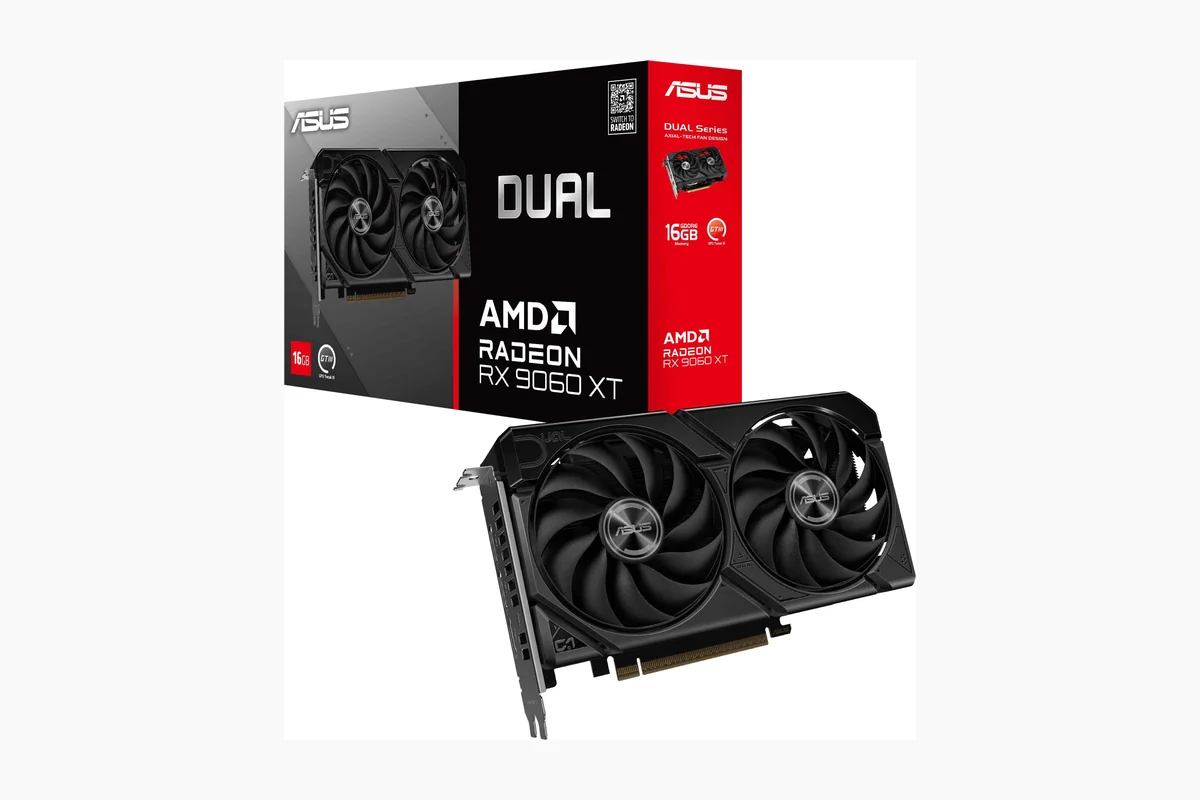
This Best GPUs comparison focuses on four exact Radeon RX 9060 XT 16GB models supplied for evaluation. Based on available product data, these cards target buyers who want a modern 16GB graphics card for 1440p gaming, content creation, and general-purpose desktop use without exceeding a $500-class budget. The listings and specifications can change, so confirm the final price, stock status, power requirements, and dimensions before ordering.

ASUS Dual Radeon RX 9060 XT 16GB GDDR6 Graphics









As an Amazon Associate we earn from qualifying purchases. Product prices and availability are accurate as of the date/time indicated.
Quick Verdict
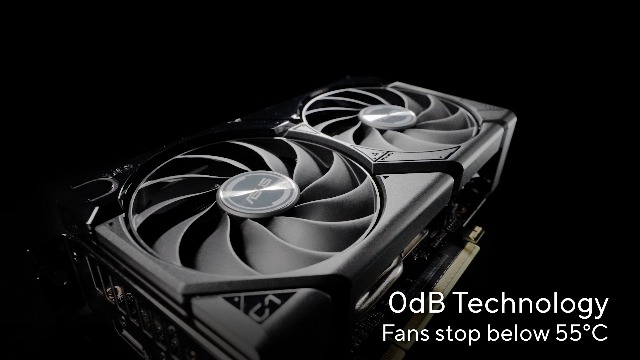
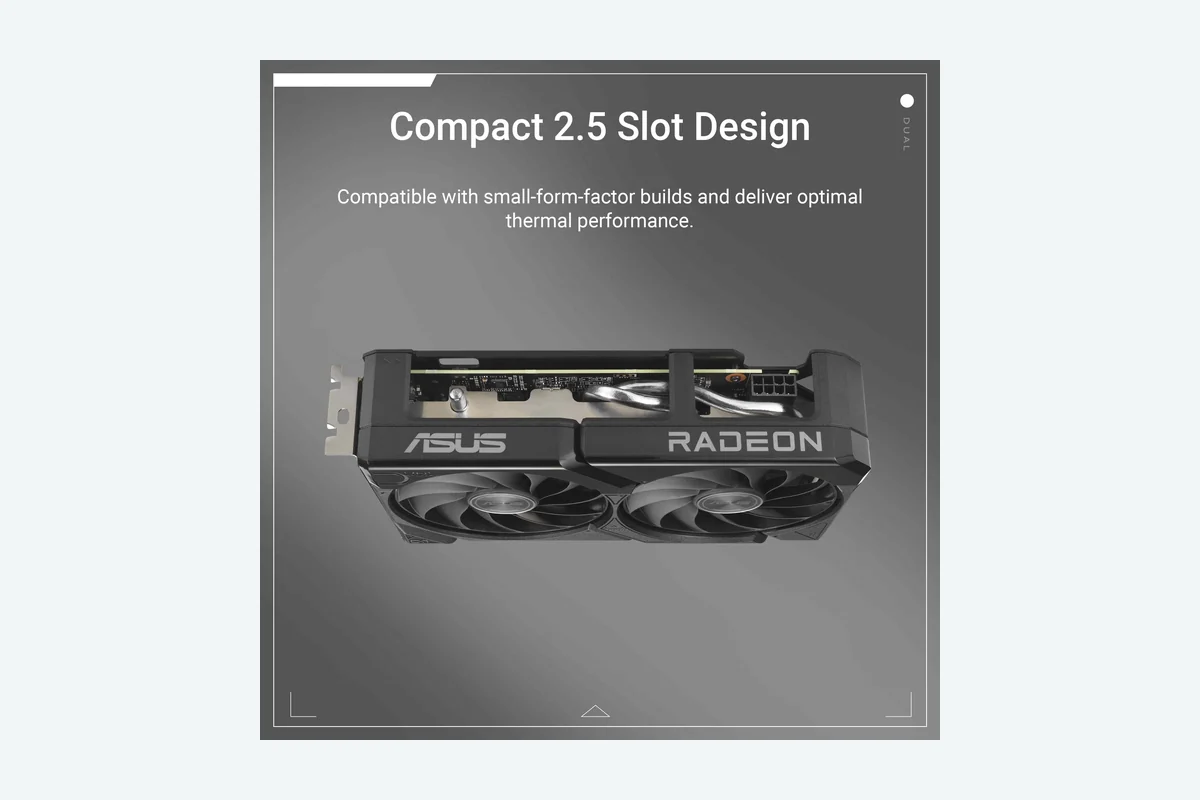
The ASUS Dual AMD Radeon™ RX 9060 XT 16GB GDDR6 is the best overall choice for most buyers because its 2.5-slot layout, dual Axial-tech fans, 0dB technology, and dual BIOS switch address the practical concerns of a mainstream gaming build. It is especially suitable for users who want flexibility between quieter and higher-performance profiles without moving to a larger card.
The PowerColor Reaper is the better fit for compact cases because its supplied dimensions measure 200 × 100 × 39 mm and its internal card length is listed as 200 mm. The ASRock Challenger is the strongest feature-led alternative, with a factory overclock, stated RDNA 4 architecture details, and 0dB silent cooling. The XFX Swift is worth considering if its stated boost clock of up to 3320 MHz is important to you, but the clock figure alone does not prove a meaningful gaming advantage.
Buy one of these cards if you specifically need 16GB of VRAM and your case, power supply, and monitor setup are compatible. Skip this group if you need verified benchmark results, substantially stronger 4K performance, or a graphics card with a different feature set. The supplied data does not include independent measurements, so this is a specification-based recommendation rather than a benchmark ranking.
Key Specifications
The four supplied products are custom versions of the AMD Radeon RX 9060 XT with 16GB of GDDR6 memory. Their shared GPU family makes them more similar in expected core capability than the product names might suggest. The meaningful differences in the available records are board size, cooling features, power connector information, factory-clock information, and included display outputs.
| Model | Memory and interface | Cooling and board details | Why it matters |
|---|---|---|---|
| ASUS Dual AMD Radeon™ RX 9060 XT 16GB GDDR6 | 16GB GDDR6; PCIe 5.0; HDMI 2.1b; DisplayPort 2.1a | 2.5-slot design; dual Axial-tech fans; 0dB technology; dual BIOS | Strong balance of compatibility, acoustic flexibility, and cooling controls |
| PowerColor Reaper AMD Radeon RX 9060 XT 16GB GDDR6 | 16GB GDDR6; HDMI 2.1b; two DisplayPort 2.1a outputs | 200 × 100 × 39 mm; one 8-pin PCI Express power connector; 500W minimum system power listed | Useful for builders who need a shorter card and a clearly specified power connection |
| ASRock Radeon RX 9060 XT Challenger 16GB OC | 16GB GDDR6 at 20 Gbps on a 128-bit bus; PCIe 5.0 | Dual fans; 0dB Silent Cooling; boost clock up to 3290 MHz; game clock 2700 MHz | Best specification set for buyers who want a factory-overclocked variant |
| XFX Swift AMD Radeon RX 9060 XT OC Gaming Edition | 16GB GDDR6; HDMI and two DisplayPort outputs listed | XFX SWFT dual-fan cooling; boost clock up to 3320 MHz | Appeals to buyers prioritizing the highest stated boost-clock figure in this shortlist |
Manufacturer specifications describe capabilities rather than guaranteed results in every game or application. For example, the ASRock and XFX boost-clock figures are not independent performance measurements. Actual behavior depends on the game engine, driver version, power limits, cooling environment, processor, memory configuration, and the selected graphics settings.
Design and Build Quality
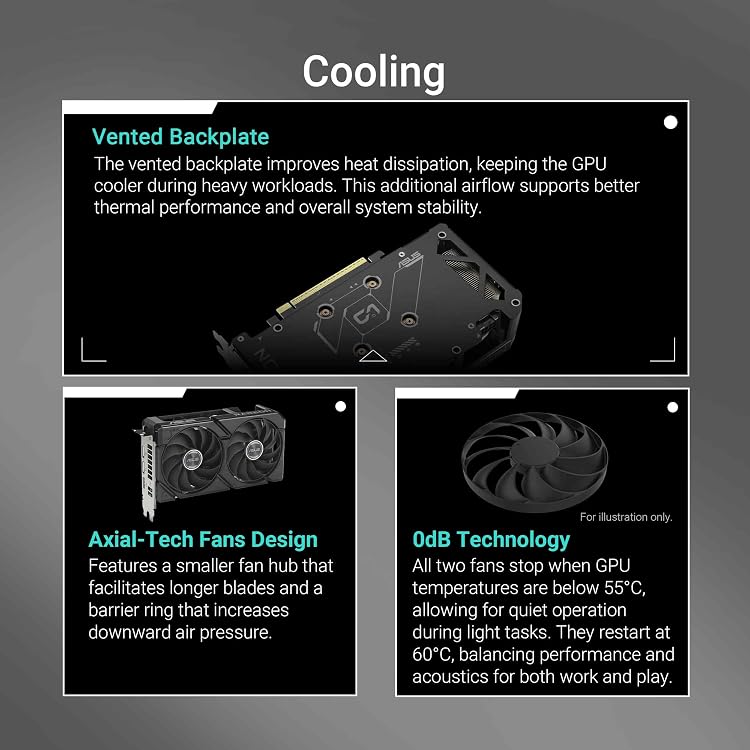
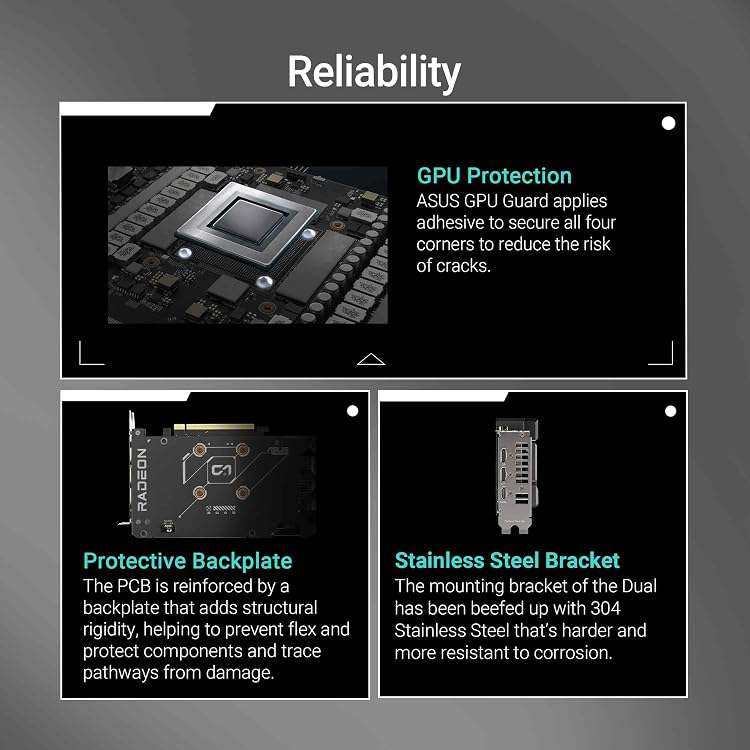
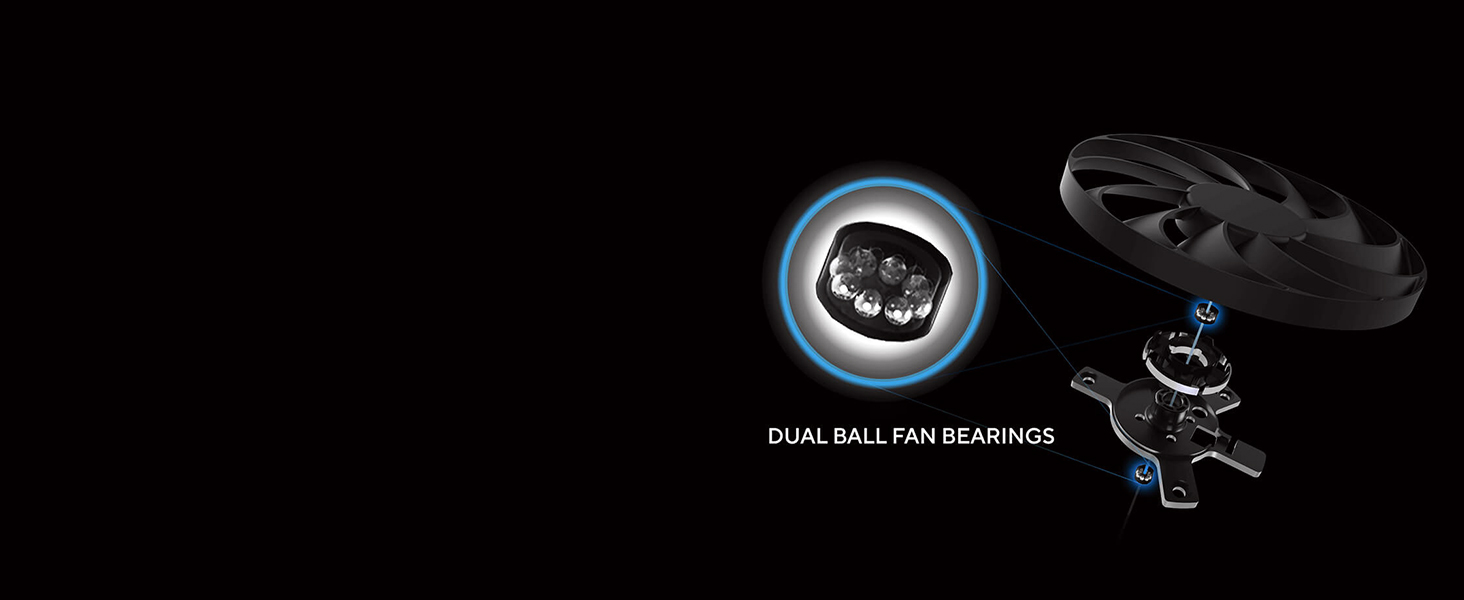
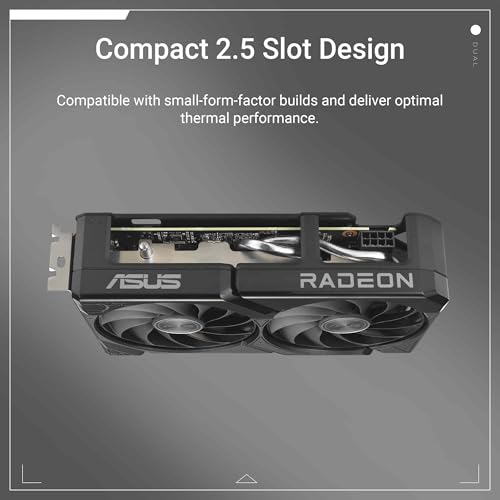
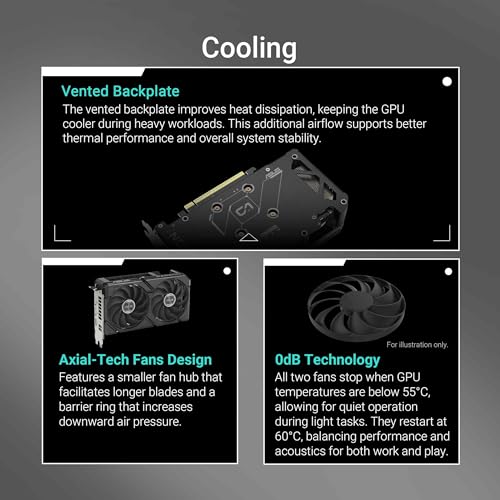
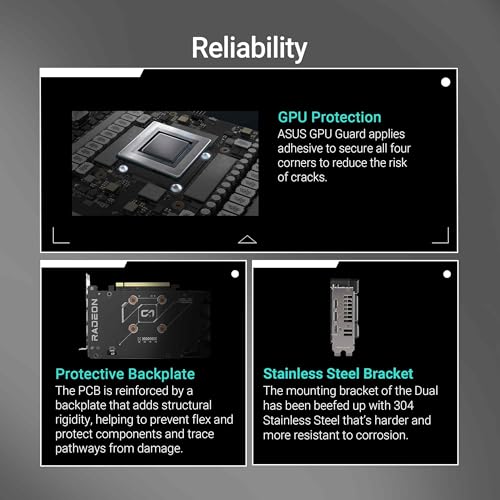
The ASUS Dual model emphasizes broad build compatibility. Its 2.5-slot form factor is slimmer than many larger enthusiast designs, although buyers must still reserve the required expansion space and check whether nearby motherboard slots or a thick front radiator create conflicts. Its two Axial-tech fans use a smaller hub and a barrier ring, features ASUS says are intended to improve airflow toward the heatsink.
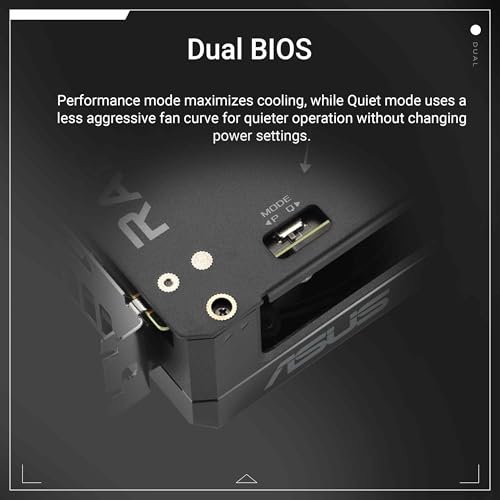
ASUS also includes dual BIOS profiles, allowing the card to switch between Quiet and Performance modes. That control is more useful than a headline clock number for buyers who change between everyday desktop use and extended gaming sessions. The 0dB feature can stop the fans during light workloads, but fan-stop behavior should not be confused with silent operation under sustained GPU load.
The PowerColor Reaper has the clearest physical-fit advantage in the supplied data. Its listed 200 mm internal card length and 200 × 100 × 39 mm dimensions make it the logical first check for a compact ATX, microATX, or small-form-factor desktop build. The record also identifies a high-thermal-conductivity Honeywell PTM7950 phase-change material, but no measured temperature or noise result is provided to quantify its benefit.
The ASRock Challenger uses a dual-fan layout with striped axial fans and 0dB Silent Cooling. Its product record identifies an LED indicator and a factory-overclocked configuration, which may appeal to builders who want a more feature-oriented card without manually tuning it. The available data does not provide the card’s physical dimensions, so case clearance must be confirmed from the final manufacturer documentation.
The XFX Swift uses the company’s SWFT dual-fan cooling solution and is described as an OC Gaming Edition. Its supplied record is less detailed than the ASUS, PowerColor, and ASRock records: it confirms the GPU family, 16GB of GDDR6, dual-fan cooling, and a stated boost clock, but does not provide dimensions, connector requirements, or a detailed BIOS description. That missing information is a buying limitation, not evidence of a design flaw.
Performance and Real-World Use
All four cards should be viewed first as RX 9060 XT 16GB products rather than as completely different performance tiers. Their shared GPU family and memory capacity mean the basic workload suitability is likely to overlap. The supplied information supports 1440p gaming and content-creation use as positioning, but it does not include frame-rate tests, application benchmarks, power measurements, temperatures, or noise measurements.
For 1080p gaming, 16GB of VRAM gives the cards substantial memory capacity for high-resolution textures and larger game assets. However, the usefulness of that capacity depends on the game, settings, and system configuration. A large VRAM number does not automatically guarantee high frame rates, and buyers targeting very high-refresh-rate gaming should review the separate 1080p 240Hz GPU guide rather than assuming any 16GB card will maintain that target.
For 1440p, the 16GB memory configuration is the clearest reason to consider this shortlist. It gives modern games and creative applications more memory headroom than lower-capacity alternatives, particularly when texture quality, asset size, or multitasking increases. The ASRock record additionally specifies 32 Compute Units, third-generation ray tracing, and second-generation AI accelerators. Those are architecture and feature specifications, not proof of a particular ray-tracing or upscaling result.
For 4K, expectations should be more cautious. These records do not contain 4K frame-rate evidence, so no responsible ranking can establish whether one model is suitable for a specific 4K refresh target. Buyers whose priority is 4K at a high refresh rate should compare verified measurements and may find the dedicated 4K 144Hz GPU comparison more relevant.
Content creators may value the 16GB framebuffer when working with larger scenes, high-resolution assets, or GPU-accelerated software, but application support varies. The available records do not identify encoding performance, compute throughput in named applications, or professional certification. Treat content creation as a plausible use case supported by memory capacity, not as a verified application-performance claim.
Compatibility
Start with physical clearance. The PowerColor Reaper is the only supplied model with explicit card dimensions, measuring 200 × 100 × 39 mm. The ASUS model is identified as a 2.5-slot card, while the ASRock and XFX records do not provide complete dimensions. For those two cards, check the manufacturer’s final specification sheet before purchasing, especially in compact cases or systems with front-mounted radiators.
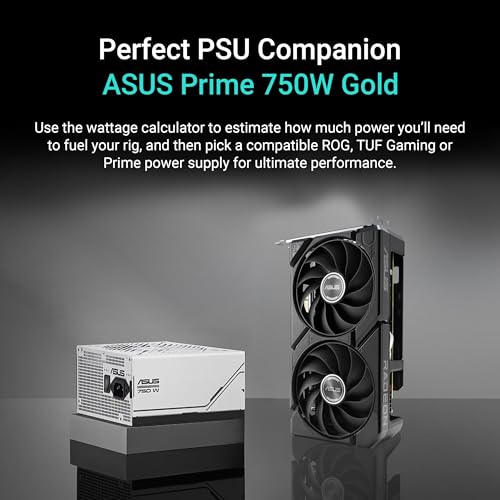
Power requirements also need verification. PowerColor lists one 8-pin PCI Express power connector and a 500W minimum system power recommendation. The supplied records do not provide equivalent connector or power-supply information for every other model, so do not assume that all four cards have identical cabling requirements. Confirm the connector layout, available cable, and recommended power supply for the exact ASIN you select.
Each card is intended for a desktop PC and uses a PCI Express graphics interface, with PCIe 5.0 explicitly listed for the ASUS and ASRock models. PCIe compatibility is not the only consideration: the motherboard must provide an appropriate full-length slot, the case must support the card’s width and length, and the power supply must meet the exact manufacturer recommendation.
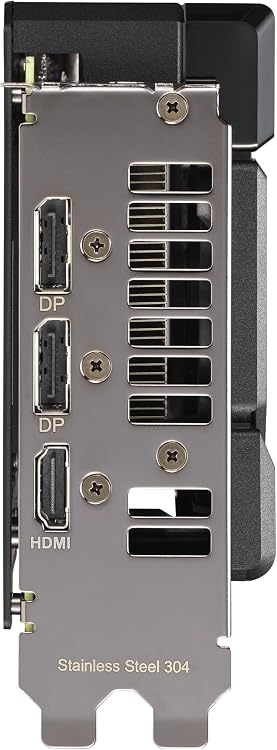
Display connectivity is suitable for modern monitors, with HDMI 2.1b and DisplayPort 2.1a listed for the ASUS and PowerColor records. The ASRock record lists DisplayPort 2.1a and HDMI 2.1b, while the XFX listing identifies HDMI and two DisplayPort outputs without giving the same detailed version information. Check the actual ports if you need a particular cable standard, multi-monitor arrangement, or display feature.
Finally, install current graphics drivers after confirming the operating system and motherboard firmware requirements. Software support, display behavior, and application compatibility can change independently of the board design. A motherboard with an older PCIe generation can still be physically relevant, but the exact platform should be checked against official documentation before assuming every feature operates identically.
Pros and Cons
These advantages and limitations come from the supplied specifications and editorial comparison. They are not the result of PCGearWiki laboratory testing or independent benchmark measurements.
- All four shortlisted cards provide 16GB of GDDR6 VRAM.
- The ASUS, ASRock, and PowerColor records list modern HDMI 2.1b and DisplayPort 2.1a connectivity.
- The ASUS model combines a 2.5-slot design, dual BIOS, dual fans, and 0dB technology.
- The PowerColor Reaper has a clearly documented 200 mm card length and 8-pin power connection.
- The ASRock Challenger includes a factory-overclocked configuration and detailed memory specifications.
- The XFX Swift lists the highest stated boost clock in this comparison, up to 3320 MHz.
- No supplied product record includes independent gaming or application benchmarks.
- Complete physical dimensions are not available for every model.
- Power-supply and connector information is incomplete for several cards.
- A higher stated boost clock does not establish a proportional real-world performance increase.
- Buyers targeting demanding 4K high-refresh gaming need evidence beyond these specification records.
Who Should Buy It?
The ASUS Dual AMD Radeon™ RX 9060 XT 16GB GDDR6 is best for a mainstream gaming PC builder who wants a balanced board design and adjustable operating profiles. Choose it when your case supports a 2.5-slot card and you value the ability to prioritize quieter operation or performance through the dual BIOS switch.
The PowerColor Reaper is best for a compact-case builder. Its 200 mm length is the most concrete fit-related advantage in the supplied data, and the listed 8-pin connector makes power planning more straightforward. Choose it when clearance is more important than having the most detailed feature list.
The ASRock Radeon RX 9060 XT Challenger 16GB OC is best for buyers who prefer a factory-overclocked model with clearly stated memory and architecture specifications. Choose it if the stated 3290 MHz boost clock, 2700 MHz game clock, 0dB cooling, and PCIe 5.0 support match your priorities and your case clearance is confirmed.
The XFX Swift AMD Radeon RX 9060 XT OC Gaming Edition is best for a buyer who specifically values XFX’s SWFT dual-fan design and the highest stated boost-clock figure among these records. Choose it only after checking the missing physical and power specifications for the exact listing.
Who Should Skip It?
Skip this shortlist if you need a verified performance leader for 4K gaming, professional GPU compute, or a specific application. The available evidence does not include those measurements. A 16GB VRAM capacity helps with memory-heavy workloads, but it cannot replace a faster GPU architecture, wider performance data, or application-specific validation.
Also skip the ASUS model if your case cannot accept a 2.5-slot card, and skip the PowerColor Reaper if its 200 mm length still exceeds your available clearance. Do not choose the ASRock or XFX models until you have verified their exact dimensions and power requirements. Buyers who do not need 16GB of VRAM may also find a different GPU class more suitable if it offers better value for their resolution and settings.
Alternatives to Consider
The strongest alternatives are the other exact RX 9060 XT 16GB cards in this comparison. They are not different GPU generations, so the decision is primarily about board implementation and compatibility rather than a guaranteed change in core performance.
- Choose ASUS for the most balanced specification set: 2.5-slot construction, dual Axial-tech fans, 0dB technology, and dual BIOS profiles.
- Choose PowerColor for the most clearly documented compact dimensions and one 8-pin power connector.
- Choose ASRock for the factory-overclocked configuration, detailed 20 Gbps memory specification, and 0dB Silent Cooling.
- Choose XFX if its SWFT dual-fan design and stated boost clock up to 3320 MHz matter more than the missing details in its supplied record.
If you are comparing the 16GB requirement against a broader budget search, consult PCGearWiki’s best GPU under $500 guide. It may help determine whether 16GB of VRAM is essential for your games and applications or whether a different card category better matches your workload.
How We Evaluated
We evaluated the supplied product records by matching each ASIN to its stated model family, VRAM capacity, card type, intended desktop use, cooling design, connectivity, physical information, and power details. We then compared the products against one another for distinct buyer scenarios, including compact builds, quiet operation, factory-overclocked configurations, and specification completeness.
This comparison does not claim hands-on testing, PCGearWiki benchmark results, independent temperatures, noise measurements, frame rates, or customer-feedback analysis. The supplied records show zero written reviews for the listed rating fields, so no owner-feedback pattern can be responsibly summarized. For more information about our research and review standards, read the PCGearWiki review methodology.
Why You Should Trust PCGearWiki
PCGearWiki separates verified product specifications from editorial judgment. We check the exact product record and ASIN, compare stated features across models, identify compatibility constraints, and avoid presenting manufacturer claims as independent test results. When measurements are unavailable, we explain the decision qualitatively instead of manufacturing frame rates, temperatures, noise levels, or power figures.
Final Verdict
The ASUS Dual AMD Radeon™ RX 9060 XT 16GB GDDR6 is the best overall pick from the supplied options. Its deciding advantage is not a claimed benchmark lead; it is the combination of a 2.5-slot form factor, dual-fan cooling, 0dB technology, and dual BIOS profiles. That makes it the most flexible recommendation for a typical desktop gaming build.
Buy the PowerColor Reaper instead when the 200 mm length and listed power connection solve a case-planning problem. Choose the ASRock Challenger when a factory-overclocked board and detailed feature set are more important. Consider the XFX Swift when its stated boost clock and SWFT cooling align with your priorities, but verify its incomplete compatibility details first.
Who should not buy? Anyone who needs proven 4K high-refresh results, professional application benchmarks, or a guaranteed fit without checking the exact card dimensions. The deciding factor is therefore your build constraint: choose ASUS for balance, PowerColor for compact fit, ASRock for factory-overclocked features, and XFX only when its specific listing details have been confirmed.
Frequently Asked Questions
Is the best GPU under $500 with 16GB VRAM worth buying?
A 16GB RX 9060 XT card is worth considering when you want additional VRAM capacity for 1440p gaming, high-resolution textures, or compatible creative workloads. Its value depends on your actual resolution, games, power supply, and case. The available data does not establish a benchmark winner, so select the board that best fits your compatibility needs.
Who is the best GPU under $500 with 16GB VRAM best for?
This category is best for desktop PC builders who specifically want 16GB of GDDR6 memory within a $500-class budget. It suits mainstream gaming and some content-creation workloads, particularly at 1440p. It is less suitable for buyers who require verified 4K high-refresh performance or professional software certification.
Is the best GPU under $500 with 16GB VRAM good for gaming?
These cards are positioned for modern gaming, with 16GB of GDDR6 memory and current display interfaces. The supplied records support 1440p as a practical target, but they do not include game-specific frame rates. Your processor, monitor, graphics settings, drivers, and game engine will determine the final experience.
What should I compare before buying a GPU under $500 with 16GB VRAM?
Compare the exact card dimensions, slot thickness, power connector, recommended system power, monitor outputs, cooling mode, and warranty information from the final manufacturer or retailer record. Among these products, the PowerColor has the clearest compact dimensions, ASUS offers dual BIOS flexibility, ASRock provides detailed factory-overclock specifications, and XFX lists the highest stated boost clock.
Does a higher boost clock guarantee better gaming performance?
No. A boost clock is a manufacturer specification, not an independent performance result. Sustained clock behavior depends on the workload, temperature, power limits, firmware, and cooling environment. The XFX listing states a boost clock up to 3320 MHz and the ASRock listing states up to 3290 MHz, but those figures alone do not prove a meaningful difference in actual games.
Add PCGearWiki as a preferred source on Google
Sources and Verification
Research basis: Product identity, dimensions, interfaces, supported features, and warranty terms are checked against available manufacturer documentation and current retailer listings. Price, stock, and aggregate customer ratings can change after publication.
Testing disclosure: Unless this article explicitly states that PCGearWiki performed hands-on testing and describes the test setup, recommendations are research-based editorial evaluations rather than PCGearWiki laboratory measurements. Customer feedback is used to identify recurring ownership patterns, not as proof of technical performance.
Last source review: September 22, 2026. See our Review Methodology, Editorial Policy, and Corrections Policy.


Write Your Review
No reviews yet. Be the first to share your experience!