

Last updated: August 5, 2026
Choosing the best 1080p gaming monitor remains one of the smartest upgrades for PC builders, competitive gamers, and content creators who want high frame rates without the GPU demands of higher resolutions. Full HD (1920 x 1080) still delivers excellent pixel density on 24- to 27-inch screens and pairs perfectly with mid-range graphics cards for smooth 144 Hz to 240 Hz gameplay in esports titles, shooters, and racing games. In July 2026, options span budget IPS panels to high-refresh Fast IPS and curved VA displays that support FreeSync Premium and G-SYNC compatibility.
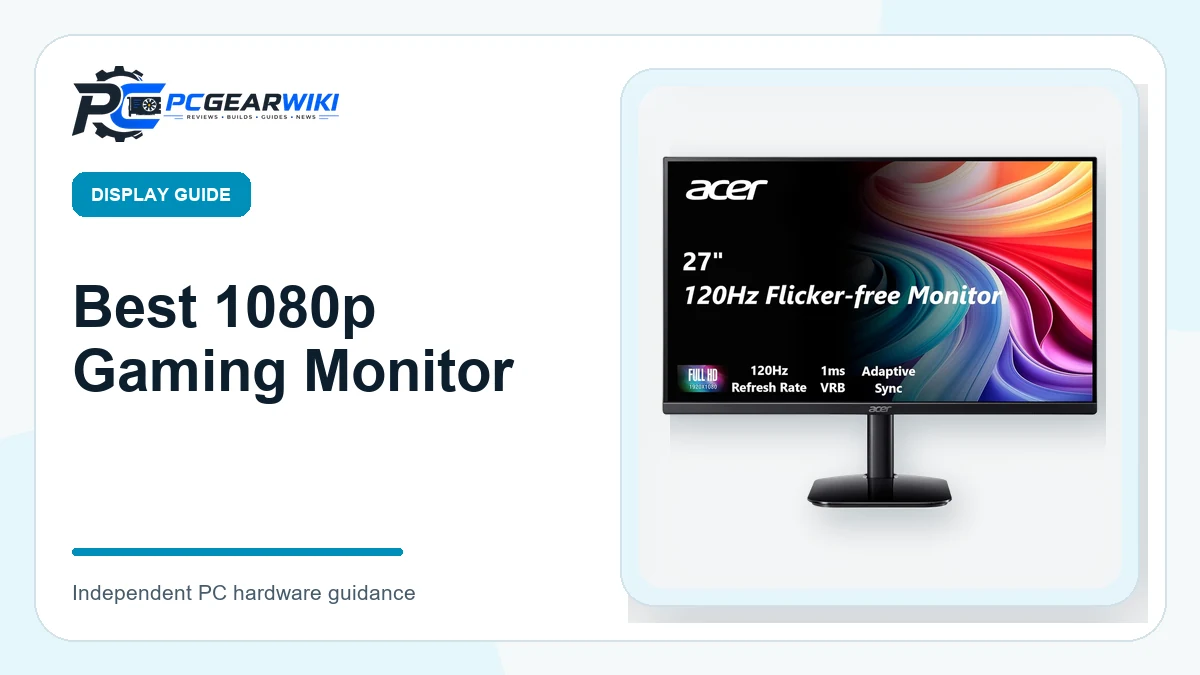
This guide helps you understand the key specs that matter most for 1080p gaming displays, compare eligible models based on manufacturer specifications and available customer ratings, and match a monitor to your desk setup, budget, and use case. Whether you are building a new system or upgrading from a 60 Hz panel, you will learn practical decision rules for refresh rate, response time, panel type, and ergonomics. For broader display options, see our best gaming monitors category.
We focused only on true Full HD gaming monitors that meet the core constraints of 1080p resolution and gaming-oriented features such as elevated refresh rates and adaptive sync. Non-matching resolutions and incomplete data points were set aside so recommendations stay accurate and useful.

Pros
- Up to 120Hz with FreeSync-compatible Adaptive-Sync for smoother gameplay
- IPS panel with 99% sRGB delivers solid color and wide viewing angles
- 1ms VRB response reduces motion blur in fast scenes
- Slim frameless design looks clean on a desk
- HDMI and VGA cover common home and office setups
Cons
- 1080p on a 27-inch panel offers lower pixel density than QHD options
- 250 nits brightness can look dim in bright rooms
- Stand offers tilt only, with no height or swivel adjustment
Display: 27-inch Full HD (1920 x 1080) IPS, 16:9 aspect ratio, pixel pitch 0.311 mm
Performance: Up to 120Hz refresh rate, 1ms VRB response time, Adaptive-Sync support (FreeSync Compatible)
Color and brightness: 99% sRGB, 250 nits brightness, wide viewing angles from IPS
Connectivity: HDMI and VGA ports
Ergonomics and design: Tilt adjustment, thin enclosure, frameless bezel; model references include KB272 / KB272 G0bi (UM.HK2AA.005)
| Aspect Ratio | 16:9 |
|---|---|
| Screen Finish | Matte |
| Contrast Ratio | 100000000:1 |
| Refresh Rate | 120 Hz |
| Display Type | LCD |
| Display Technology | LCD |
| Brightness | 250 nits |
| Pixel Pitch | 0.311 |
| Color Gamut | 99.0 |
| Has Color Screen | Yes |
Best suited to shoppers comparing monitors products who specifically need enjoy tear-free gaming and video with Adaptive-Sync (FreeSync Compatible) and up to 120Hz refresh, Keep fast action crisp with 1ms VRB response that cuts….
Before buying, compare the exact model’s compatibility, dimensions, core specifications, warranty, recurring owner feedback, and current price against other monitors options. Retailer availability and pricing can change after publication.

Pros
- High refresh rate performance at accessible pricing
- Curved VA panel offers strong contrast for gaming visuals
- HDMI CEC support simplifies device switching and profile syncing
- VESA compatibility allows flexible mounting options
- Basic connectivity covers both modern HDMI and legacy VGA needs
Cons
- 1080p resolution falls short for users seeking higher detail clarity
- Tilt-only stand limits ergonomic adjustments compared to full stands
- No DisplayPort restricts options for some PC and console setups
| Aspect Ratio | 16:9 |
|---|---|
| Screen Finish | Matte |
| Contrast Ratio | 100000000:1 |
| Refresh Rate | 240 Hz |
| Display Type | LED |
| Display Technology | Rapid Vertical Alignment (VA) |
| Viewing Angle | 178 Degrees |
| Brightness | 1027.8 lm |
| Pixel Pitch | 0.3114 |
| Color Gamut | 130.0 |
Best suited to shoppers comparing monitors products who specifically need immersive 1500R curved screen draws players deeper into gameplay, 240Hz refresh rate delivers ultra-smooth motion for fast-paced titles.
Before buying, compare the exact model’s compatibility, dimensions, core specifications, warranty, recurring owner feedback, and current price against other monitors options. Retailer availability and pricing can change after publication.

Pros
- Fast 200Hz refresh rate with up to 0.5ms response time
- AMD FreeSync Premium reduces tearing and stuttering
- IPS panel with 99% sRGB color coverage
- Large 27-inch screen with slim ZeroFrame design
- Multiple video inputs for flexible device compatibility
Cons
- Full HD resolution is less sharp than 1440p on a 27-inch screen
- The feature set is focused on performance and does not mention built-in speakers or ergonomic stand adjustments
- Color-critical professionals may still prefer a higher-resolution, factory-calibrated display
| Color | Black |
|---|---|
| Size | 27-inch |
| Dimensions | 8.28 x 24.11 x 18.03 Inches |
| Weight | 13.00065959014 pounds |
| Product Group | Personal Computer |
| Binding | Personal Computers |
Best suited to shoppers comparing monitors products who specifically need enjoy smoother, more responsive gameplay with a rapid 200Hz refresh rate that reduces motion blur and input delay., AMD FreeSync Premium helps synchronize the….
Before buying, compare the exact model’s compatibility, dimensions, core specifications, warranty, recurring owner feedback, and current price against other monitors options. Retailer availability and pricing can change after publication.

Pros
- 165Hz refresh rate provides a competitive advantage in fast-paced games
- AMD FreeSync Premium ensures tear-free gaming performance
- Versatile connectivity with DisplayPort and dual HDMI ports
- Space-saving zero-frame design ideal for multi-monitor setups
- HDR Ready for improved image depth and realism
Cons
- Limited ergonomic adjustments with only tilt functionality
- VA panel may exhibit minor color shifting at extreme angles
- No built-in speakers requiring separate audio solutions
| Aspect Ratio | 16:9 |
|---|---|
| Screen Finish | Matte |
| Contrast Ratio | 100,000,000:1 |
| Refresh Rate | 165 Hz |
| Display Type | LCD |
| Display Technology | LCD |
| Viewing Angle | 170 Degrees |
| Brightness | 250 Nits |
| Pixel Pitch | 0.0108 |
| Color Gamut | 72 |
Best suited to shoppers comparing monitors products who specifically need achieve fluid motion in games with 165Hz refresh rate for reduced input lag and smoother visuals, Eliminate screen tearing and stuttering thanks to AMD….
Before buying, compare the exact model’s compatibility, dimensions, core specifications, warranty, recurring owner feedback, and current price against other monitors options. Retailer availability and pricing can change after publication.

Pros
- Fast 180Hz refresh rate is well suited to competitive and action gaming.
- 1ms MPRT and FreeSync support help deliver smoother, more responsive visuals.
- Black Equalizer and Virtual Aim Point add useful gaming-focused controls.
- Fully adjustable ergonomic stand supports comfortable positioning.
- 3-sided borderless design works well for dual-monitor setups.
Cons
- The 24-inch Full HD screen provides less workspace and detail than larger or higher-resolution monitors.
- Advanced gaming features such as Virtual Aim Point may not appeal to users seeking a simple office display.
- The monitor is primarily optimized for fast gaming rather than high-resolution content creation.
| Color | Black |
|---|---|
| Size | 24-inch |
| Dimensions | 9.2 x 21.4 x 19.3 inches |
| Weight | 8.6 pounds |
| Product Group | Personal Computer |
| Binding | Personal Computers |
Best suited to shoppers comparing monitors products who specifically need enjoy fluid, responsive gameplay with a 180Hz refresh rate that helps reduce perceived lag during fast action., Track moving targets more clearly with a….
Before buying, compare the exact model’s compatibility, dimensions, core specifications, warranty, recurring owner feedback, and current price against other monitors options. Retailer availability and pricing can change after publication.

Pros
- High refresh rate supports competitive edge in esports titles
- Multiple sync technologies ensure compatibility with NVIDIA and AMD GPUs
- Intuitive software simplifies adjustments and visual optimization
- Solid color performance with 99 percent sRGB coverage
Cons
- 1080p resolution on a 27 inch screen can appear less sharp up close
- Requires a powerful graphics card to reach full 240Hz performance
- Connectivity options are basic without newer high bandwidth ports
| Aspect Ratio | 16:9 |
|---|---|
| Screen Finish | Matte |
| Contrast Ratio | 1000:1 |
| Refresh Rate | 240 Hz |
| Display Type | LED |
| Display Technology | LCD, LED |
| Viewing Angle | 178 Degrees |
| Brightness | 300 Candela per Square Meter |
| Color Gamut | 99.0 |
| Has Color Screen | Yes |
Best suited to shoppers comparing monitors products who specifically need achieve buttery smooth gameplay with a 240Hz refresh rate that minimizes lag during fast action, Enjoy sharp motion clarity from the 0.3ms response time….
Before buying, compare the exact model’s compatibility, dimensions, core specifications, warranty, recurring owner feedback, and current price against other monitors options. Retailer availability and pricing can change after publication.

Pros
- High 180Hz refresh rate is well suited to competitive gaming.
- Fast IPS panel offers responsive performance with broad viewing angles.
- ELMB, FreeSync, and Variable Overdrive provide useful motion and synchronization controls.
- Shadow Boost can improve visibility in dark gaming environments.
- Includes both DisplayPort and HDMI cables, plus built-in speakers.
Cons
- Full HD resolution is less sharp than 1440p or 4K for productivity and detailed content.
- The 1.5W stereo speakers are convenient but unlikely to replace dedicated desktop speakers or headphones.
- The listed specifications do not mention HDR support or USB connectivity.
| Color | BLACK |
|---|---|
| Dimensions | 7 x 22 x 15.3 inches |
| Weight | 7.9 Pounds |
| Product Group | Personal Computer |
| Binding | Personal Computers |
Best suited to shoppers comparing monitors products who specifically need 180Hz refresh rate delivers smoother motion and more responsive gameplay for fast-paced competitive games., Fast IPS technology combines quick pixel response with wide viewing….
Before buying, compare the exact model’s compatibility, dimensions, core specifications, warranty, recurring owner feedback, and current price against other monitors options. Retailer availability and pricing can change after publication.

Pros
- High 165Hz refresh rate for smooth gaming motion
- ELMB and 1ms MPRT help improve clarity during fast action
- FreeSync Premium and Adaptive-Sync support
- Shadow Boost can make enemies and objects easier to see in dark areas
- Includes both HDMI and DisplayPort cables
Cons
- Full HD resolution is less detailed than 1440p on a 27-inch screen
- Tilt adjustment is more limited than a fully adjustable ergonomic stand
- Advanced features may require compatible hardware and careful settings configuration
| Color | BLACK |
|---|---|
| Dimensions | 24.21 x 17.83 x 7.64 inches |
| Weight | 9.85 Pounds |
| Product Group | Personal Computer |
| Binding | Personal Computers |
Best suited to shoppers comparing monitors products who specifically need 165Hz refresh rate delivers fluid motion and responsive control in fast-paced games, 1ms MPRT with ELMB helps reduce ghosting for sharper moving visuals.
Before buying, compare the exact model’s compatibility, dimensions, core specifications, warranty, recurring owner feedback, and current price against other monitors options. Retailer availability and pricing can change after publication.

Pros
- High 144Hz rate provides responsive motion for gaming and work
- Strong eye care certifications minimize fatigue
- Versatile ports support multiple device types
- Slim design aids multi-monitor arrangements
Cons
- Stand offers tilt only with no height adjustment
- VGA port limits modern high-resolution use
- HDR performance remains basic rather than advanced
| Aspect Ratio | 16:9 |
|---|---|
| Screen Finish | Matte |
| Contrast Ratio | 100,000,000:1 (Dynamic Contrast Ratio), 1,500:1 (Static Contrast Ratio) |
| Refresh Rate | 144 Hz |
| Display Type | IPS |
| Display Technology | IPS |
| Viewing Angle | 178 Degrees |
| Brightness | 856.5 lm |
| Pixel Pitch | 0.2745 |
| Color Gamut | 102 |
Best suited to shoppers comparing monitors products who specifically need achieve fluid gaming and multitasking with a 144Hz refresh rate paired with FreeSync to eliminate tearing, Reduce eye strain during extended use through TÜV-certified….
Before buying, compare the exact model’s compatibility, dimensions, core specifications, warranty, recurring owner feedback, and current price against other monitors options. Retailer availability and pricing can change after publication.

Pros
- Fast 144Hz refresh rate with 146Hz overclocking
- IPS panel delivers clear Full HD images and wide viewing angles
- ELMB Sync helps reduce ghosting and tearing
- Shadow Boost improves visibility in dark game environments
- Includes speakers and a 3-year warranty
Cons
- Full HD resolution provides less desktop detail than a 1440p monitor
- The maximum 146Hz refresh rate is available through overclocking rather than the standard mode
- The supplied product data does not specify advanced ergonomic adjustments or additional connectivity options
| Color | BLACK |
|---|---|
| Dimensions | 6.9 x 21.3 x 15.5 inches |
| Weight | 7.3 pounds |
| Product Group | Personal Computer |
| Binding | Personal Computers |
Best suited to shoppers comparing monitors products who specifically need smooth, responsive gaming with a 144Hz refresh rate that overclocks to 146Hz for fluid motion in fast-paced titles., Sharp Full HD visuals on a….
Before buying, compare the exact model’s compatibility, dimensions, core specifications, warranty, recurring owner feedback, and current price against other monitors options. Retailer availability and pricing can change after publication.

Pros
- Fast 180Hz refresh rate is well suited to competitive gaming.
- 1ms MBR and Dynamic Action Sync support responsive gameplay.
- AMD FreeSync helps deliver smoother, virtually tear-free visuals.
- Gaming tools such as Black Stabilizer, FPS Counter, and Crosshair add practical value.
- Three-side virtually borderless design works well in modern multi-monitor setups.
Cons
- Full HD resolution is less detailed than 1440p or 4K monitors at this screen size.
- HDR10 support may provide more limited HDR impact than displays with higher brightness and local dimming.
- The stand offers tilt adjustment, but the listed specifications do not indicate height, swivel, or pivot adjustments.
| Color | Black |
|---|---|
| Size | 27 inch |
| Dimensions | 17.95 x 24.16 x 7.94 Inches |
| Weight | 8.53 Pounds |
| Product Group | Personal Computer |
| Binding | Personal Computers |
Best suited to shoppers comparing monitors products who specifically need enjoy smoother motion and faster reactions with a high-speed 180Hz refresh rate., Reduce visible blur during fast gameplay with the 1ms Motion Blur Reduction….
Before buying, compare the exact model’s compatibility, dimensions, core specifications, warranty, recurring owner feedback, and current price against other monitors options. Retailer availability and pricing can change after publication.

Pros
- Strong motion clarity supports high-frame-rate gaming without blur
- Reliable adaptive sync prevents stuttering across varied frame rates
- Ergonomic tilt and swivel plus VESA compatibility aid comfortable setups
- Durable TUF construction with multiple input options for versatility
Cons
- 1080p resolution on a 31.5-inch screen can show pixelation at close range
- Maximum refresh rate requires overclock activation and compatible hardware
- HDR implementation remains basic with limited contrast enhancement
| Aspect Ratio | 16:9 |
|---|---|
| Screen Finish | Matte |
| Contrast Ratio | 100000000:1 |
| Refresh Rate | 240 Hz |
| Display Type | LED |
| Display Technology | LCD |
| Viewing Angle | 178 Degrees |
| Brightness | 1027.8 |
| Pixel Pitch | 0.363 |
| Color Gamut | 120 |
Best suited to shoppers comparing monitors products who specifically need achieve faster reaction times with 240Hz refresh rate that cuts lag in competitive titles, Eliminate tearing and ghosting via FreeSync Premium paired with ELMB….
Before buying, compare the exact model’s compatibility, dimensions, core specifications, warranty, recurring owner feedback, and current price against other monitors options. Retailer availability and pricing can change after publication.

Pros
- High 180Hz refresh rate enables fluid competitive play
- QHD resolution provides crisp detailed visuals
- Ergonomic stand improves long-session comfort
- Black Equalizer offers practical in-game visibility boost
- HDR10 adds noticeable depth to supported content
Cons
- Lacks flicker-free certification which may increase eye fatigue during extended use
- VA panel offers narrower viewing angles than IPS alternatives
- FreeSync support limits compatibility with NVIDIA G-Sync systems
| Aspect Ratio | 16:9 |
|---|---|
| Screen Finish | Matte |
| Contrast Ratio | 3000:1 |
| Refresh Rate | 180 |
| Display Type | LCD |
| Display Technology | VA |
| Viewing Angle | 178 Degrees |
| Brightness | 300 cd/㎡ Candela per Square Meter |
| Color Gamut | 0.72 |
| Has Color Screen | Yes |
Best suited to shoppers comparing monitors products who specifically need enjoy sharper more realistic game worlds with QHD resolution that packs 1.7 times the detail of Full HD, Immerse deeper in vivid scenes thanks….
Before buying, compare the exact model’s compatibility, dimensions, core specifications, warranty, recurring owner feedback, and current price against other monitors options. Retailer availability and pricing can change after publication.

Pros
- Immersive curved screen enhances viewing depth
- Smooth 100Hz performance reduces motion issues
- Strong eye comfort certification for long use
- Versatile HDMI and D-Sub connectivity
Cons
- Requires manual adjustment to reach full 100Hz
- VA panel may show limited viewing angles
- No DisplayPort option for modern devices
| Aspect Ratio | 16:9 |
|---|---|
| Screen Finish | Curved |
| Contrast Ratio | 3,000:1 |
| Refresh Rate | 100 Hz |
| Display Type | LED |
| Display Technology | LED |
| Viewing Angle | 178 Degrees |
| Brightness | 250 cd/m² |
| Color Gamut | 0.95 |
| Has Color Screen | Yes |
Best suited to shoppers comparing monitors products who specifically need curved design wraps around your vision for deeper immersion and fewer distractions during long sessions, 100Hz refresh rate delivers smoother motion with less blur….
Before buying, compare the exact model’s compatibility, dimensions, core specifications, warranty, recurring owner feedback, and current price against other monitors options. Retailer availability and pricing can change after publication.
Pros
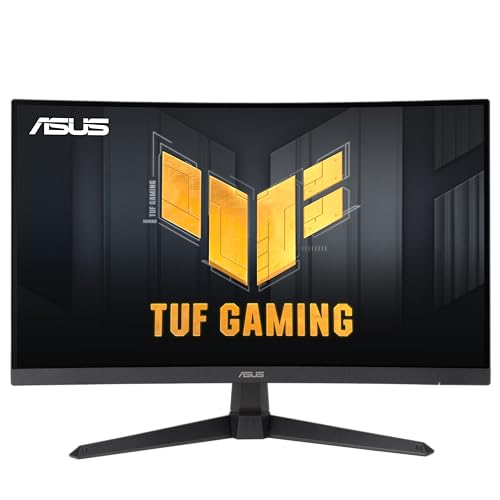
- Fast 180Hz refresh rate is well suited to competitive gaming.
- 1ms response time and ELMB Sync help minimize ghosting and blur.
- FreeSync support provides smoother, tear-free gameplay.
- 1500R curvature creates a more immersive gaming experience.
- Includes a DisplayPort cable and comes with a 3-year warranty.
Cons
- Full HD resolution can look less sharp on a 27-inch screen than a 1440p monitor.
- The curved design and gaming-focused feature set may be less appealing for users seeking a productivity or color-critical display.
| Color | BLACK |
|---|---|
| Size | 14.4" x 24" x 3.1" |
| Dimensions | 21 x 38 x 49 Inches |
| Weight | 13.9 Pounds |
| Product Group | Personal Computer |
| Binding | Personal Computers |
Best suited to shoppers comparing monitors products who specifically need enjoy smoother competitive gameplay with a fast 180Hz refresh rate that helps reduce visible motion blur., React quickly in fast-moving games with a 1ms….
Before buying, compare the exact model’s compatibility, dimensions, core specifications, warranty, recurring owner feedback, and current price against other monitors options. Retailer availability and pricing can change after publication.
How to Choose the Best 1080p Gaming Monitor
Selecting a strong 1080p gaming monitor means balancing refresh rate, response time, panel technology, size, and connectivity against your GPU’s output and desk space. Below are the practical criteria that separate a good daily driver from a competitive edge.
Resolution and Screen Size Balance
All models in this guide are Full HD 1920 x 1080, which keeps pixel density sharp on 24- to 27-inch screens and still usable on 31.5- to 32-inch curved panels. At 24 inches the image looks crisp for competitive FPS play; at 27 inches you gain immersion without obvious pixelation for most users sitting at normal desk distances.
Larger 32-inch 1080p curved screens wrap the field of view and feel more cinematic, but they lower pixel density, so text can appear softer for productivity. If you multitask or edit documents alongside gaming, stick to 24- or 27-inch sizes. Pair the size with your GPU: a mid-range card can push high frame rates at 1080p far more easily than at 1440p, making the resolution a smart performance choice.
Refresh Rate for Smooth Gameplay
Refresh rate is the single biggest upgrade most gamers notice when moving from a 60 Hz office panel. Manufacturer specifications show options ranging from 100 Hz and 120 Hz entry models up to 165 Hz, 180 Hz, and 240 Hz high-performance panels. 144 Hz already feels dramatically smoother for tracking enemies and camera pans; 240 Hz reduces motion blur further for competitive players who can sustain those frame rates.
Match the monitor’s max refresh to your GPU. A card that averages 200+ fps in your main titles will take advantage of a 240 Hz panel, while a more modest GPU may be better served by a 144–165 Hz model that costs less. Adaptive-sync technologies (FreeSync Premium or G-SYNC Compatible) let the refresh rate vary with the frame rate, eliminating tearing without fixed V-Sync lag. For most 1080p builds in July 2026, 144 Hz or higher remains the sweet spot.
Response Time and Motion Clarity
Response time (listed as GtG or MPRT) measures how quickly pixels change color. Specs on the eligible models range from 0.3 ms and 0.5 ms on Fast IPS and rapid VA panels to 1 ms on many IPS and VA units. Lower numbers reduce ghosting and smearing during fast camera movements or crosshair tracking.
Extreme Low Motion Blur Sync (ELMB SYNC) and similar technologies found on several ASUS TUF models allow low-motion-blur modes to work together with variable refresh rate. This combination is especially useful in competitive shooters. Real-world clarity also depends on proper overdrive settings; too aggressive overdrive can introduce inverse ghosting, so look for monitors with adjustable overdrive levels.
Panel Technology: IPS, VA, and Fast Variants
IPS panels dominate the list for good reason: they deliver wide viewing angles and accurate colors, making them suitable for both gaming and light creative work. Fast IPS variants further cut response times while retaining the color benefits. VA panels trade some viewing-angle performance for higher native contrast and deeper blacks, which can improve immersion in dark scenes and cinematic games.
Curved VA or IPS options (1500R or 1800R) enhance peripheral immersion on larger screens. For mixed use, an IPS or Fast IPS model is usually the safer choice. If you primarily play story-driven or atmospheric titles and sit centered, a rapid VA panel can look more dynamic. Check the manufacturer’s stated contrast ratio and color gamut (for example, 99 % sRGB or 120 % sRGB coverage) when color fidelity matters.
Adaptive Sync, HDR, and Extra Features
AMD FreeSync Premium and NVIDIA G-SYNC Compatible support appear on most of the higher-refresh models and ensure tear-free gameplay across a wide frame-rate range. HDR Ready or HDR10 support is listed on several units; while full high-brightness HDR is rare at this price tier, the feature still improves highlight detail when content is available.
Useful extras include DisplayWidget or similar software for mouse-based OSD control, Shadow Boost or Black Equalizer modes that lift dark areas without washing out the image, low-blue-light and flicker-free certifications for long sessions, and VESA mount compatibility. Built-in speakers or HDMI-CEC add convenience but are secondary to core image performance. Firmware-update support, noted on some MSI models, can improve long-term compatibility.
Ergonomics, Connectivity, and Build
A height-adjustable, tilt, or pivot stand reduces neck strain during long gaming or work sessions. Many budget models offer only tilt, so plan for a VESA arm if full adjustability is required. Ports should include at least one DisplayPort and one or two HDMI inputs for PC and console use; VGA or D-Sub remains useful for legacy hardware on a few models.
Slim bezels help multi-monitor setups, and a sturdy stand or easy VESA mounting improves cable management. When comparing, also note warranty length—several ASUS TUF models list a three-year warranty—and any included cables or software bonuses such as short-term Adobe access. For complete system pairing advice, review our PC builds resources.
Price-to-Performance and Real-World Use Cases
The current range spans roughly entry-level 100–144 Hz panels to 240 Hz Fast IPS and curved models. Prioritize the highest sustainable refresh rate and lowest response time your budget allows, then refine by panel type and size. Competitive FPS players should target 165 Hz or 240 Hz with strong adaptive sync; hybrid work-and-play users can accept 120–144 Hz IPS for better colors and eye-care features.
Always verify that your GPU and cables can drive the chosen resolution and refresh rate. A well-chosen 1080p monitor often delivers more playable frames than a higher-resolution panel on the same hardware, extending the life of mid-range builds.
Technical Comparison Table
The table below summarizes key manufacturer-stated specifications for eligible Full HD gaming monitors only. Prices and availability fluctuate; focus on the specs that match your needs.
| Model | Size & Panel | Refresh / Response | Key Features | Best For |
|---|---|---|---|---|
| ASUS TUF VG279QM5A | 27″ Fast IPS | 240 Hz / 0.3 ms | G-SYNC Compatible, FreeSync Premium, ELMB SYNC, 99 % sRGB | Competitive high-refresh |
| MSI PRO MP243L E14 | 23.8″ IPS | 144 Hz / 1 ms | FreeSync, HDR Ready, flicker-free, VESA, VGA + HDMI | Budget hybrid use |
| ASUS TUF VG32VQM5AZ | 31.5″ Curved | 240 Hz / 0.5 ms | 1500R, FreeSync Premium, ELMB SYNC, 120 % sRGB | Immersive large-screen |
| MSI MAG 274CF X24 | 27″ Rapid VA | 240 Hz / 0.5 ms | FreeSync Premium, HDR Ready, AI Vision, less blue light | Value 240 Hz gaming |
| Acer Nitro KG241Y | 23.8″ VA | 165 Hz / 1 ms | FreeSync Premium, ZeroFrame, DP + dual HDMI | Compact competitive |
| Acer KB272 | 27″ IPS | Up to 120 Hz / 1 ms | Adaptive-Sync, 99 % sRGB, tilt, HDMI + VGA | Entry-level everyday |
| ASUS TUF VG277Q1A | 27″ | 165 Hz (144 Hz support) / 1 ms | FreeSync Premium, Extreme Low Motion Blur, Shadow Boost | Proven mid-range |
| ASUS TUF VG259Q3A | 24.5″ Fast IPS | 180 Hz / 1 ms | FreeSync, ELMB, 99 % sRGB, speakers | Compact high-refresh |
| Samsung Essential S3 | 27″ Curved FHD | 100 Hz | 1800R, Game Mode, TÜV eye comfort, HDMI + D-sub | Casual curved immersion |
Why You Should Trust PCGearWiki
At PCGearWiki we focus on objective, specification-driven comparisons rather than marketing hype. Every recommendation starts with manufacturer-stated specs for resolution, refresh rate, response time, panel type, adaptive-sync support, and connectivity. We cross-check compatibility needs (GPU frame-rate headroom, cable standards, VESA patterns) and evaluate real-world value by balancing features against typical use cases for gamers and builders.
Customer rating aggregates and review counts are noted only when supplied; we highlight recurring themes without inventing sentiment. We never claim laboratory testing or personal benchmarks unless first-party data is present. Affiliate relationships help keep the site running, yet they do not alter our rankings—transparency and reader utility come first. For more on how we evaluate hardware, see our review methodology.
Final Thoughts
After reviewing the eligible Full HD models against the constraints of a best 1080p gaming monitor search, clear winners emerge for different priorities and budgets.
Best Overall: The ASUS TUF Gaming VG279QM5A stands out with its 27-inch Fast IPS panel, 240 Hz refresh rate, 0.3 ms response time, dual FreeSync Premium and G-SYNC compatibility, plus ELMB SYNC and DisplayWidget. It suits competitive players and enthusiasts who want top-tier motion clarity and modern features without leaving 1080p. Ideal for mid-to-high-end GPUs that can feed high frame rates.
Best Value: The MSI MAG 274CF X24 delivers 27-inch 240 Hz performance with a rapid 0.5 ms VA panel, FreeSync Premium, HDR Ready, and AI Vision at a more accessible price point. It is an excellent choice for gamers who want high refresh without paying premium-IPS money. Trade-off is VA viewing angles versus IPS color consistency.
Best Budget: The MSI PRO MP243L E14 offers a 23.8-inch IPS panel, 144 Hz, FreeSync, HDR Ready, flicker-free and low-blue-light certification, plus VESA and dual-input flexibility. It is perfect for first-time upgraders, students, or hybrid office-gaming desks. You sacrifice extreme refresh rates, but gain eye-care features and solid all-round usability.
Best Premium / Enthusiast Pick: The ASUS TUF Gaming VG32VQM5AZ brings a 31.5-inch 1500R curved Full HD panel with overclockable 240 Hz, 0.5 ms response, FreeSync Premium, ELMB SYNC, and wide color coverage. Choose it when immersion and desk presence matter most. Pixel density is lower than on 27-inch models, so it favors pure gaming over text-heavy productivity.
Pair any of these with a capable GPU and adequate cooling for the best results. If you are assembling a full system, our power supply buying guide and RAM recommendations can help complete the build.
Frequently Asked Questions
What makes a good 1080p gaming monitor in 2026?
A strong 1080p gaming monitor combines at least 144 Hz refresh, 1 ms or better response time, FreeSync or G-SYNC support, and an IPS or rapid VA panel in a 24- to 27-inch size. Higher 180–240 Hz models further reduce motion blur for competitive play. Eye-care features and VESA mounting add long-term comfort.
Is 240 Hz worth it for 1080p gaming?
Yes if your GPU can consistently deliver high frame rates in the games you play most. 240 Hz provides noticeably smoother tracking and lower perceived blur than 144 Hz, especially in fast esports titles. For GPUs that average under 160 fps, a 144–165 Hz panel offers better value.
Should I choose IPS or VA for a 1080p gaming display?
IPS (including Fast IPS) is generally preferred for wider viewing angles and more accurate colors, making it versatile for gaming plus work. VA panels deliver higher contrast and deeper blacks, which can look more immersive in dark games, but angles are narrower. Fast variants of both technologies now offer very low response times.
How important is adaptive sync on a 1080p monitor?
Adaptive sync (FreeSync Premium or G-SYNC Compatible) is highly recommended. It dynamically matches the monitor’s refresh rate to the GPU’s frame output, eliminating screen tearing and stutter without the input lag of traditional V-Sync. Nearly every competitive 1080p model now includes it.
Can I use a 1080p gaming monitor for productivity as well?
Absolutely. Many of the IPS models offer 99 % sRGB coverage, low-blue-light modes, and flicker-free backlights that reduce eye strain during long work sessions. Pair the monitor with a good stand or arm and sufficient RAM for multitasking; see our best RAM for gaming PC guide for memory recommendations that also benefit creative workloads.
Sources and Verification
Research basis: Product identity, dimensions, interfaces, supported features, and warranty terms are checked against available manufacturer documentation and current retailer listings. Price, stock, and aggregate customer ratings can change after publication.
Testing disclosure: Unless this article explicitly states that PCGearWiki performed hands-on testing and describes the test setup, recommendations are research-based editorial evaluations rather than PCGearWiki laboratory measurements. Customer feedback is used to identify recurring ownership patterns, not as proof of technical performance.
Last source review: August 5, 2026. See our Review Methodology, Editorial Policy, and Corrections Policy.



Write Your Review
No reviews yet. Be the first to share your experience!