

Last updated: October 2, 2026
1600 DPI objectively reduces initial input latency compared to 800 DPI on modern optical sensors. Higher sensor counts detect minimal physical displacement faster, transmitting first motion packets milliseconds earlier. Pair 1600 DPI with halved in-game sensitivity to maintain exact effective DPI (eDPI) while gaining smoother crosshair motion.
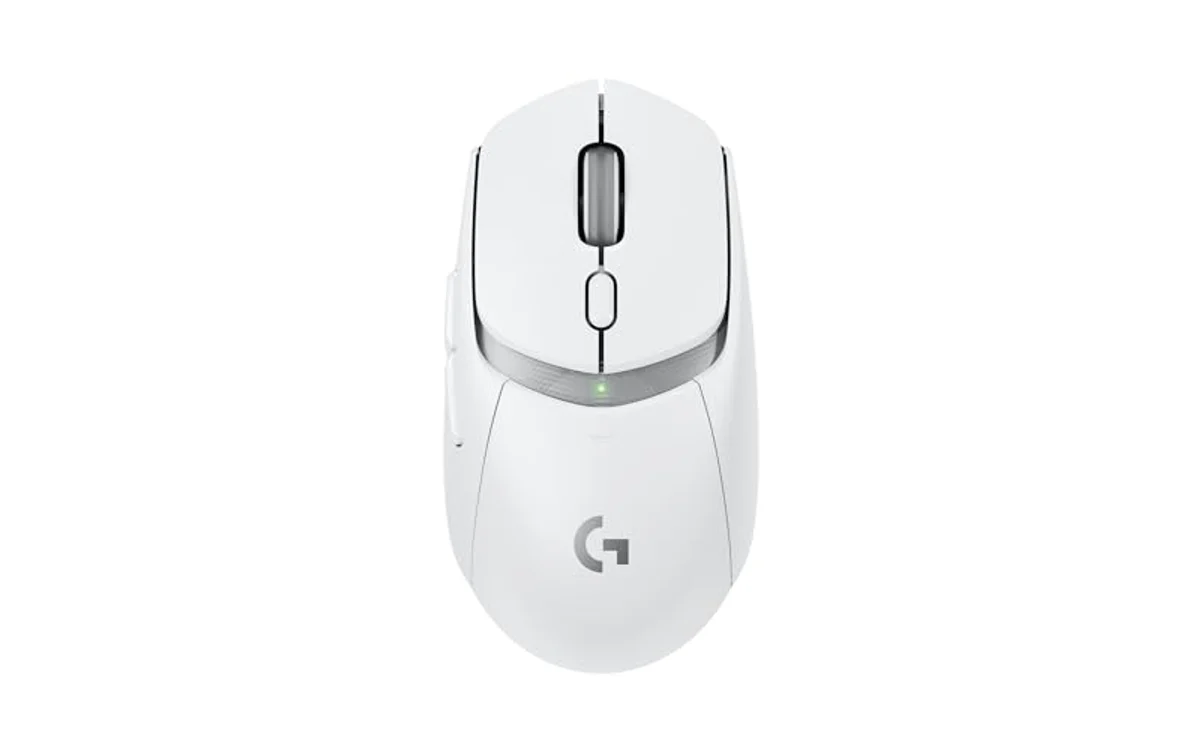
Input Latency Mechanics: Why 1600 DPI Reacts Faster
DPI measures sensor reporting events per linear inch of physical travel. At 800 DPI, mouse moves 1/800th of inch (0.03175 mm) before optical sensor sends first tracking count to USB controller. At 1600 DPI, sensor detects motion after 1/1600th of inch (0.015875 mm).
Lower physical travel requirement cuts latency before first USB packet fires. When moving crosshair from absolute rest, 1600 DPI registers initial movement in roughly half time required by 800 DPI. At standard 1000 Hz polling, motion delay from hardware displacement drops by 1 to 3 milliseconds during micro-adjustments. You can verify base polling stability through instructions on how to check mouse polling rate to ensure sensor updates transfer without port dropouts.
Pixel Skipping vs Crosshair Smoothness
Pixel skipping occurs when low DPI forces game engine to jump multiple display pixels per count. If player runs 400 or 800 DPI with high in-game sensitivity multiplier, crosshair cannot target fine hitboxes at long distances. Minimum crosshair step exceeds target pixel width.
1600 DPI coupled with lower in-game sensitivity eliminates granular step angle. Game engine receives twice as many movement reports for identical physical distance. Angular granularity increases, making long-range sniper micro-corrections linear instead of stepped. If software settings misbehave during configuration changes, inspect basic OS settings via guide on how to change mouse DPI in windows 11.
Sensor Smoothing and High-DPI Limits
DPI scaling carries technical ceiling. Optical sensors rely on complementary metal-oxide-semiconductor (CMOS) image arrays capturing thousands of surface frames per second. High DPI levels amplify noise from mouse pad surface weave patterns.
Sensor manufacturers apply algorithmic smoothing past specific DPI thresholds to suppress surface jitter. PixArt sensors historically activate 1-frame to 2-frame smoothing above 1600 or 3200 DPI depending on variant (such as PMW3360, PMW3389, PAW3395). Smoothing introduces processing delay, cancelling input latency gains. 1600 DPI operates below smoothing thresholds on modern sensors, providing latency advantages without smoothing penalties. Extreme settings like 8000+ DPI risk jitter amplification unless utilizing specialized hardware covered in breakdown of the best 8K polling rate gaming mouse options.
Comparison Table: 800 vs 1600 DPI
| Metric | 800 DPI | 1600 DPI |
|---|---|---|
| Physical distance to first report | ~0.0318 mm | ~0.0159 mm |
| Initial input latency | Higher baseline latency | Lower baseline latency (1-3 ms faster start) |
| Desktop usability | Standard, easy desktop targeting | Fast, requires Windows slider fine-tuning |
| In-game sensitivity slider margin | Forgiving across older game engines | Requires low fractional in-game multipliers |
| Sensor noise / surface jitter risk | Extremely low across all mouse pads | Negligible on modern optical sensors |
| Pixel step granularity | Larger angle steps at long range | Finer sub-pixel angular resolution |
| High polling rate synergy (4K/8K) | Inadequate count rate to saturate packets | Fully saturates high polling packet queues |
Decision Matrix: When to Select 800 vs 1600 DPI
Select settings based on engine architecture, desk hardware, and high-frequency communication stability:
Choose 1600 DPI If:
- Playing Tactical Shooters: Games like Counter-Strike 2, Valorant, or Rainbow Six Siege require pixel-perfect micro-adjustments against tiny headshot angles.
- Using High Polling Rates: 2000 Hz, 4000 Hz, and 8000 Hz modes require sufficient raw counts to saturate USB bandwidth. 800 DPI produces insufficient reports during slow movements, dropping effective polling frequency down toward 1000 Hz.
- High Resolution Displays: Native 1440p and 4K displays benefit from finer sub-pixel scaling without excessive engine multipliers.
Choose 800 DPI If:
- Engine Uses Low-Precision Slider: Older game engines (like Unreal Engine 3 or legacy Quake engines) lack decimal precision. Setting sensitivity below 1.0 creates rounding artifacts or remains too fast.
- Jitter and Tracking Irregularities: Low-grade sensor lenses or rough, heavily textured cordura pads introduce tracking noise at 1600 DPI. If crosshair shivers while hand sits stationary, test connection health using how to fix wireless gaming mouse stuttering diagnostics.
- Desktop Cursor Muscle Memory: Windows desktop cursor speed feels too fast at 1600 DPI, and third-party sensitivity matching software is undesirable.
Implementation and Verification Checklist
- Calculate Matching eDPI: Multiply current DPI by current in-game sensitivity. Example: 800 DPI × 1.2 sensitivity = 960 eDPI. Switching to 1600 DPI requires dividing sensitivity by two: 960 / 1600 = 0.6 sensitivity. Physical turn distance per swipe stays identical.
- Adjust Windows Pointer Speed: Maintain Windows pointer speed slider at 6/11 (center). Mark “Enhance Pointer Precision” checkbox as disabled to ensure pure 1:1 hardware translation without non-linear acceleration.
- Confirm In-Game Raw Input: Enable “Raw Input” in game settings where present (e.g., RawMouse / Raw Input Buffer). Setting bypasses OS-level pointer scaling algorithms.
- Test Micro-Adjustment Linearity: Enter practice range. Target single headshot pixel at long draw distance. Move mouse slowly at minimum human speed. If crosshair skips target hitbox entirely, lower game sensitivity and use 1600 DPI. If crosshair vibrates without hand motion, reduce to 800 DPI.
Frequently Asked Questions
Will switching from 800 to 1600 DPI ruin muscle memory?
No. Muscle memory links to physical distance per degree of camera rotation (cm/360), defined by eDPI. Halving game sensitivity when doubling hardware DPI preserves exact physical travel requirements. Crosshair motion simply feels smoother.
Why do most professional FPS players still use 400 or 800 DPI?
Legacy habits dominate esports scenes. Veterans began on older optical sensors (like Avago ADNS-3090, 3310) which exhibited high frame smoothing and tracking anomalies above 800 DPI. Modern optical sensors (e.g., Focus Pro, PixArt PAW3395/3950) do not suffer legacy flaws, but players maintain familiar configuration environments.
Does 1600 DPI drain wireless mouse battery faster than 800 DPI?
Battery drain difference is negligible. Optical LED/laser illumination cycle and microcontroller polling rate drive power consumption. Internal sensor DSP processing load at 1600 DPI draws insignificant additional current compared to 800 DPI.
Sources and Verification
Research basis: Product identity, dimensions, interfaces, supported features, and warranty terms are checked against available manufacturer documentation and current retailer listings. Price, stock, and aggregate customer ratings can change after publication.
Testing disclosure: Unless this article explicitly states that PCGearWiki performed hands-on testing and describes the test setup, recommendations are research-based editorial evaluations rather than PCGearWiki laboratory measurements. Customer feedback is used to identify recurring ownership patterns, not as proof of technical performance.
Last source review: October 2, 2026. See our Review Methodology, Editorial Policy, and Corrections Policy.


Write Your Review
No reviews yet. Be the first to share your experience!