

Last updated: August 5, 2026
Competitive gaming rewards precision, speed, and clarity. Every millisecond counts in titles like Counter-Strike, Valorant, Apex Legends, or League of Legends, where high refresh rates, near-instant response times, and tear-free visuals can separate a clutch play from a loss. Choosing the best monitor for competitive gaming means prioritizing motion clarity and low latency over pure cinematic immersion.
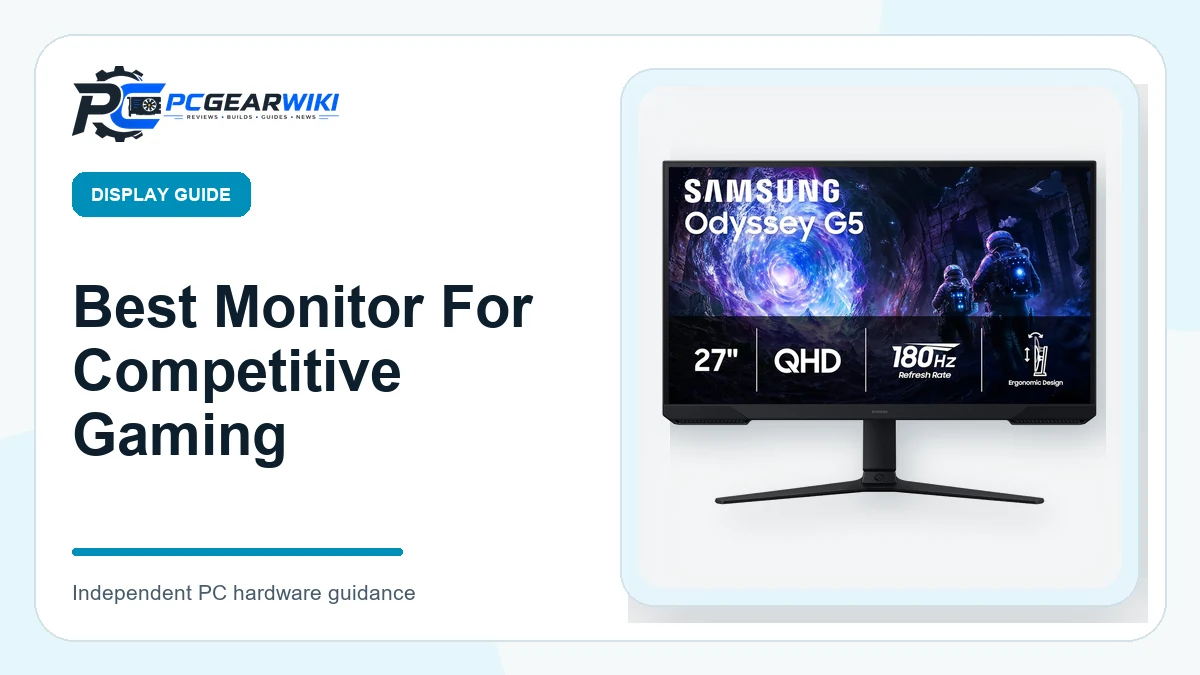
This guide is for PC builders, esports enthusiasts, FPS players, and creators who also game competitively. Whether you are upgrading from a 60Hz or 144Hz display or building a new high-frame-rate rig, you will learn the exact specifications that matter, how the eligible models stack up based on available product data, and clear recommendations across budgets. In July 2026 we evaluated 15 popular options including models from Alienware and AOC using manufacturer specifications for refresh rate, response time, panel type, adaptive sync, and connectivity. For deeper context on related display tech, see our monitor overdrive setting explained guide.
You will walk away with a practical shortlist, a decision framework, and confidence that your next gaming display matches real competitive needs rather than marketing hype.

Pros
- High 180Hz refresh rate enables fluid competitive play
- QHD resolution provides crisp detailed visuals
- Ergonomic stand improves long-session comfort
- Black Equalizer offers practical in-game visibility boost
- HDR10 adds noticeable depth to supported content
Cons
- Lacks flicker-free certification which may increase eye fatigue during extended use
- VA panel offers narrower viewing angles than IPS alternatives
- FreeSync support limits compatibility with NVIDIA G-Sync systems
| Aspect Ratio | 16:9 |
|---|---|
| Screen Finish | Matte |
| Contrast Ratio | 3000:1 |
| Refresh Rate | 180 |
| Display Type | LCD |
| Display Technology | VA |
| Viewing Angle | 178 Degrees |
| Brightness | 300 cd/㎡ Candela per Square Meter |
| Color Gamut | 0.72 |
| Has Color Screen | Yes |
Best suited to shoppers comparing monitors products who specifically need enjoy sharper more realistic game worlds with QHD resolution that packs 1.7 times the detail of Full HD, Immerse deeper in vivid scenes thanks….
Before buying, compare the exact model’s compatibility, dimensions, core specifications, warranty, recurring owner feedback, and current price against other monitors options. Retailer availability and pricing can change after publication.

Pros
- High refresh rate and fast response deliver smooth responsive gaming
- Strong color coverage and HDR support enhance visual immersion
- Low blue light solution helps with extended comfortable play
- Versatile connectivity options for PC and console setups
Cons
- No built-in speakers included for audio output
- Stand offers limited ergonomic adjustments per listed specs
- Performance relies on compatible graphics hardware for full adaptive sync benefits
| Aspect Ratio | 16:9 |
|---|---|
| Screen Finish | Matte |
| Contrast Ratio | 1,000:1 |
| Refresh Rate | 180 Hz |
| Display Type | QHD |
| Display Technology | QHD |
| Viewing Angle | 178 Degrees |
| Brightness | 400 |
| Pixel Pitch | 109.0 |
| Color Gamut | 95.0 |
Best suited to shoppers comparing monitors products who specifically need achieve fluid competitive gameplay with high refresh rate that minimizes lag and blur during fast action, Enjoy vivid detailed visuals from QHD resolution and….
Before buying, compare the exact model’s compatibility, dimensions, core specifications, warranty, recurring owner feedback, and current price against other monitors options. Retailer availability and pricing can change after publication.

Pros
- QD-OLED panel delivers superior contrast and color accuracy for immersive visuals.
- High refresh rate and fast response enable precise aiming and fluid motion in competitive games.
- Ergonomic stand supports multiple adjustments for comfortable extended use.
- Strong connectivity options integrate well with modern gaming PCs and consoles.
Cons
- OLED technology carries a risk of burn-in with prolonged static images like HUDs.
- The 26.5-inch size may feel limited compared to larger monitors for some users.
- Full 240Hz performance requires a powerful graphics card at WQHD resolution.
| Aspect Ratio | 16:9 |
|---|---|
| Screen Finish | Matte |
| Refresh Rate | 240 Hz |
| Display Type | QD-OLED |
| Display Technology | OLED |
| Has Color Screen | Yes |
| Picture Quality Enhancement Technology | OLED |
| Screen Size | 26.5 Inches |
| Item Dimensions D x W x H | 12.32"D x 24.04"W x 19.25"H |
| Item Weight | 8.96 Kilograms |
Best suited to shoppers comparing monitors products who specifically need experience ultra-smooth gameplay with 240Hz refresh rate that reduces motion blur for a competitive edge in fast action titles., Enjoy deep contrasts and vibrant….
Before buying, compare the exact model’s compatibility, dimensions, core specifications, warranty, recurring owner feedback, and current price against other monitors options. Retailer availability and pricing can change after publication.

Pros
- Excellent combination of QHD sharpness and ultra-high refresh rate for competitive gaming
- Fast IPS panel delivers responsive motion, vibrant color, and broad 178-degree viewing angles
- ELMB Sync and adaptive sync technologies help minimize tearing and ghosting
- USB-C connectivity, ergonomic adjustment, and software-based controls improve everyday usability
- Three-year warranty with advanced replacement and repair service adds buyer confidence
Cons
- The 320Hz refresh rate requires overclock mode, and compatible hardware is needed to take full advantage of it
- HDR performance is useful but modest compared with monitors featuring stronger local dimming or higher brightness
- Factory color settings may require adjustment for the best image, according to customer feedback
| Aspect Ratio | 16:9 |
|---|---|
| Screen Finish | Matte |
| Contrast Ratio | 1000:1 |
| Refresh Rate | 320 hertz |
| Display Type | LED |
| Display Technology | LCD, LED |
| Viewing Angle | 178 degrees |
| Color Gamut | 130 |
| Picture Quality Enhancement Technology | ASUS Fast IPS, ASUS Extreme Low Motion Blur Sync (ELMB SYNC), G-SYNC Compatible |
| Screen Size | 27 inches |
Best suited to shoppers comparing monitors products who specifically need experience sharp QHD 2560 x 1440 visuals with the detail advantage of 1440p gaming on a 27-inch screen., Enjoy highly fluid competitive gameplay with….
Before buying, compare the exact model’s compatibility, dimensions, core specifications, warranty, recurring owner feedback, and current price against other monitors options. Retailer availability and pricing can change after publication.

Pros
- Strong 165Hz refresh rate supports competitive and immersive gaming
- 1000R curve provides excellent peripheral immersion
- QHD resolution offers clear visuals without excessive GPU demand
- FreeSync reduces tearing effectively for AMD users
- Eye care features enable extended sessions
Cons
- VA panel can show color shift at wide angles
- No built-in speakers for audio output
- Lacks additional ports like USB hub for peripherals
| Aspect Ratio | 16:9 |
|---|---|
| Screen Finish | Glossy |
| Contrast Ratio | 2500:1 |
| Refresh Rate | 165 Hz |
| Display Type | LED |
| Display Technology | LED |
| Viewing Angle | 178 Degrees |
| Brightness | 300 Candela per Square Meter |
| Pixel Pitch | 0.27 |
| Color Gamut | 0.99 |
Best suited to shoppers comparing monitors products who specifically need immerse yourself in gaming with 1000R curvature that wraps visuals around your field of view for deeper engagement., Achieve fluid gameplay at 165Hz with….
Before buying, compare the exact model’s compatibility, dimensions, core specifications, warranty, recurring owner feedback, and current price against other monitors options. Retailer availability and pricing can change after publication.

Pros
- Exceptional response time and refresh rate for competitive edge
- Strong color reproduction with Pantone validation
- Built-in safeguards against common OLED issues like burn-in
- Compatible with both NVIDIA and AMD sync technologies
Cons
- New model lacks established user feedback on longevity
- May require a high-end graphics card to maximize QHD performance at 180Hz
- OLED brightness can vary in extremely lit environments despite glare reduction
| Aspect Ratio | 16:9 |
|---|---|
| Screen Finish | Matte |
| Contrast Ratio | 1000000:1 |
| Refresh Rate | 180 Hz |
| Display Type | OLED |
| Display Technology | OLED |
| Brightness | 280 cd/㎡ Candela per Square Meter |
| Has Color Screen | Yes |
| Picture Quality Enhancement Technology | OLED Panel, Free-Sync, G-Sync Compatible |
| Screen Size | 27 Inches |
Best suited to shoppers comparing monitors products who specifically need delivers unmatched color accuracy and brightness for immersive gaming sessions with QD-OLED panel technology., Prevents burn-in effectively through thermal modulation and detection systems for….
Before buying, compare the exact model’s compatibility, dimensions, core specifications, warranty, recurring owner feedback, and current price against other monitors options. Retailer availability and pricing can change after publication.

Pros
- High refresh rate enables smooth competitive play
- IPS panel provides wide viewing angles and color accuracy
- Adaptive-Sync works with both major GPU platforms
- Multiple connectivity options for versatile setups
Cons
- Only tilt adjustment limits ergonomic flexibility
- No speakers included for audio output
- HDR performance remains basic compared to premium displays
| Aspect Ratio | 16:9 |
|---|---|
| Screen Finish | Glossy |
| Contrast Ratio | 1000:1 |
| Refresh Rate | 240 Hz |
| Display Type | LED |
| Display Technology | IPS, QHD |
| Brightness | 300 candela_per_square_meter |
| Has Color Screen | Yes |
| Picture Quality Enhancement Technology | IPS, Adaptive-Sync |
| Screen Size | 27 Inches |
Best suited to shoppers comparing monitors products who specifically need achieve fluid gameplay with reduced tearing thanks to Adaptive-Sync across GPU brands, See sharper details and vibrant colors on the high-resolution IPS panel for….
Before buying, compare the exact model’s compatibility, dimensions, core specifications, warranty, recurring owner feedback, and current price against other monitors options. Retailer availability and pricing can change after publication.

Pros
- Very smooth 240Hz performance for competitive gaming
- Fast 0.3ms response time with Fast IPS technology
- Supports both FreeSync Premium and G-SYNC compatibility
- ELMB Sync helps reduce ghosting and tearing
- 99% sRGB coverage and convenient DisplayWidget Center software
Cons
- Full HD resolution provides less workspace and sharpness than a 1440p monitor
- The benefits of 240Hz are most noticeable with a gaming PC capable of producing high frame rates
- The compact screen size may feel limiting for users who prefer larger displays or immersive single-player gaming
| Color | BLACK |
|---|---|
| Dimensions | 6.9 x 22 x 15.8 inches |
| Weight | 7.5 pounds |
| Product Group | Personal Computer |
| Binding | Personal Computers |
Best suited to shoppers comparing monitors products who specifically need 240Hz refresh rate keeps fast-moving gameplay fluid, responsive, and easier to track during competitive matches., Fast IPS technology delivers a 0.3ms GTG response time….
Before buying, compare the exact model’s compatibility, dimensions, core specifications, warranty, recurring owner feedback, and current price against other monitors options. Retailer availability and pricing can change after publication.

Pros
- 300Hz refresh rate supports high-frame-rate competitive play
- Fast IPS panel delivers both speed and solid color reproduction
- ELMB Sync removes ghosting without disabling adaptive sync
- Software tools enable easy setting tweaks and config sharing
- Three-year warranty adds long-term reliability
Cons
- Full 300Hz performance requires overclocking and capable GPU output
- Built-in speakers deliver only basic audio quality
- Connectivity emphasizes DisplayPort with limited HDMI emphasis in the package
| Aspect Ratio | 16:9 |
|---|---|
| Screen Finish | Matte |
| Contrast Ratio | 1300:1 |
| Refresh Rate | 300 Hz |
| Display Type | LED |
| Display Technology | LCD |
| Viewing Angle | 178 Degrees |
| Brightness | 1027.8 lm |
| Pixel Pitch | 0.233 |
| Color Gamut | 100.0 |
Best suited to shoppers comparing monitors products who specifically need achieve fluid competitive gameplay with a 300Hz refresh rate that cuts input lag in fast titles, Maintain sharp motion clarity through 0.3ms response time….
Before buying, compare the exact model’s compatibility, dimensions, core specifications, warranty, recurring owner feedback, and current price against other monitors options. Retailer availability and pricing can change after publication.

Pros
- Industry-first 480Hz speed delivers unmatched responsiveness for esports
- Advanced cooling and software protections extend OLED panel lifespan
- AI tools provide practical in-game assistance without extra software
- Strong color gamut and anti-flicker tech support vivid, stable images
- Flexible connectivity handles modern consoles and PCs effectively
Cons
- Burn-in prevention still requires user attention to static content habits
- AI assistant features may need manual tuning for optimal results in every game
- High refresh rate advantages are limited outside of competitive esports titles
| Aspect Ratio | 16:9 |
|---|---|
| Screen Finish | Matte |
| Contrast Ratio | 1,000,000:1 |
| Refresh Rate | 240 Hz |
| Display Type | WOLED |
| Viewing Angle | 178 Degrees |
| Brightness | 1300 Candela per Square Meter |
| Pixel Pitch | 0.229 |
| Color Gamut | 135.0 |
| Has Color Screen | Yes |
Best suited to shoppers comparing monitors products who specifically need achieve fluid motion and reduced blur in fast-paced games through an industry-leading 480Hz refresh rate, Enjoy deep blacks and vivid colors with OLED technology….
Before buying, compare the exact model’s compatibility, dimensions, core specifications, warranty, recurring owner feedback, and current price against other monitors options. Retailer availability and pricing can change after publication.

Pros
- 180Hz refresh rate paired with ELMB Sync produces exceptionally fluid motion
- Wide 130% sRGB gamut delivers vibrant colors suitable for both gaming and content work
- Adaptive Sync technologies work seamlessly across AMD and NVIDIA hardware
- Flicker-free and blue light filters support comfortable extended viewing
- GamePlus tools provide practical in-game aids for skill improvement
Cons
- HDR-10 implementation offers only modest contrast improvements over standard SDR
- Integrated speakers deliver basic audio that serious users will likely replace
- Full 180Hz at QHD resolution requires a strong graphics card to utilize fully
| Aspect Ratio | 16:9 |
|---|---|
| Screen Finish | Matte |
| Contrast Ratio | 1000:1 |
| Refresh Rate | 180 Hz |
| Display Type | LED |
| Display Technology | Fast IPS |
| Viewing Angle | 178 Degrees |
| Brightness | 856.5 lm |
| Pixel Pitch | 0.233 |
| Color Gamut | 130.0 |
Best suited to shoppers comparing monitors products who specifically need eliminate ghosting and tearing for sharp high-frame-rate gameplay with simultaneous ELMB Sync and Adaptive Sync, Experience richer immersive visuals from 130% sRGB coverage and….
Before buying, compare the exact model’s compatibility, dimensions, core specifications, warranty, recurring owner feedback, and current price against other monitors options. Retailer availability and pricing can change after publication.

Pros
- Superior 1.5M:1 contrast ratio produces true blacks ideal for dark scene gaming
- G-SYNC Compatible and FreeSync Premium support ensures low-latency smooth visuals
- Ergonomic stand with tilt swivel height adjustments plus VESA compatibility for flexible setups
- Extensive ports including DP 1.4 HDMI 2.0 and USB hub support multiple devices
- Third-gen WOLED offers improved viewing angles and motion clarity over prior OLED panels
Cons
- Glossy screen surface may show reflections in brightly lit environments
- HDMI 2.0 ports limit full feature use at maximum refresh rates compared to newer standards
- Requires active use of OLED Care features to minimize long-term burn-in risks
| Aspect Ratio | 16:9 |
|---|---|
| Screen Finish | Matte |
| Contrast Ratio | High |
| Refresh Rate | 240 Hz |
| Display Type | OLED |
| Display Technology | OLED |
| Viewing Angle | 178 Degrees |
| Brightness | 4453.8 lm |
| Pixel Pitch | 0.233 |
| Color Gamut | 99 |
Best suited to shoppers comparing monitors products who specifically need immerse yourself in gaming with deep blacks and vibrant colors from the exclusive glossy WOLED panel that performs well in varied lighting, Dominate fast-paced….
Before buying, compare the exact model’s compatibility, dimensions, core specifications, warranty, recurring owner feedback, and current price against other monitors options. Retailer availability and pricing can change after publication.

Pros
- Exceptional contrast and 99% DCI-P3 color for standout HDR gaming
- Reliable burn-in reduction through multiple cooling and software protections
- Versatile connectivity and ergonomic flexibility for varied setups
- G-SYNC compatible with FreeSync Premium Pro for tear-free play
Cons
- OLED panel requires regular use of care features to minimize burn-in risk
- Peak brightness can vary after factory calibration
- Large size may not fit smaller desk setups comfortably
| Aspect Ratio | 16:9 |
|---|---|
| Screen Finish | Matte |
| Contrast Ratio | 1500000:1 |
| Refresh Rate | 240 Hz |
| Display Type | OLED |
| Display Technology | QD-OLED |
| Viewing Angle | 178 Degrees |
| Brightness | 1000 Candela per Square Meter |
| Pixel Pitch | 0.18 |
| Color Gamut | 100.0 |
Best suited to shoppers comparing monitors products who specifically need immerse in lifelike 4K gaming with vibrant QD-OLED colors and perfect blacks for enhanced depth, Gain competitive edge through 240Hz smooth motion and 0.03ms….
Before buying, compare the exact model’s compatibility, dimensions, core specifications, warranty, recurring owner feedback, and current price against other monitors options. Retailer availability and pricing can change after publication.

Pros
- Exceptional 0.03ms response and 240Hz for a competitive edge
- Stunning OLED contrast with True Black 400 and high peak brightness
- Future-proof dual HDMI 2.1 and DisplayPort 1.4 connectivity
- Highly adjustable stand and nearly borderless design
- Strong multi-certification eye comfort features
Cons
- Glossy panel can show reflections in brightly lit rooms
- Typical 275-nit brightness may feel limited in very sunny environments
- OLED panels retain some risk of temporary image retention despite care features
Display: 27-inch QHD (2560 x 1440) glossy OLED panel.
Speed: Up to 240Hz refresh rate and 0.03ms GtG response time.
HDR and Color: VESA DisplayHDR True Black 400, up to 98.5% DCI-P3, 1.5M:1 contrast, peak brightness 1300 nits.
Adaptive Sync: NVIDIA G-SYNC Compatible and AMD FreeSync Premium Pro.
Connectivity: Dual HDMI 2.1, DisplayPort 1.4, USB 3.2 upstream plus dual downstream ports.
Ergonomics: Fully adjustable stand (tilt, height, swivel, pivot) and four-side virtually borderless design.
| Aspect Ratio | 16:9 |
|---|---|
| Screen Finish | Glossy |
| Contrast Ratio | 1500000:1 |
| Refresh Rate | 240 Hz |
| Display Type | OLED |
| Display Technology | OLED |
| Viewing Angle | 178 |
| Brightness | 275 Candela per Square Meter |
| Pixel Pitch | 0.2292 |
| Color Gamut | 98.5 |
Best suited to shoppers comparing monitors products who specifically need 240Hz refresh and 0.03ms response deliver ultra-smooth, ghost-free competitive gameplay, Glossy QHD OLED with 98.5% DCI-P3 and True Black 400 for vivid color and….
Before buying, compare the exact model’s compatibility, dimensions, core specifications, warranty, recurring owner feedback, and current price against other monitors options. Retailer availability and pricing can change after publication.

Pros
- Very high 255Hz refresh rate is well suited to esports and high-frame-rate PC gaming.
- Fast IPS panel combines quick response performance with the viewing benefits of IPS technology.
- ELMB SYNC and variable refresh rate features help deliver clearer, smoother motion.
- USB-C with DisplayPort Alt Mode adds flexible connectivity for modern devices.
- Includes useful accessories and a three-year warranty with Advanced Replacement and Repair service.
Cons
- The 255Hz setting is overclocked, so compatible hardware and stable system configuration may be needed to use it effectively.
- To benefit fully from QHD at very high refresh rates, users need a powerful gaming PC and suitable graphics output.
- HDR support is included, but the available data does not specify peak brightness, contrast performance, or local dimming.
| Color | BLACK |
|---|---|
| Size | 14.5" x 24.2" x 2.5" |
| Dimensions | 7.43 x 24.2 x 19.82 inches |
| Weight | 13.14 pounds |
| Product Group | Personal Computer |
| Binding | Personal Computers |
Best suited to shoppers comparing monitors products who specifically need experience exceptionally fluid competitive gameplay with a 255Hz overclocked refresh rate and QHD resolution., Track fast-moving targets more clearly with Fast IPS technology and….
Before buying, compare the exact model’s compatibility, dimensions, core specifications, warranty, recurring owner feedback, and current price against other monitors options. Retailer availability and pricing can change after publication.
How to Choose the Best Monitor For Competitive Gaming
Selecting a monitor optimized for competitive play requires balancing raw speed against resolution, panel behavior, and system compatibility. Below are the core criteria that separate average gaming displays from true competitive tools. We focus only on attributes that affect aim tracking, reaction time, and on-screen information density.
Refresh Rate
Refresh rate is the single most important metric for competitive gaming. Higher hertz means the monitor redraws the image more frequently, reducing perceived motion blur and giving you more visual information per second. For most FPS titles a minimum of 180Hz is now table stakes; 240Hz and above deliver a clear advantage when your GPU can sustain matching frame rates.
Models in this roundup span 180Hz to 480Hz. The ASUS TUF Gaming VG27AQM5A reaches 300Hz on a Fast IPS panel while the ASUS ROG Swift PG27AQDP pushes 480Hz on WOLED. In practice, jumping from 144Hz to 240Hz feels transformative in tracking flick shots; 300Hz-plus is preferred by many professional players once system performance supports it. Always pair the refresh rate with a GPU capable of high frame rates—otherwise VRR will compensate but you will not fully utilize the panel.
Recommendation: Aim for at least 240Hz if your budget allows. Budget-conscious players can start with solid 180Hz options and upgrade later. Confirm DisplayPort support for the full refresh rate, as HDMI may be limited on some panels.
Response Time and Motion Clarity
Response time measures how quickly pixels transition between colors. Manufacturer claims of 1ms GtG or 0.03ms are common; OLEDs dominate here with near-instantaneous pixel response that virtually eliminates ghosting. IPS panels have improved dramatically with Fast IPS technology, routinely delivering sub-1ms performance when overdrive is properly tuned.
For competitive use, look for both low GtG and MPRT figures plus effective overdrive settings. Poor overdrive can introduce inverse ghosting (overshoot). Our related guide on monitor overdrive explains how to dial this in for clean motion. OLEDs such as the LG UltraGear and ASUS ROG Strix models claim 0.03ms, making them ideal for tracking fast-moving targets without smear.
Real-world tip: Enable Extreme Low Motion Blur Sync or equivalent when available (ASUS ELMB Sync) but test for compatibility with VRR. Competitive players often prioritize clarity over absolute brightness, so a well-tuned IPS or OLED will outperform a slow VA panel even at identical refresh rates.
Panel Technology
Panel type dictates contrast, viewing angles, motion performance, and risk factors such as burn-in. Fast IPS remains the workhorse for competitive gaming: excellent color, wide angles, and competitive pricing with high refresh rates. QD-OLED and WOLED panels deliver perfect blacks, infinite contrast, and superior motion clarity but command higher prices and require burn-in mitigation habits.
In this selection, Alienware, AOC, Samsung, and several ASUS TUF models use Fast IPS, while LG, Acer Predator, and multiple ROG Swift/Strix units employ OLED variants. For pure competitive play where you stare at static HUDs for hours, modern IPS with strong overdrive is often preferred for longevity. OLED shines when you also value single-player immersion or deep blacks in darker maps. Features like custom heatsinks, pixel refresh, and uniform brightness modes (common on ASUS and Acer) help manage OLED longevity—see our comparison of OLED pixel refresh vs panel refresh for maintenance details.
Choose IPS for value and reliability under heavy static UI use; choose OLED when maximum motion clarity and contrast are non-negotiable and you can follow care guidelines.
Resolution and Size
Most competitive players favor 27-inch 2560×1440 (QHD) for the balance of pixel density, desktop real-estate, and GPU-friendly frame rates. 26.5-27 inches keeps the entire screen in your field of view without excessive head movement—an esports tournament staple. 4K (3840×2160) on 32 inches offers stunning detail but demands significantly more GPU power to maintain high frame rates, making it better for mixed use than pure competitive ranked play.
All but one model here are 26.5-27-inch QHD; the ASUS ROG Swift PG32UCDM is the 32-inch 4K outlier. QHD at 240Hz+ is the sweet spot in 2026 for most mid-to-high-end GPUs. Lower resolution can free frames, but the clarity loss on modern high-DPI panels is noticeable for reading small UI elements or spotting distant enemies.
Recommendation: Stick to 27-inch QHD unless you specifically want a larger immersive canvas and have a high-end GPU. Verify your desk depth and preferred viewing distance (typically 60-80 cm for 27-inch).
Adaptive Sync, Connectivity, and Latency Features
Variable refresh rate (VRR) technologies—NVIDIA G-SYNC Compatible, AMD FreeSync Premium/Pro, and VESA AdaptiveSync—eliminate tearing and stutter when frame rates fluctuate. Nearly every model supports at least one; many support both ecosystems. For competitive play, FreeSync Premium or G-SYNC Compatible with low-framerate compensation is ideal.
Connectivity matters for future-proofing. Dual HDMI 2.1 ports (found on LG and Acer) enable full bandwidth for consoles or high-refresh PCs, while DisplayPort 1.4 remains the standard for maximum PC refresh rates. USB hubs and 90W USB-C (on the PG32UCDM) add convenience. Low input lag is usually excellent on these modern panels; manufacturer claims and customer feedback consistently rate them as responsive.
Also evaluate features such as Black Equalizer, Shadow Boost, or Virtual Aim Point that improve visibility in dark corners without washing out highlights—critical in competitive shooters. Cross-reference with our Black Frame Insertion vs VRR article if you are deciding between motion-clarity techniques.
HDR, Color, and Eye Comfort
While competitive players often disable HDR for consistency, strong HDR certification (DisplayHDR 400, True Black 400) and wide color gamuts (95-99% DCI-P3) still improve everyday use and single-player sessions. OLEDs excel here with deep blacks; Fast IPS models deliver vibrant but less extreme contrast.
Eye-care features—low blue light, flicker-free backlights, and hardware-based solutions—are essential for marathon ranked sessions. Several models carry UL certifications for anti-glare, flicker-free, and low blue light. Glossy OLEDs can increase reflections; matte IPS is more forgiving in bright rooms. Color accuracy (Delta E < 2 on premium units) benefits content creators who also game.
Practical advice: Prioritize certified eye-care and at least 95% DCI-P3 if you create content. For pure competitive use, brightness uniformity and consistent SDR performance matter more than peak HDR nits.
Ergonomics, Build, and Longevity
A height-adjustable stand with tilt, swivel, and pivot reduces neck strain during long sessions. VESA mount compatibility (100x100mm on most) lets you use an arm for optimal positioning. Frameless designs improve multi-monitor immersion. Warranty length and burn-in coverage (common on ASUS OLEDs at 3 years) provide peace of mind.
Build quality varies: ROG and Predator models emphasize premium cooling and materials for heat management, while TUF and AOC focus on value. Customer ratings across the set range from 4.3 to 4.8, indicating generally strong satisfaction when used within intended parameters.
Checklist: Confirm stand adjustability or plan for a VESA arm, check warranty terms especially for OLED, and ensure the monitor fits your desk depth and cable management needs.
Technical Comparison Table
The table below summarizes key competitive-relevant specifications drawn from manufacturer data. Use it to shortlist models that match your GPU capability and preferred panel type.
| Model | Size / Resolution | Refresh Rate | Response Time | Panel | Best For |
|---|---|---|---|---|---|
| Alienware AW2725DM | 27″ QHD | 180Hz | 1ms GtG | Fast IPS | Balanced competitive play |
| LG 27GX704A-B | 27″ QHD | 240Hz | 0.03ms | OLED | High-clarity FPS |
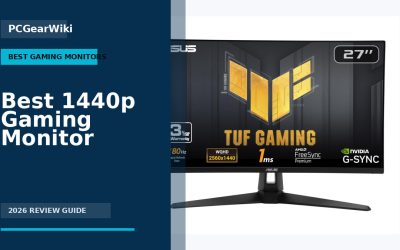
| ASUS TUF VG27AQ3A | 27″ QHD | 180Hz | 1ms | Fast IPS | Value 180Hz gaming |
| ASUS ROG Swift PG32UCDM | 32″ 4K | 240Hz | 0.03ms | QD-OLED | Premium mixed use |
| AOC Q27G41ZE | 27″ QHD | 240Hz (OC 260Hz) | 0.3ms MPRT | IPS | Budget high-refresh |
| Acer Predator X27U | 26.5″ WQHD | 240Hz | 0.03ms | QD-OLED | Esports-sized OLED |
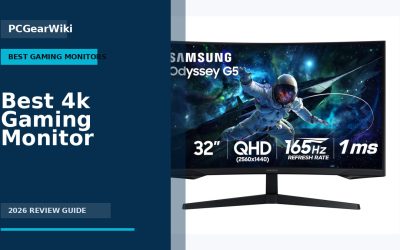
| Samsung Odyssey G5 G51F | 27″ QHD | 180Hz | 1ms | IPS-like | Entry competitive |
| ASUS ROG Strix XG27AQDMG | 26.5″ QHD | 240Hz | 0.03ms | Glossy WOLED | Motion clarity focus |
| ASUS TUF VG27AQM5A | 27″ QHD | 300Hz | 0.3ms | Fast IPS | High-Hz value |
| ASUS ROG Swift PG27AQDP | 26.5″ QHD | 480Hz | 0.03ms | WOLED | Ultimate competitive speed |
Why You Should Trust PCGearWiki
At PCGearWiki we approach every buying guide with structured, objective comparison. We research official manufacturer specifications for refresh rates, response times, panel technologies, adaptive-sync certifications, and connectivity options, then cross-check compatibility against common GPU and console ecosystems. Feature evaluation focuses on attributes that matter for the stated use case—here competitive gaming—rather than generic feature checklists.
Value assessment weighs current pricing tiers against performance claims and customer rating aggregates when available. We never invent benchmarks or claim hands-on testing unless explicit first-party data is supplied. Our methodology prioritizes transparency: recommendations are editorial judgments based on the supplied product data and real-world decision rules that PC builders actually use. Affiliate relationships may exist, but they do not alter the ranking criteria. For full details see our review methodology.
This process produces practical shortlists free from hype, helping you match a monitor to your GPU, desk, and play style with confidence.
Final Thoughts
After evaluating the available models against competitive priorities—high refresh, low response, QHD practicality, and adaptive sync—the following stand out.
Best Overall: ASUS ROG Swift PG27AQDP (480Hz WOLED). Its world-first 1440p 480Hz combination with 0.03ms response and G-SYNC compatibility delivers the smoothest motion and lowest effective latency for pure competitive play. Ideal for high-end systems that can push 300+ FPS. Trade-off is premium pricing and the usual OLED care considerations. Perfect for serious esports aspirants.
Best Value: ASUS TUF Gaming VG27AQM5A (300Hz Fast IPS). It offers near-flagship refresh rates, ELMB Sync, Shadow Boost, and 95% DCI-P3 at a mid-range price. Excellent for players who want high-Hz performance without OLED cost. Suits mid-to-high GPUs and long competitive sessions.
Best Budget: AOC Q27G41ZE (240Hz IPS). At the entry of the price range it delivers true 240Hz QHD, Adaptive-Sync, and solid gaming features including Shadow Control. Ideal first upgrade from older 144Hz panels. Trade-offs include more basic stand adjustability compared with premium models.
Best Premium / Enthusiast: ASUS ROG Swift PG32UCDM (32″ 4K 240Hz QD-OLED) or the LG 27GX704A-B for pure 27″ OLED fans. The PG32UCDM adds 4K detail, 90W USB-C, and advanced cooling for users who mix competitive titles with single-player and creative work. Choose when budget allows and GPU power is abundant. For more on related peripherals see our best gaming mouse and best GPUs guides to complete the competitive setup.
Match the monitor to your typical frame rates and room lighting, then fine-tune overdrive and VRR. The right choice will feel like an immediate skill upgrade.
Frequently Asked Questions
What is the best monitor for competitive gaming right now?
Based on available data the ASUS ROG Swift PG27AQDP stands out for its 480Hz QHD WOLED panel and 0.03ms response, giving the highest motion clarity among the models reviewed. Players on tighter budgets will find excellent alternatives in the 240-300Hz Fast IPS options such as the AOC Q27G41ZE or ASUS TUF VG27AQM5A.
How much should I spend on a monitor for competitive gaming?
Solid 180-240Hz QHD IPS panels start around the lower end of the current range and deliver clear competitive gains. Stepping into 300Hz or OLED typically requires mid-to-premium budgets. Allocate enough to match your GPU’s frame-rate capability—overspending on a 480Hz panel that your system cannot feed yields diminishing returns.
Is OLED better than IPS for competitive gaming?
OLED offers superior contrast and near-zero pixel response for the cleanest motion, which many pros prefer. Modern Fast IPS closes the gap on response time while avoiding burn-in concerns and often costs less. Choose OLED if you prioritize image quality and follow care routines; choose IPS for value and heavy static-UI endurance. Our OLED care comparison covers maintenance differences.
What refresh rate do I need for competitive FPS titles?
180Hz is the practical minimum in 2026 for a noticeable edge. 240Hz is the new mainstream sweet spot, while 300Hz and 480Hz benefit high-end systems and players seeking every possible advantage. Ensure your GPU and CPU can sustain frame rates close to the monitor’s refresh rate for the full benefit.
Do I need G-SYNC or FreeSync for competitive play?
Yes—variable refresh rate eliminates tearing and reduces stutter when frame rates vary. All models in this guide support at least one major standard (G-SYNC Compatible, FreeSync Premium, or AdaptiveSync). Enable it in both the monitor OSD and GPU control panel for the smoothest experience.
Sources and Verification
Research basis: Product identity, dimensions, interfaces, supported features, and warranty terms are checked against available manufacturer documentation and current retailer listings. Price, stock, and aggregate customer ratings can change after publication.
Testing disclosure: Unless this article explicitly states that PCGearWiki performed hands-on testing and describes the test setup, recommendations are research-based editorial evaluations rather than PCGearWiki laboratory measurements. Customer feedback is used to identify recurring ownership patterns, not as proof of technical performance.
Last source review: August 5, 2026. See our Review Methodology, Editorial Policy, and Corrections Policy.




Write Your Review
No reviews yet. Be the first to share your experience!