

Last updated: September 22, 2026
How much VRAM for 4K gaming should you target in July 2026? For most PC gamers, 16GB is the practical sweet spot for a new 4K graphics card, while 12GB can still work with optimized settings, upscaling, and selective texture adjustments. If you want high-resolution texture packs, ray tracing, heavy mods, or longer upgrade headroom, 16GB or more is the safer choice.
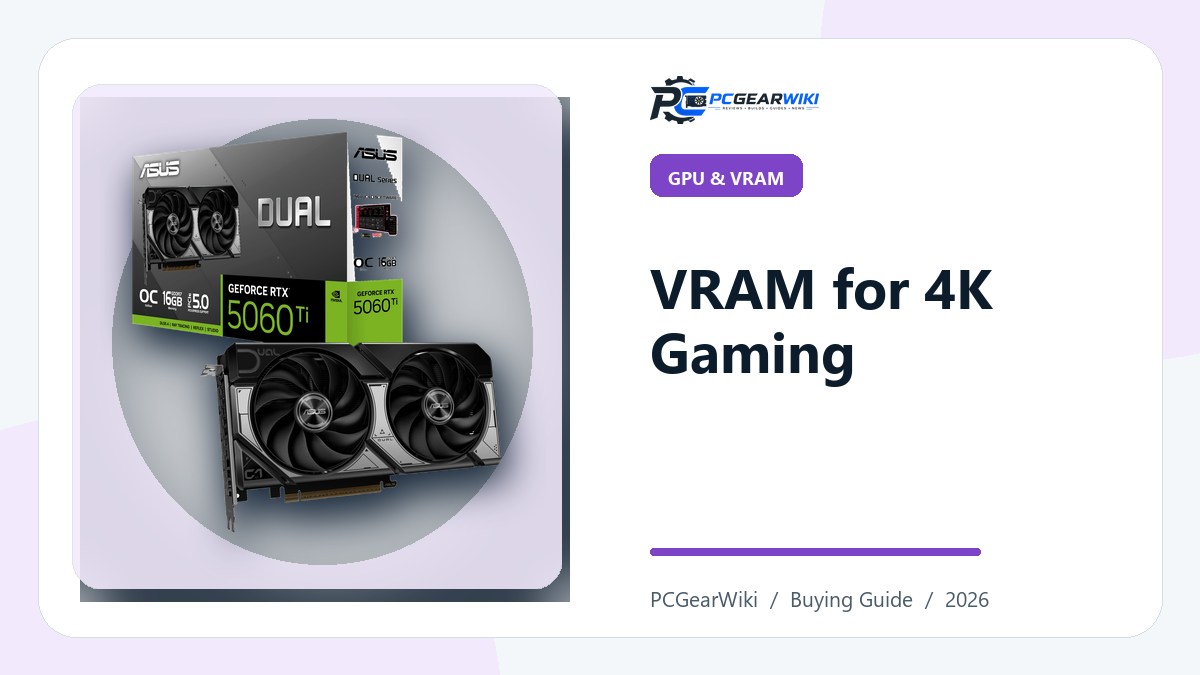
Video RAM, or VRAM, stores the frame buffer, textures, shaders, geometry data, ray tracing acceleration data, and other assets your GPU needs while rendering a game. At 4K, the pixel count is much higher than 1080p or 1440p, and modern games can exceed the comfort zone of older 8GB cards when ultra textures, ray tracing, and high-quality assets are enabled. If you are also comparing broader GPU tiers, our graphics card buying guide is a useful next step.
This guide explains the real role of VRAM in 4K gaming, how to read GPU specifications, and which supplied graphics cards are the most relevant examples for different 4K use cases. We base the analysis on manufacturer specifications, available product data, compatibility considerations, and editorial judgment; we do not claim hands-on benchmark testing where no first-party test data was provided.

Pros
- Compact form factor fits smaller cases while still providing flagship-level cooling
- Quiet fan operation with automatic stop-start technology
- Robust build quality including vented backplate and Auto-Extreme manufacturing
- High AI performance rating supports future AI-enhanced applications
Cons
- Requires a compatible high-wattage power supply for optimal use
- Dual BIOS modes may require manual switching for preferred fan curves
- Limited real-world user feedback available at launch
| Graphics Coprocessor | NVIDIA GeForce RTX 5060 Ti |
|---|---|
| Graphics Card Ram | 16 GB |
| GPU Clock Speed | 2632 MHz |
| Video Output Interface | Displayport 2.1b x3, HDMI 2.1b |
| Graphics Ram Type | GDDR7 |
| Compatible Devices | Desktop |
| Graphics Card Interface | PCI-Express x16 |
| Memory Clock Speed | 2602 MHz |
| Number of Fans | 2 |
| GPU Series | NVIDIA RTX 50 Series |
Best suited to shoppers comparing graphics cards products who specifically need enables high-performance gaming in compact builds thanks to its space-saving 2.5-slot design, Maintains cool and quiet operation with Axial-tech fans and 0dB technology that….
Before buying, compare the exact model’s compatibility, dimensions, core specifications, warranty, recurring owner feedback, and current price against other graphics cards options. Retailer availability and pricing can change after publication.

Pros
- Strong cooling for sustained performance
- Generous 16GB memory for modern games
- RGB lighting adds visual appeal
- Durable build with advanced thermal materials
Cons
- Large size may not fit smaller cases
- High power draw requires robust PSU
- Advanced features unnecessary for basic use
| Graphics Coprocessor | AMD Radeon RX 9070 XT |
|---|---|
| Graphics Card Ram | 16 GB |
| GPU Clock Speed | 3060 MHz |
| Video Output Interface | DisplayPort |
| Graphics Ram Type | GDDR6 |
| Compatible Devices | Desktop |
| Graphics Card Interface | PCI-Express x16 |
| Memory Clock Speed | 2600 GHz |
| Display Maximum Resolution | 7680 x 4320 |
| Display Resolution Maximum | 7680x4320 |
Best suited to shoppers comparing graphics cards products who specifically need enables smooth high-resolution gaming with Radeon RX 9070 XT power, Keeps temperatures low during extended sessions via WINDFORCE system.
Before buying, compare the exact model’s compatibility, dimensions, core specifications, warranty, recurring owner feedback, and current price against other graphics cards options. Retailer availability and pricing can change after publication.
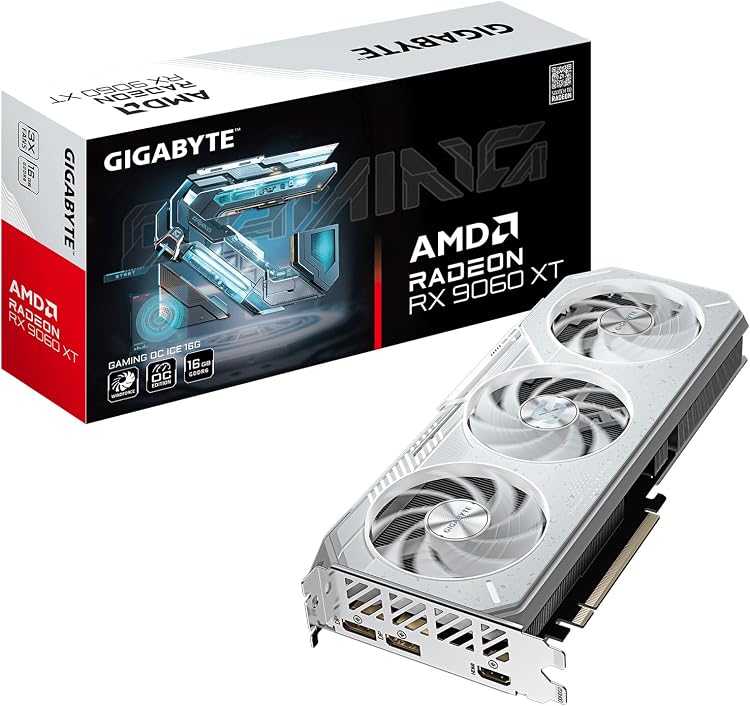
Pros
- Generous 16GB GDDR6 VRAM handles demanding games and creative workloads
- Advanced WINDFORCE cooling combines copper heat pipes, 3D fans and screen cooling
- Reinforced structure and metal backplate add physical stability
- Dual BIOS provides flexible performance or quiet operation choices
Cons
- 128-bit memory bus may limit bandwidth in certain high-end scenarios
- Two-slot design could restrict airflow in compact cases
- Zero customer reviews available to confirm real-world reliability
| Graphics Coprocessor | RX 9060XT |
|---|---|
| Graphics Card Ram | 16 GB |
| GPU Clock Speed | 2780 MHz |
| Video Output Interface | DisplayPort, HDMI |
| Graphics Ram Type | GDDR6 |
| Compatible Devices | Desktop |
| Graphics Card Interface | PCI-Express x16 |
| Memory Clock Speed | 20000 MHz |
| Number of Fans | 3 |
| Display Maximum Resolution | 3840 x 2160 |
Best suited to shoppers comparing graphics cards products who specifically need unlock high-resolution gaming and AI tasks with 16GB GDDR6 memory and RDNA 4 architecture, Maintain cool and quiet operation via WINDFORCE system with alternate-spinning….
Before buying, compare the exact model’s compatibility, dimensions, core specifications, warranty, recurring owner feedback, and current price against other graphics cards options. Retailer availability and pricing can change after publication.

Pros
- High boost clock for improved frame rates
- 16GB GDDR6 for handling large textures and multitasking
- Triple fan cooling maintains lower temperatures
- Overclocked model provides extra performance
- Compatible with standard desktop PCs
Cons
- Triple fan design requires sufficient space in the PC case
- Exclusively for desktop systems, limiting versatility
- May demand a high-quality power supply for optimal function
| Graphics Coprocessor | RX 9060 XT |
|---|---|
| Graphics Card Ram | 16 GB |
| GPU Clock Speed | 1900 MHz |
| Video Output Interface | DisplayPort, HDMI |
| Graphics Ram Type | GDDR6 |
| Compatible Devices | Desktop |
| Graphics Card Interface | PCI-Express x16 |
| Memory Clock Speed | 20 GHz |
| Display Maximum Resolution | 4K UHD (3840x2160) |
| Display Resolution Maximum | 3840x2160 |
Best suited to shoppers comparing graphics cards products who specifically need unlock high-performance gaming with RDNA 4 architecture and boost clocks reaching 3320 MHz., Ensure stable operation through effective heat dissipation from the triple fan….
Before buying, compare the exact model’s compatibility, dimensions, core specifications, warranty, recurring owner feedback, and current price against other graphics cards options. Retailer availability and pricing can change after publication.

Pros
- High memory capacity handles demanding games and multitasking
- Strong boost clock supports high frame rates
- Dual fan cooling promotes reliable thermal performance
Cons
- Dual fan setup can increase noise during heavy loads
- Requires a compatible desktop PC with adequate power and space
- High-end specs may exceed needs for basic computing tasks
| Graphics Coprocessor | RX 9060 XT |
|---|---|
| Graphics Card Ram | 16 GB |
| GPU Clock Speed | 1900 MHz |
| Video Output Interface | DisplayPort, HDMI |
| Graphics Ram Type | GDDR6 |
| Compatible Devices | Desktop |
| Graphics Card Interface | PCI-Express x16 |
| Memory Clock Speed | 20 GHz |
| Number of Fans | 2 |
| Display Maximum Resolution | 3840 x 2160 |
Best suited to shoppers comparing graphics cards products who specifically need powers smooth high-resolution gaming with ample 16GB GDDR6 memory, Achieves faster frame rates via boost clock up to 3320 MHz.
Before buying, compare the exact model’s compatibility, dimensions, core specifications, warranty, recurring owner feedback, and current price against other graphics cards options. Retailer availability and pricing can change after publication.

Pros
- Compact SFF design suits space-limited builds
- Next-gen Blackwell architecture for future-proofing
- Efficient cooling system supports sustained loads
- High-bandwidth GDDR7 memory aids demanding workloads
Cons
- 12GB VRAM may limit extreme 4K or heavy multitasking scenarios
- New architecture could need initial driver optimizations
- SFF constraints may reduce maximum overclock headroom
| Graphics Coprocessor | NVIDIA GeForce RTX 5070 |
|---|---|
| Graphics Card Ram | 12 GB |
| GPU Clock Speed | 2600 GHz |
| Video Output Interface | DisplayPort, HDMI |
| Graphics Ram Type | GDDR7 |
| Compatible Devices | Desktop |
| Graphics Card Interface | PCI-Express x16 |
| Memory Clock Speed | 2600 MHz |
| Number of Fans | 3 |
| GPU Series | NVIDIA RTX 50 Series |
Best suited to shoppers comparing graphics cards products who specifically need unlock smooth high-frame-rate gaming with DLSS 4 upscaling technology, Accelerate AI-driven creative tasks using advanced Tensor Cores.
Before buying, compare the exact model’s compatibility, dimensions, core specifications, warranty, recurring owner feedback, and current price against other graphics cards options. Retailer availability and pricing can change after publication.

Pros
- Effective thermal performance in a space-saving form factor
- Quiet operation suitable for noise-sensitive environments
- Durable components increase long-term reliability
- Versatile for a range of compact gaming and creative setups
Cons
- Requires adequate case ventilation for optimal cooling
- May need a high-wattage PSU for full performance
- Newer architecture could involve driver optimization time
| Graphics Coprocessor | AMD Radeon RX 9060 XT |
|---|---|
| Graphics Card Ram | 16 GB |
| GPU Clock Speed | 3250 MHz |
| Video Output Interface | Native DisplayPort 2.1a x2, Native HDMI 2.1b |
| Graphics Ram Type | GDDR6 |
| Compatible Devices | Desktop, Personal Computer |
| Graphics Card Interface | PCI-Express x16 |
| Memory Clock Speed | 3250 MHz |
| Number of Fans | 2 |
| Display Maximum Resolution | 7680 x 4320 |
Best suited to shoppers comparing graphics cards products who specifically need compact 2.5-slot design enables powerful graphics in smaller PC cases without cooling compromises, Silent light gaming via 0dB technology that stops fans below 55….
Before buying, compare the exact model’s compatibility, dimensions, core specifications, warranty, recurring owner feedback, and current price against other graphics cards options. Retailer availability and pricing can change after publication.

Pros
- Powerful AI-driven performance for gaming and content creation
- High-capacity GDDR7 memory for demanding workloads
- Advanced features like DLSS 4 and Reflex 2
- Robust build with triple fan cooling and ARGB lighting
Cons
- Occupies significant space with 2.99-slot design
- High power requirements for peak operation
- May require case upgrades for optimal airflow
| Graphics Coprocessor | NVIDIA GeForce RTX 5080 |
|---|---|
| Graphics Card Ram | 16 GB |
| GPU Clock Speed | 2775 MHz |
| Video Output Interface | DisplayPort, HDMI |
| Graphics Ram Type | GDDR7 |
| Compatible Devices | Desktop |
| Graphics Card Interface | PCI-Express x16 |
| Memory Clock Speed | 2295 MHz |
| Number of Fans | 3 |
| GPU Series | NVIDIA RTX 50 Series |
Best suited to shoppers comparing graphics cards products who specifically need achieve superior gaming speeds with AI-powered DLSS 4 for higher frame rates and enhanced visuals, Handle complex creative projects faster using NVIDIA Studio tools….
Before buying, compare the exact model’s compatibility, dimensions, core specifications, warranty, recurring owner feedback, and current price against other graphics cards options. Retailer availability and pricing can change after publication.

Pros
- SFF-ready compatibility for compact builds
- Advanced thermal features for reliable cooling
- Flexible Dual BIOS for performance tuning
- Robust build quality with protective elements
Cons
- No user reviews available for real-world validation
- Requires compatible high-wattage PSU
- Best suited for SFF enthusiasts rather than standard ATX builds
| Graphics Coprocessor | NVIDIA GeForce RTX 5070 |
|---|---|
| Graphics Card Ram | 12 GB |
| GPU Clock Speed | 2542 MHz |
| Video Output Interface | HDCP support, Native DisplayPort 2.1b x3, Native HDMI 2.1b |
| Graphics Ram Type | GDDR7 |
| Compatible Devices | Desktop |
| Graphics Card Interface | PCI-Express x16 |
| Memory Clock Speed | 4000 MHz |
| Number of Fans | 3 |
| GPU Series | NVIDIA RTX 50 Series |
Best suited to shoppers comparing internal power supplies products who specifically need compact 2.5-slot design fits small form factor cases while maintaining full cooling performance, Phase-change GPU thermal pad delivers superior heat transfer for lower temperatures….
Before buying, compare the exact model’s compatibility, dimensions, core specifications, warranty, recurring owner feedback, and current price against other internal power supplies options. Retailer availability and pricing can change after publication.

Pros
- Strong thermal design with multiple cooling enhancements for reliable operation
- Durable components including ball bearings and protective backplate
- Dual BIOS provides user choice between cooling and noise levels
- 0dB fan mode enables quiet performance at lower loads
Cons
- 2.5-slot size may limit options in very compact PC cases
- Performance BIOS mode can increase fan noise under heavy load
- Requires compatible PCIe 5.0 system and sufficient power supply
| Graphics Coprocessor | AMD RX9070 |
|---|---|
| Graphics Card Ram | 16 GB |
| GPU Clock Speed | 4000 MHz |
| Video Output Interface | Native DisplayPort 2.1a x 3, Native HDMI 2.1b |
| Graphics Ram Type | GDDR6 |
| Compatible Devices | Desktop |
| Graphics Card Interface | PCI-Express x16 |
| Memory Clock Speed | 4000 MHz |
| Number of Fans | 3 |
| Display Maximum Resolution | 7680 x 4320 |
Best suited to shoppers comparing graphics cards products who specifically need delivers consistent cooling during extended gaming sessions through upgraded Axial-tech fans and vented backplate, Reduces noise with 0dB technology that stops fans below 55°C….
Before buying, compare the exact model’s compatibility, dimensions, core specifications, warranty, recurring owner feedback, and current price against other graphics cards options. Retailer availability and pricing can change after publication.

Pros
- Effective WINDFORCE cooling with graphene lubricant for extended fan life
- DLSS 4 support for significant AI performance boosts
- Direct contact heat pipes for rapid GPU and VRAM cooling
- Balanced design for both gaming and creative workloads
Cons
- 8GB memory capacity may limit ultra settings at higher resolutions
- Newer architecture could require driver updates for full stability
- Alternate fan spinning may need adjustment in some cases
| Graphics Coprocessor | NVIDIA GeForce RTX 5060 |
|---|---|
| Graphics Card Ram | 8 GB |
| GPU Clock Speed | 2512 MHz |
| Video Output Interface | DisplayPort, HDMI |
| Graphics Ram Type | GDDR7 |
| Compatible Devices | Desktop |
| Graphics Card Interface | PCI-Express x16 |
| Memory Clock Speed | 28000 MHz |
| Number of Fans | 2 |
| GPU Series | NVIDIA RTX 50 Series |
Best suited to shoppers comparing graphics cards products who specifically need unlock smoother gameplay with AI-driven frame generation for higher frame rates, Maintain quiet operation during extended sessions thanks to advanced fan design.
Before buying, compare the exact model’s compatibility, dimensions, core specifications, warranty, recurring owner feedback, and current price against other graphics cards options. Retailer availability and pricing can change after publication.

Pros
- Effective thermal management in a small form factor
- Robust construction with stainless steel bracket and protective backplate
- Broad compatibility via PCIe 5.0 and modern display outputs
- Auto-Extreme manufacturing improves product reliability
Cons
- 8GB VRAM may constrain performance in high-resolution future titles
- No customer reviews available to confirm real-world longevity
- Requires a compatible power supply for optimal operation
| Graphics Coprocessor | NVIDIA GeForce RTX 5060 |
|---|---|
| Graphics Card Ram | 8 GB |
| GPU Clock Speed | 2535 MHz |
| Video Output Interface | Native DisplayPort 2.1b x3, Native HDMI 2.1b |
| Graphics Ram Type | GDDR7 |
| Compatible Devices | Desktop |
| Graphics Card Interface | PCI-Express x16 |
| Memory Clock Speed | 2535 MHz |
| Number of Fans | 2 |
| GPU Series | NVIDIA RTX 50 Series |
Best suited to shoppers comparing graphics cards products who specifically need compact 2.5-slot design fits performance into smaller PC cases, Quiet 0dB fan technology enables silent operation under light loads.
Before buying, compare the exact model’s compatibility, dimensions, core specifications, warranty, recurring owner feedback, and current price against other graphics cards options. Retailer availability and pricing can change after publication.

Pros
- Rugged military-grade build quality for lasting durability
- Effective cooling maintains performance under stress
- Protective features guard against common environmental hazards
- Quiet operation modes enhance user experience
- Strong compatibility with tuning software and creative tools
Cons
- Large 3.125-slot size may not fit compact PC cases
- Demands a high-quality PSU for full performance potential
- Limited long-term user data available as a newer model
| Graphics Coprocessor | NVIDIA GeForce RTX 5070 |
|---|---|
| Graphics Card Ram | 12 GB |
| GPU Clock Speed | 2610 MHz |
| Video Output Interface | DisplayPort 2.1a x3, HDMI 2.1b x2 |
| Graphics Ram Type | GDDR7 |
| Compatible Devices | Desktop |
| Graphics Card Interface | PCI-Express x16 |
| Memory Clock Speed | 4000 MHz |
| Number of Fans | 3 |
| Display Maximum Resolution | 7680x4320 pixels |
Best suited to shoppers comparing graphics cards products who specifically need military-grade components deliver stable power and extended lifespan for uninterrupted gaming sessions, Advanced cooling system with Axial-tech fans and phase-change pads keeps temperatures low….
Before buying, compare the exact model’s compatibility, dimensions, core specifications, warranty, recurring owner feedback, and current price against other graphics cards options. Retailer availability and pricing can change after publication.

Pros
- Advanced cooling technology for reliable operation
- Quiet fan performance under load
- Compact design for versatile case compatibility
- Durable components for long-term use
Cons
- Minimum 500W system power supply required
- Limited to one 8-pin power connector
- New model with no user reviews available
| Graphics Coprocessor | AMD Radeon RX 9060 XT |
|---|---|
| Graphics Card Ram | 16 GB |
| GPU Clock Speed | 2620 MHz |
| Video Output Interface | 1 x HDMI 2.1b, 2 x DisplayPort 2.1a |
| Graphics Ram Type | GDDR6 |
| Compatible Devices | Desktop |
| Graphics Card Interface | PCI-Express x16 |
| Memory Clock Speed | 20 GHz |
| Number of Fans | 2 |
| Display Maximum Resolution | 7680x4320 |
Best suited to shoppers comparing graphics cards products who specifically need delivers sustained gaming performance through superior thermal efficiency, Reduces noise with temperature-based intelligent fan control.
Before buying, compare the exact model’s compatibility, dimensions, core specifications, warranty, recurring owner feedback, and current price against other graphics cards options. Retailer availability and pricing can change after publication.

Pros
- Compact 2.5-slot format is suitable for many space-conscious PC builds
- Modern Blackwell architecture with DLSS 4 support
- Fast 12GB GDDR7 memory
- Enhanced cooling design with Axial-tech fans and a phase-change thermal pad
- Dual BIOS provides added configuration flexibility
Cons
- 12GB of VRAM may be limiting for some future ultra-high-resolution gaming and professional workloads
- The 2.5-slot cooler still requires adequate case clearance and airflow
- Actual gaming performance and acoustics will depend on the system's power delivery, ventilation, and software settings
| Color | BLACK |
|---|---|
| Dimensions | 12 x 5 x 2 inches |
| Weight | 2.3 pounds |
| Product Group | Personal Computer |
| Binding | Personal Computers |
Best suited to shoppers comparing graphics cards products who specifically need sFF-Ready design helps fit high-performance graphics into compatible small-form-factor builds, NVIDIA Blackwell architecture and DLSS 4 support enable advanced gaming features and improved image….
Before buying, compare the exact model’s compatibility, dimensions, core specifications, warranty, recurring owner feedback, and current price against other graphics cards options. Retailer availability and pricing can change after publication.
What VRAM Means for 4K Gaming
VRAM capacity determines how much graphics data a GPU can keep close to the graphics processor without constantly streaming assets from system memory or storage. When a game fits comfortably inside the available VRAM, performance is more likely to feel smooth. When it does not, you may see stutter, delayed texture loading, reduced texture quality, or unstable frame pacing even if the GPU core is otherwise powerful.
At 4K, VRAM demand rises because games render more pixels and often use higher-resolution texture assets. The GPU still needs enough raw shader, rasterization, and memory bandwidth performance, so VRAM alone does not make a card a strong 4K option. An entry-level GPU with 16GB can avoid some memory limits, but it may still lack the rendering horsepower for demanding 4K ultra gameplay.
12GB vs 16GB vs More Than 16GB
For 4K gaming, 12GB should be treated as a workable baseline rather than a long-term comfort zone. It can be enough for esports games, older titles, optimized AAA settings, and games that use upscaling effectively. However, 12GB becomes less forgiving when you enable ultra textures, high ray tracing presets, or large open-world asset packs.
16GB is the safer recommendation for most new 4K builds. It gives modern games more room for high-resolution textures and reduces the need to lower texture quality first. Cards such as the GIGABYTE Radeon RX 9070 XT Gaming OC 16G, ASUS Prime Radeon RX 9070 XT 16GB OC, and PNY GeForce RTX 5080 16GB all fit this capacity target while also belonging to stronger performance tiers than basic 8GB options.
More than 16GB is desirable for extreme texture modding, certain creator workloads, AI-assisted workflows, or very long upgrade cycles, but the supplied product data here centers on 8GB, 12GB, and 16GB GPUs. Based on the available models, 16GB is the most balanced capacity target for serious 4K gaming.
Texture Quality Is Usually the First Setting VRAM Affects
Texture quality is one of the clearest VRAM-sensitive settings. Raising textures from high to ultra often has a smaller impact on shader workload than raising ray tracing or resolution, but it can consume significantly more memory. If a game warns that your settings exceed available VRAM, texture quality is usually the first setting to reduce before lowering resolution.
For example, an 8GB GPU such as a GeForce RTX 5060 model may be a sensible 1080p or 1440p card, but it is not ideal for a 4K-first build. A 16GB card gives you more room to keep high texture settings without immediately hitting a memory ceiling. This is why VRAM capacity matters even when average frame rate comparisons do not show the full problem.
Ray Tracing Raises Both Compute and Memory Pressure
Ray tracing does not only demand more GPU compute performance; it can also increase memory use because the engine must store additional scene data and acceleration structures. At 4K, that combination can expose both a weak GPU core and limited VRAM. This is why a 12GB card can feel acceptable in rasterized 4K games but more constrained with heavy ray tracing enabled.
NVIDIA Blackwell cards in the supplied data support DLSS 4 according to manufacturer specifications, while AMD Radeon RX 9000-series models use RDNA 4 features and modern display engines. Upscaling can reduce rendering load, but it does not always eliminate high texture memory use. If ray tracing is a priority, compare the total GPU tier, upscaling support, VRAM capacity, and cooling design rather than buying by memory capacity alone.
Upscaling Helps Performance but Does Not Make VRAM Irrelevant
Upscaling technologies render at a lower internal resolution and reconstruct the image for a 4K output. This can improve frame rates and make 4K gaming more practical on midrange GPUs. However, many games still load high-resolution textures and large scene assets, so the VRAM requirement does not always fall in proportion to the internal render resolution.
A card such as the ASUS TUF Gaming GeForce RTX 5070 12GB OC may be viable for 4K gaming when DLSS 4 and optimized settings are part of the plan. By contrast, if you want native 4K, high textures, and less tuning, a 16GB model is easier to recommend. For a broader generation-to-generation comparison, see our RTX 4070 Super vs RX 7900 GRE guide.
Memory Bus, Bandwidth, and GPU Class Still Matter
VRAM capacity tells you how much data can be stored locally, but memory bus width and memory type affect how quickly that data can move. A 16GB card with a narrow memory interface may not behave like a higher-tier 16GB card with a wider bus and stronger GPU core. The PNY GeForce RTX 5080 Epic-X ARGB OC, for example, lists 16GB GDDR7 and a 256-bit memory interface, positioning it differently from 16GB cards built around lower-tier GPUs.
This is the most common misconception in 4K GPU shopping: more VRAM is helpful, but it is not a substitute for rasterization performance, ray tracing hardware, bandwidth, power delivery, or cooling. A balanced 4K card should have enough memory and enough rendering horsepower to use it effectively.
Cooling, Slot Width, and Case Compatibility
4K gaming can keep a GPU under sustained load, so cooling design matters. Triple-fan cards and thicker heatsinks can maintain boost behavior more comfortably, but they also require more case clearance. The ASUS TUF Gaming GeForce RTX 5070 OC uses a 3.125-slot design, while the ASUS Prime Radeon RX 9070 XT OC uses a 2.5-slot design, making the latter easier to fit in some builds.
Before buying, check your case GPU length clearance, slot clearance, power connector requirements, airflow path, and power supply capacity. If you are building around a compact case, a smaller card may be more practical even if a larger cooler looks stronger on paper. For display pairing, our monitor reviews section can help you think through 4K refresh rate and panel choices.
4K VRAM Recommendation Table
| Model | VRAM | Memory Type | 4K Role | Main Strength | Main Trade-Off |
|---|---|---|---|---|---|
| PNY GeForce RTX 5080 Epic-X ARGB OC | 16GB | GDDR7 | Premium 4K gaming and creator workloads | High-end GPU class, DLSS 4 support, 256-bit memory interface | Requires a premium build and careful case and power planning |
| GIGABYTE Radeon RX 9070 XT Gaming OC 16G | 16GB | GDDR6 | Strong 4K rasterization-focused gaming | 16GB capacity, WINDFORCE cooling, PCIe 5.0 | Ray tracing and upscaling ecosystem should be compared by game |
| ASUS Prime Radeon RX 9070 XT 16GB OC | 16GB | GDDR6 | 4K gaming in builds needing a slimmer cooler | 2.5-slot design, dual BIOS, 0dB technology | Still needs enough case airflow for sustained 4K loads |
| ASUS TUF Gaming GeForce RTX 5070 12GB OC | 12GB | GDDR7 | Optimized 4K with DLSS and tuned settings | DLSS 4, rugged component design, large cooler | 12GB is less comfortable for ultra textures and heavy ray tracing |
| XFX Swift Radeon RX 9060 XT OC Triple Fan | 16GB | GDDR6 | Budget-conscious 4K entry with reduced settings | 16GB capacity and triple-fan cooling | GPU tier is better suited to tuned 4K than uncompromised ultra settings |
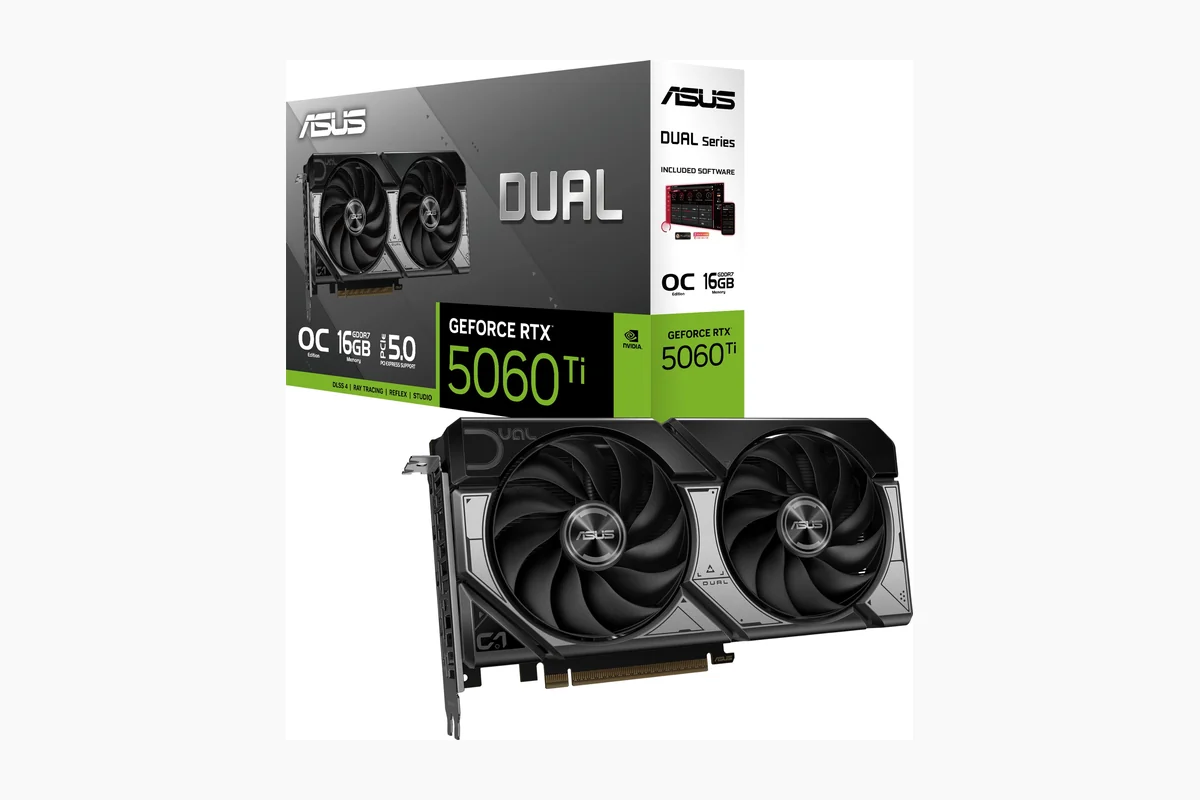
| ASUS Dual GeForce RTX 5060 Ti 16GB OC | 16GB | GDDR7 | Light 4K, esports, and upscaled gaming | 16GB capacity, DLSS 4, compact 2.5-slot design | Not the same performance class as higher-end 4K GPUs |
How to Choose the Right How Much VRAM For 4K Gaming
Start With Your Target Settings
If your target is 4K high settings with selective upscaling, 12GB can still be workable on a capable GPU. If your target is 4K ultra textures, large open-world games, ray tracing, and fewer compromises, 16GB should be your baseline. This simple settings-first approach prevents you from overbuying memory on a weak GPU or underbuying memory on an expensive card.
For competitive games, VRAM pressure is usually lower than in cinematic AAA titles, so GPU speed and latency may matter more than memory size. For single-player games with large texture packs, VRAM capacity becomes more important. Match the card to the actual games you play, not just the resolution printed on your monitor box.
Separate VRAM Capacity From GPU Performance
A 16GB GPU is not automatically a better 4K card than every 12GB GPU. The graphics processor, memory bandwidth, driver features, upscaling quality, and game engine optimization all affect the final experience. Capacity helps most when the GPU is fast enough to render the settings you want.
This is why a GeForce RTX 5080 16GB and a Radeon RX 9060 XT 16GB should not be treated as equivalent just because the VRAM number matches. The first is positioned as a premium graphics card, while the second is more appropriate for value-focused builds where you are willing to tune settings. Use VRAM as one filter, not the only filter.
Consider Ray Tracing and Upscaling Ecosystems
If you care about ray tracing, evaluate the full platform. NVIDIA cards in the supplied data list DLSS 4 support, while AMD Radeon models provide RDNA 4-based features and modern HDMI/DisplayPort support. The best choice depends on your game library, preferred image reconstruction method, and tolerance for tuning settings.
For native rasterized 4K gaming, 16GB Radeon RX 9070 XT models are relevant examples because they combine a stronger GPU tier with sufficient VRAM. For ray tracing-heavy games that support NVIDIA features well, an RTX 5070 or RTX 5080 may be more attractive, but the 12GB limit on the RTX 5070 should be considered before choosing ultra texture settings.
Check Display Outputs and Monitor Goals
Modern 4K gaming also depends on display connectivity. Many supplied cards list HDMI 2.1 or DisplayPort 2.1-class outputs, which are important for high-refresh 4K displays. Always confirm the exact output version on the specific model, because product families can include revisions and regional variations.
A 4K 60Hz display is easier to satisfy than a high-refresh 4K monitor. If you plan to drive high refresh rates, you need more than enough VRAM; you need a GPU class capable of producing those frames. Pair the graphics card, monitor refresh rate, CPU, and game settings as a complete system.
Plan for Case Clearance, Power, and Cooling
Large 4K-capable GPUs often use thick coolers. The PNY GeForce RTX 5080 Epic-X ARGB OC is listed as a 2.99-slot card, and the ASUS TUF Gaming RTX 5070 OC is listed as a 3.125-slot design. Those dimensions can block adjacent slots or create airflow challenges in smaller cases.
Before ordering, verify GPU length, slot thickness, power supply capacity, connector layout, and case airflow. A card with a strong cooler can still run poorly in a restrictive case. If you are also upgrading storage for larger 4K game installs, the SSD reviews section can help with system planning.
Avoid 8GB for a New 4K-First Build
8GB GPUs can still be useful for 1080p, esports, older games, and some 1440p scenarios, but they are not ideal as new 4K-first purchases. At 4K, the memory ceiling can arrive quickly in demanding games, especially when ultra textures or ray tracing are enabled. You may be forced to reduce settings earlier than expected.
The GIGABYTE GeForce RTX 5060 WINDFORCE OC 8G and ASUS Dual GeForce RTX 5060 8GB OC include modern features such as PCIe 5.0 and DLSS 4 according to manufacturer specifications, but the 8GB capacity makes them poor fits for this specific 4K VRAM question. They are better evaluated as lower-resolution gaming GPUs rather than primary 4K recommendations.
Why You Should Trust PCGearWiki
PCGearWiki evaluates graphics cards by separating verified specifications from assumptions, marketing language, and unavailable benchmark data. For this guide, we looked at VRAM capacity, memory type, GPU tier, display support, cooling design, slot width, and the practical demands of 4K gaming. We do not claim personal testing or measured frame rates unless that evidence is available.
Our recommendations prioritize compatibility, workload fit, and value for real PC builders. Affiliate links may be used, but product inclusion is based on relevance to the topic, not on unsupported performance claims. When a model is better suited to 1440p or tuned 4K rather than uncompromised 4K ultra gaming, we say so clearly.
Final Thoughts
Best Overall: The GIGABYTE Radeon RX 9070 XT Gaming OC 16G is the most balanced example for most 4K gamers in the supplied data. It combines 16GB of VRAM, a stronger Radeon RX 9070 XT GPU tier, PCIe 5.0 support, and GIGABYTE’s WINDFORCE cooling design. It is a strong fit if you want 4K gaming with high texture settings and do not want to rely on an 8GB or 12GB memory ceiling.
Best Value: The XFX Swift Radeon RX 9060 XT OC Triple Fan is a value-focused 16GB option for players who want the memory capacity needed for 4K textures but are willing to tune settings. Its triple-fan cooler and 16GB GDDR6 specification make it more relevant to this topic than 8GB cards, though it should not be confused with a premium 4K ultra GPU.
Best Budget: The ASUS Dual GeForce RTX 5060 Ti 16GB OC is the most sensible budget-leaning NVIDIA example from the supplied product data for users who still want 16GB. It is best for lighter 4K games, esports, DLSS-assisted play, or mixed 1440p and 4K usage. The trade-off is that its GPU class is below the stronger 4K-focused cards.
Best Premium or Enthusiast Pick: The PNY GeForce RTX 5080 Epic-X ARGB OC is the premium choice among the supplied models. It offers 16GB GDDR7, a 256-bit memory interface, DLSS 4 support, and a high-end GPU tier suitable for demanding 4K gaming and creator workflows. If you are considering even higher tiers, our RTX 5090 review provides additional enthusiast context.
The short answer remains simple: for how much VRAM for 4K gaming, choose 16GB for a new serious 4K build whenever possible. Consider 12GB only if the GPU is strong, your games support effective upscaling, and you are comfortable adjusting settings. Avoid 8GB if 4K is your main target.
Frequently Asked Questions
How much VRAM do I need for 4K gaming?
For most new 4K gaming builds, 16GB is the recommended target. 12GB can work with optimized settings and upscaling, but it is less comfortable for ultra textures, ray tracing, and future games. 8GB is not ideal for a 4K-first graphics card.
Is 12GB VRAM enough for 4K gaming?
12GB can be enough for many 4K games if you use high rather than ultra textures, enable upscaling, and avoid the most memory-heavy ray tracing presets. It is a workable baseline, not the safest long-term target. If you are buying a new card primarily for 4K, 16GB is usually the better goal.
Is 16GB VRAM overkill for 4K gaming?
No, 16GB is not overkill for modern 4K gaming. It gives you more headroom for high-resolution textures, open-world games, ray tracing data, and future titles. The GPU still needs enough processing power, so choose a balanced 16GB card rather than focusing only on memory capacity.
Does DLSS or upscaling reduce VRAM usage?
Upscaling can reduce rendering workload by using a lower internal resolution, but it does not make VRAM irrelevant. Many games still load high-resolution textures and large assets for a 4K output. For broader GPU comparisons, visit our GPU Reviews category.
Should I buy an 8GB GPU for 4K gaming?
An 8GB GPU is not a good choice for a new 4K-first gaming build. It may handle esports titles, older games, or reduced settings, but demanding modern games can exceed its memory comfort zone. For 4K, start with 12GB as a minimum and prefer 16GB when possible.
Add PCGearWiki as a preferred source on Google
Sources and Verification
Research basis: Product identity, dimensions, interfaces, supported features, and warranty terms are checked against available manufacturer documentation and current retailer listings. Price, stock, and aggregate customer ratings can change after publication.
Testing disclosure: Unless this article explicitly states that PCGearWiki performed hands-on testing and describes the test setup, recommendations are research-based editorial evaluations rather than PCGearWiki laboratory measurements. Customer feedback is used to identify recurring ownership patterns, not as proof of technical performance.
Last source review: September 22, 2026. See our Review Methodology, Editorial Policy, and Corrections Policy.


Write Your Review
No reviews yet. Be the first to share your experience!