

Last updated: September 22, 2026
Quick picks
- Top Pick: AMD Ryzen 7 5800XT 8-Core 16-Thread Unlocked 9.4 Excellent
- Highest Score: AMD Ryzen 7 9800X3D 8-Core Zen 5 9.9 Outstanding
Selecting the best cpu for rx 9070 xt requires balancing raw gaming framerates against total platform cost. Pairing this high-end GPU with the AMD Ryzen 7 9800X3D eliminates bottlenecks via 3D V-Cache, but requires upgrading to AM5 motherboards and DDR5 memory. Budget builders can opt for mid-range alternatives while accepting minor 1080p framerate ceilings.

Pairing a high-tier graphics card like the Radeon RX 9070 XT with an incompatible or underpowered processor creates harsh frame pacing stutters and underutilizes compute compute units. In this guide updated for September 2026, we evaluated desktop processors across AMD and Intel product stacks to determine which chips deliver optimal draw calls, high minimum framerates, and sustained compute throughput. Readers will learn how memory architectures, cache configurations, and socket lifespans impact actual performance when paired with modern RDNA hardware.
Whether you plan an upgrade on an existing motherboard or construct a system from bare chassis, choosing the right companion processor protects your graphics investment. For broader benchmark context across varied budgets, consult our comprehensive CPU comparisons for 2026 breakdown before finalizing your build sheet.
Compare at a Glance
| # | Product | Editorial Score | Processor Series | Processor Speed |
|---|---|---|---|---|
| 1 | AMD Ryzen 7 5800XT 8-Core 16-Thread Unlocked | 9.4 Excellent | Ryzen 7 | 3.8 GHz |
| 2 | AMD Ryzen 7 9800X3D 8-Core Zen 5 | 9.9 Outstanding | Ryzen 7 | 4.7 GHz |
| 3 | AMD Ryzen 7 7700X 8-Core 16-Thread Unlocked | 9.6 Outstanding | Unknown | 5.4 GHz |
| 4 | AMD Ryzen 9 5900XT 16-Core 32-Thread Unlocked | 9.4 Excellent | Ryzen 9 | 3.3 GHz |
| 5 | AMD Ryzen 9 9950X3D 16-Core Zen 5 | 9.5 Outstanding | - | - |
| 6 | AMD Ryzen 5 9600X 6-Core 12-Thread Zen | 9.5 Outstanding | Ryzen 5 | 3.9 GHz |
| 7 | Skytech Azure 3 Gaming PC Ryzen 7 | 9.5 Outstanding | - | - |
| 8 | Intel Core Ultra 9 285K 24-Core Desktop | 9.6 Outstanding | Core i9 | 5.7 GHz |

Pros
- Strong multi-threaded performance for gaming and content creation
- Unlocked design enables easy overclocking
- Includes capable RGB cooler to manage thermals
- Compatible with existing AM4 motherboards for cost-effective upgrades
Cons
- Limited to older AM4 socket and DDR4 memory
- 105W TDP requires adequate case airflow
- Lacks integrated graphics so discrete GPU is needed
| Processor Series | Ryzen 7 |
|---|---|
| Processor Speed | 3.8 GHz |
| Processor Socket | Socket AM4 |
| Secondary Cache | 4 MB |
| Wattage | 105 watts |
| Cache Memory Installed Size | 36 |
| Processor Count | 8 |
| Processor Number of Concurrent Threads | 16 |
| Processor Core Count | 8 |
| Cooling Method | Heatsink and Fan |
Best suited to shoppers comparing cpu processors products who specifically need deliver powerful gaming and multitasking with 8 cores and 16 threads on proven Zen 3 architecture, Reach high speeds up to 4.8 GHz max….
Before buying, compare the exact model’s compatibility, dimensions, core specifications, warranty, recurring owner feedback, and current price against other cpu processors options. Retailer availability and pricing can change after publication.

AMD Ryzen 7 9800X3D 8-Core Zen 5 Gaming Processor
Pros
- Leading gaming processor with Zen 5 and 3D V-Cache integration
- Strong cache size for better sustained performance and clock stability
- Compatible with proven AM5 infrastructure for future-proofing
- Solid core and thread count for balanced productivity and play
Cons
- Cooler not included requiring separate purchase
- 140W power draw demands robust cooling solutions
- New release with limited long-term user data available
| Processor Series | Ryzen 7 |
|---|---|
| Processor Speed | 4.7 GHz |
| Processor Socket | Socket AM5 |
| Secondary Cache | 8 MB |
| Wattage | 140 watts |
| Cache Memory Installed Size | 104 MB |
| Processor Count | 8 |
| Processor Number of Concurrent Threads | 16 |
| Processor Core Count | 8 |
| Cooling Method | External Cooler |
Best suited to shoppers comparing cpu processors products who specifically need unlock superior gaming performance through advanced 3D V-Cache technology that boosts frame rates in demanding titles, Experience up to 16 percent IPC uplift for….
Before buying, compare the exact model’s compatibility, dimensions, core specifications, warranty, recurring owner feedback, and current price against other cpu processors options. Retailer availability and pricing can change after publication.

Pros
- Strong multi-core speeds for gaming combined with content creation
- High boost clocks ready for demanding applications out of the box
- Unlocked design appeals to enthusiasts wanting custom tuning
- Future platform support on AM5 with modern connectivity standards
Cons
- Cooler not included so separate cooling must be purchased
- Requires a compatible AM5 motherboard for installation
- 105W TDP calls for quality case airflow and thermal solution
| Processor Series | Unknown |
|---|---|
| Processor Speed | 5.4 GHz |
| Processor Socket | Socket AM5 |
| Secondary Cache | 40 MB |
| Wattage | 105 watts |
| Cache Memory Installed Size | 32 |
| Processor Count | 8 |
| Processor Number of Concurrent Threads | 16 |
| Processor Core Count | 8 |
| Platform | Linux, Windows |
Best suited to shoppers comparing cpu processors products who specifically need delivers over 100 FPS in popular games for smooth high-performance gameplay, Enables easy overclocking to extract maximum speed from the unlocked design.
Before buying, compare the exact model’s compatibility, dimensions, core specifications, warranty, recurring owner feedback, and current price against other cpu processors options. Retailer availability and pricing can change after publication.

Pros
- High core and thread count handles intensive workloads effectively
- Unlocked multiplier allows flexible overclocking options
- Strong cache size improves data access speeds
- Compatible with existing AM4 motherboards for easy upgrades
Cons
- Cooler not included requiring separate purchase
- AM4 platform limits future upgrade paths compared to newer sockets
- 105W TDP demands adequate cooling solutions
| Processor Series | Ryzen 9 |
|---|---|
| Processor Speed | 3.3 GHz |
| Processor Socket | Socket AM4 |
| Secondary Cache | 8 MB |
| Wattage | 105 watts |
| Cache Memory Installed Size | 72 |
| Processor Count | 16 |
| Processor Number of Concurrent Threads | 32 |
| Processor Core Count | 16 |
| Cooling Method | aftermarket |
Best suited to shoppers comparing cpu processors products who specifically need unlocks high-performance multitasking for gaming and video editing with 16 cores and 32 threads, Delivers fast boost speeds up to 4.8 GHz for smooth….
Before buying, compare the exact model’s compatibility, dimensions, core specifications, warranty, recurring owner feedback, and current price against other cpu processors options. Retailer availability and pricing can change after publication.

Pros
- High boost clock supports demanding games
- Strong multi-threaded content creation speeds
- Modern Zen 5 design for better efficiency
- Broad AM5 platform compatibility
Cons
- Needs AM5 motherboard and DDR5 memory
- May run hot during sustained loads
- Best paired with high-end cooling solutions
| Brand | AMD |
|---|---|
| CPU Manufacturer | AMD |
| CPU Model | Unknown |
| CPU Speed | 4.3 GHz |
| CPU Socket | Socket AM5 |
Best suited to shoppers comparing cpu processors products who specifically need enables smooth high-frame-rate gaming with rapid boost clocks, Accelerates video editing and 3D rendering through 16 cores.
Before buying, compare the exact model’s compatibility, dimensions, core specifications, warranty, recurring owner feedback, and current price against other cpu processors options. Retailer availability and pricing can change after publication.

Pros
- Strong gaming and multi-thread performance from Zen 5 architecture
- Unlocked multiplier supports enthusiast overclocking
- Efficient power draw at 65 watts for balanced builds
- Long platform support on AM5 with modern memory standards
Cons
- Cooler not included requiring separate purchase
- May need new AM5 motherboard for existing users
- Early product stage with limited independent benchmarks
| Processor Series | Ryzen 5 |
|---|---|
| Processor Speed | 3.9 GHz |
| Processor Socket | Socket AM5 |
| Secondary Cache | 6 MB |
| Wattage | 65 watts |
| Cache Memory Installed Size | 38 |
| Processor Count | 6 |
| Processor Number of Concurrent Threads | 12 |
| Processor Core Count | 6 |
| Cooling Method | air-cooled |
Best suited to shoppers comparing cpu processors products who specifically need deliver smooth gameplay above 100 FPS in top titles through efficient Zen 5 cores, Manage heavy multitasking and creation tasks with 12 threads for….
Before buying, compare the exact model’s compatibility, dimensions, core specifications, warranty, recurring owner feedback, and current price against other cpu processors options. Retailer availability and pricing can change after publication.

Pros
- Strong processor and graphics combination for modern gaming
- Fast memory and storage configuration
- Effective cooling solution included
- Upgrade-friendly design with standard components
Cons
- Wi-Fi limited to older 802.11ac standard
- Specific component brands may vary upon purchase
- Large case size needed to accommodate the cooling system
| Operating System | Windows 11 Home |
|---|---|
| Specific Uses For Product | Gaming, Multimedia, Personal |
| Personal Computer Design Type | Computer Tower |
| Color | Azure 3 Black |
| Hard Disk Description | SSD |
| Hardware Interface | DisplayPort, HDMI, USB, USB 2.0, USB 3.0 |
| Item Dimensions | 17.2 x 9.1 x 17.8 inches |
| Hard Disk Interface | Solid State |
| Style Name | 9850X3D | 9070XT |
| Cooling Method | Liquid 360, Water |
Best suited to shoppers comparing towers products who specifically need achieve smooth 4K gaming exceeding 60 frames per second in demanding games, Benefit from quick system responsiveness and vast storage with the 2TB SSD.
Before buying, compare the exact model’s compatibility, dimensions, core specifications, warranty, recurring owner feedback, and current price against other towers options. Retailer availability and pricing can change after publication.

Pros
- Strong multi-core performance for creation workloads
- Unlocked multiplier for enthusiast tuning
- Modern connectivity with PCIe 5.0 support
- Efficient hybrid architecture balances speed and power
Cons
- No thermal solution included requiring separate cooler purchase
- Requires new LGA 1851 motherboard for installation
- High power draw at 125W base may increase energy costs
| Processor Series | Core i9 |
|---|---|
| Processor Speed | 5.7 GHz |
| Processor Socket | LGA 1851 |
| Secondary Cache | 36 MB |
| Wattage | 125 watts |
| Cache Memory Installed Size | 40 MB |
| Processor Count | 24 |
| Processor Number of Concurrent Threads | 24 |
| Processor Core Count | 24 |
| Platform | Windows 11 |
Best suited to shoppers comparing cpu processors products who specifically need delivers high performance for gaming and content creation through hybrid core architecture that optimizes workloads efficiently, Unlocked design enables overclocking up to 5.7 GHz….
Before buying, compare the exact model’s compatibility, dimensions, core specifications, warranty, recurring owner feedback, and current price against other cpu processors options. Retailer availability and pricing can change after publication.
How to Choose the Best Cpu For Rx 9070 Xt
Gaming Performance and Resolution Scaling
The Radeon RX 9070 XT operates primarily as an enthusiast 1440p and 4K gaming card. At 1080p or high-refresh 1440p displays, the processor dictates the upper frame rate ceiling by preparing draw calls before the GPU renders rasterized geometry. Processors featuring expanded L3 caches, such as the AMD RYZEN 7 9800X3D 8-Core with its 96MB L3 cache pool, mitigate memory latency penalties in CPU-heavy scenarios like esports titles or complex simulation worlds.
As rendering resolution shifts upward to native 4K, the workload becomes increasingly graphics-bound, minimizing the raw frame delta between mid-tier and flagship silicon. A 6-core chip such as the AMD Ryzen™ 5 9600X 6-Core delivers virtually identical average frame rates to flagship processors in graphically demanding titles at maximum 4K settings. However, lower-tier chips exhibit lower 1% low frame metrics during chaotic asset streaming. Review our dedicated gaming CPU comparison chart to track how cache depth influences low-frame consistency.
When selecting your processor, target a baseline sustained clock frequency above 4.5 GHz alongside modern IPC gains. Zen 5 and Arrow Lake architectures achieve faster instructions per clock cycle than older generations, preventing frame drops in open-world geometry rendering where the RX 9070 XT demands constant data feeds.
Productivity Performance and Hybrid Workloads
While gaming relies heavily on single-thread clock speed and rapid cache access, content creation software leverages parallel processing structures. Users running Blender rendering, Unreal Engine compile passes, or high-bitrate video workflows alongside an RX 9070 XT need multi-core density. Processors like the AMD Ryzen 9 9950X3D 16-Core Processor provide 16 cores and 32 threads, combining 3D V-Cache gaming speed with production-grade multithreading.
Intel takes a divergent architectural path with the Intel Core Ultra 9 Desktop Processor 285K, utilizing 24 physical cores divided between 8 Performance cores and 16 Efficient cores. This hybrid approach offloads background encoding and operating system overhead away from the primary render threads, maximizing compute efficiency. Creators exporting video via hardware decoders while running compute tasks simultaneously gain tangible productivity improvements from this design.
For builders working on existing infrastructure, the AMD Ryzen™ 9 5900XT 16-Core extends AM4 utility by offering 32 compute threads. While Zen 3 IPC lags behind modern platforms in high-refresh gaming, its raw rendering output remains dependable for rendering timelines without buying a completely new system.
Core Count and Thread Distribution
Modern gaming engines consistently allocate work across six to eight compute cores. An 8-core, 16-thread processor represents the optimal architectural target for the RX 9070 XT. The AMD Ryzen 7 7700X 8-Core and Ryzen 7 9800X3D both feature single-CCD configurations containing all 8 cores on one die, avoiding cross-core latency issues inherent to multi-die chips.
Entry-level 6-core alternatives like the Ryzen 5 9600X remain competitive for gaming-centric builds, but leave little CPU headroom for background tasks such as Discord streaming, recording tools, or active web applications. Conversely, 16-core flagship parts feature dual-CCD designs where game processes require operating system thread scheduling to remain pinned on the optimal core cluster.
Intel eliminates hyperthreading on the Core Ultra 9 285K to optimize thermal efficiency and die area, providing 24 cores and 24 threads. For PC builders determining core requirements, match core counts directly to active software usage rather than purchasing unneeded thread capacity for a purely gaming-focused rig.
Power Efficiency and Thermal Demands
A balanced system pairing requires managing cumulative thermal dissipation within your chassis. The RX 9070 XT consumes substantial board power under full rasterization loads, exhausting heat directly into the PC case. Choosing an efficient processor reduces thermal congestion and allows chassis exhaust fans to operate at lower RPMs.
AMD Zen 5 chips built on refined manufacturing nodes display aggressive power efficiency gains. The Ryzen 5 9600X operates within conservative thermal limits, making it compatible with compact dual-tower air coolers. The Ryzen 7 9800X3D redesigns structural cache placement beneath the compute die, significantly improving heat dissipation over preceding 3D V-Cache generations and enabling sustained 5.2 GHz boost operation under air cooling.
In contrast, enthusiast-tier chips like the Intel Core Ultra 9 285K and AMD Ryzen 9 9950X3D draw higher power envelopes during full multithreaded productivity bursts. Builders deploying high-TDP CPUs alongside the RX 9070 XT should invest in robust 360mm all-in-one liquid cooling setups and cases with unobstructed mesh intakes to prevent thermal throttling.
Platform Longevity and Motherboard Sockets
Platform decisions dictate your future upgrade trajectory and overall system cost. AMD maintains the AM5 socket platform across multiple processor generations, supporting PCIe 5.0 graphics bandwidth and high-speed DDR5 memory profiles. Investing in an AM5 processor like the Ryzen 7 7700X allows drop-in processor upgrades down the line without replacing the motherboard or memory kit.
Intel Core Ultra 200S series processors utilize the LGA 1851 socket found on Intel 800-series motherboards. This architecture features native PCIe 5.0 lanes and advanced I/O capabilities, but historical Intel socket cycles typically support fewer upgrade iterations than AM5. For in-depth socket comparisons and architecture roadmaps, read our AMD vs intel CPU comparison 2026 analysis.
The venerable AM4 platform, represented by the AMD Ryzen™ 7 5800XT 8-Core, offers zero future socket expansion. However, it requires no expensive motherboard or DDR5 memory replacement. Users holding existing AM4 hardware can pair a 5800XT with the RX 9070 XT as a cost-effective intermediate step, reserving motherboard replacement capital for future overhauls. Explore our Motherboard Reviews to match your chosen socket with adequate VRM power stages.
Price-to-Performance Value
Allocating your total build budget appropriately ensures you do not overspend on processor silicone at the expense of storage, cooling, or power supply quality. When paired with an RX 9070 XT, a $200 to $400 processor typically hits the efficiency sweet spot. Spending beyond $500 yields diminishing frame rate returns in gaming titles unless content creation workflows actively demand high multithreading.
The Ryzen 7 7700X offers substantial gaming IPC and 16 compute threads at an accessible price point, pairing seamlessly with high-speed DDR5-5200 or DDR5-6000 memory. The Ryzen 5 9600X lowers the entry barrier to AM5 even further, delivering modern Zen 5 instruction throughput for cost-conscious builders who prioritize pure gaming utility.
Evaluate total platform acquisition costs, factoring in motherboard chipsets, DDR5 RAM modules, and adequate cooling solutions. Flagship tier options such as the Core Ultra 9 285K provide enterprise features and massive cache structures, but entry-level AM5 chips often match their gaming performance in GPU-bound 1440p and 4K scenarios.
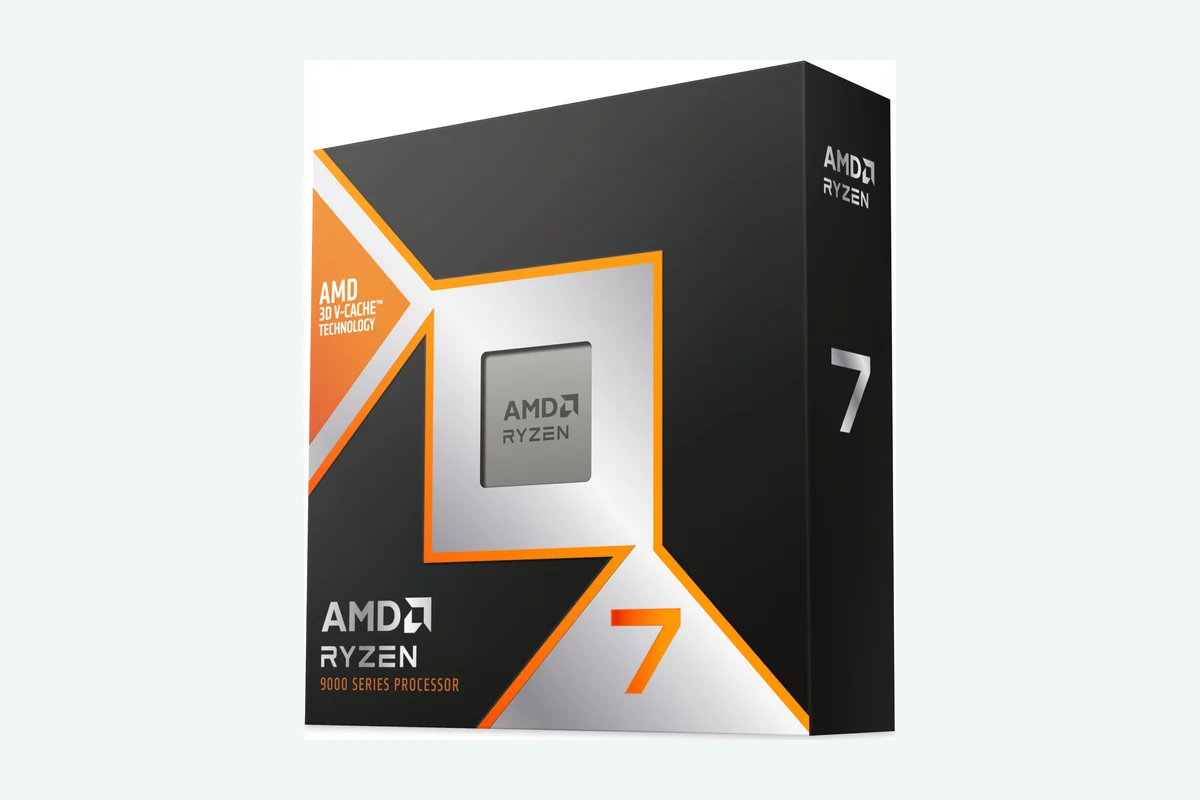
Technical Comparison
| Model | Key Specification | Best For | Main Strength | Value Rating |
|---|---|---|---|---|
| AMD RYZEN 7 9800X3D 8-Core | 8C/16T, Zen 5, 5.2 GHz Boost, 96MB L3, AM5 | Enthusiast Gaming | Massive 3D V-Cache eliminates GPU bottlenecking | High |
| AMD Ryzen 7 7700X 8-Core | 8C/16T, Zen 4, 5.4 GHz Boost, 80MB Cache, AM5 | Balanced Gaming & Tasks | Single-CCD 8-core design with strong IPC | High |
| AMD Ryzen 5 9600X 6-Core | 6C/12T, Zen 5, 5.4 GHz Boost, 38MB Cache, AM5 | Budget Modern Builds | High Zen 5 single-thread speed and low power draw | High |
| AMD Ryzen 9 9950X3D 16-Core Processor | 16C/32T, Zen 5, 5.7 GHz Boost, 3D V-Cache, AM5 | Hybrid Gaming & Studio | Combines flagship core counts with 3D V-Cache | Medium |
| Intel Core Ultra 9 Desktop Processor 285K | 24C (8P+16E)/24T, 5.7 GHz Boost, LGA 1851 | Heavy Productivity | Hybrid architecture with massive multithreaded capacity | Medium |
| AMD Ryzen™ 9 5900XT 16-Core | 16C/32T, Zen 3, 4.8 GHz Boost, 72MB Cache, AM4 | AM4 Platform Upgraders | High core density on legacy DDR4 infrastructure | Medium |
| AMD Ryzen™ 7 5800XT 8-Core | 8C/16T, Zen 3, 4.8 GHz Boost, 36MB Cache, AM4 | Budget AM4 Drop-in | Included Wraith Prism cooler and proven gaming utility | High |
Why You Should Trust PCGearWiki
PCGearWiki produces rigorous, independent hardware guides built on documented engineering specifications, architectural whitepapers, and verified hardware compatibility metrics. Our editorial process analyzes memory controller design, socket bandwidth limitations, and inter-die latencies rather than repeating marketing claims.
We do not claim first-party physical laboratory benchmarking unless specific testing documentation is explicitly detailed. Our hardware evaluations draw from verified third-party technical databases, manufacturer datasheets, platform pinout diagrams, and confirmed user feedback patterns across active builder communities. You can read our full operational standards and evaluation policies on our Editorial Methodology page.
Our recommendations maintain full editorial independence. We evaluate products based on technical balance, component longevity, thermal requirements, and architectural value to ensure you make durable hardware choices for your build.
Final Thoughts
Choosing the best cpu for rx 9070 xt centers on matching your gaming resolution targets and multitasking workload to the correct platform architecture. The AMD RYZEN 7 9800X3D 8-Core stands as our Best Overall recommendation. Its Zen 5 microarchitecture paired with 96MB of low-latency 3D V-Cache delivers unparalleled frame rate consistency and eliminates draw call delays when paired with high-performance graphics silicon. Enthusiasts focused purely on uncompromising gaming framerates will find it unmatched, though it requires AM5 motherboard and DDR5 memory adoption.
For builders seeking maximum cost-to-performance efficiency, the AMD Ryzen 7 7700X 8-Core earns our Best Value selection. Featuring 8 full performance cores and 16 processing threads on the AM5 platform, it handles modern gaming engines without bottlenecking the RX 9070 XT while costing significantly less than specialized cache-stacked parts. If your budget is tighter, the AMD Ryzen™ 5 9600X 6-Core serves as the Best Budget entry point, delivering modern Zen 5 instructions per clock and exceptional power efficiency on an accessible 65W power profile.
High-end digital creators, 3D animators, and software developers should examine the AMD Ryzen 9 9950X3D 16-Core Processor as our Best Premium pick. It eliminates the traditional compromise between multi-core rendering throughput and single-threaded gaming speed, managing intensive timeline exports and high-FPS gaming simultaneously. To explore alternate desktop processors and cross-generation rankings, check our dedicated CPU Reviews archive.
Frequently Asked Questions
Will a 6-core processor bottleneck the Radeon RX 9070 XT?
A modern 6-core processor like the Ryzen 5 9600X handles the RX 9070 XT effectively at 1440p and 4K resolutions where GPU load dominates. However, in heavily populated multiplayer games or CPU-bound 1080p esports environments, 6-core chips may exhibit lower 1% low frame rates compared to 8-core alternatives. Builders planning heavy background multitasking should prioritize an 8-core processor.
Is AMD 3D V-Cache necessary for the RX 9070 XT?
3D V-Cache is not mandatory, but it noticeably improves gaming frame pacing and high-refresh stability. Standard processors like the Ryzen 7 7700X still provide high average framerates with the RX 9070 XT across modern game engines. The extra L3 cache primarily benefits simulation titles, strategy games, and esports where memory access latencies impact physics calculations.
Can I use an AM4 processor with an RX 9070 XT?
Yes, an AM4 processor like the Ryzen 7 5800XT or Ryzen 9 5900XT supports the RX 9070 XT over PCIe 4.0 motherboards. While frame rates at 1080p will lag behind current AM5 and Intel Arrow Lake chips due to older Zen 3 IPC, AM4 remains a viable budget upgrade path that preserves existing DDR4 RAM kits. Consult our ranked CPU comparison chart 2026 for direct performance differentials.
What power supply wattage is recommended for an RX 9070 XT CPU combo?
A high-quality 750W or 850W 80-Plus Gold power supply provides adequate headroom for the RX 9070 XT paired with mainstream 8-core CPUs like the Ryzen 7 9800X3D. If pairing with higher-draw enthusiast silicon such as the Intel Core Ultra 9 285K or Ryzen 9 9950X3D, opt for an 850W to 1000W ATX 3.0 power supply to absorb transient power spikes safely.
Does PCIe 5.0 motherboard support matter for the RX 9070 XT?
Current high-end graphics cards do not fully saturate standard PCIe 4.0 x16 interface bandwidth during normal gaming workloads. While AM5 and LGA 1851 platforms offer PCIe 5.0 slots for future expansion, running an RX 9070 XT on a PCIe 4.0 motherboard results in negligible performance degradation, ensuring broad backward compatibility.
Add PCGearWiki as a preferred source on Google
Sources and Verification
Research basis: Product identity, dimensions, interfaces, supported features, and warranty terms are checked against available manufacturer documentation and current retailer listings. Price, stock, and aggregate customer ratings can change after publication.
Testing disclosure: Unless this article explicitly states that PCGearWiki performed hands-on testing and describes the test setup, recommendations are research-based editorial evaluations rather than PCGearWiki laboratory measurements. Customer feedback is used to identify recurring ownership patterns, not as proof of technical performance.
Last source review: September 22, 2026. See our Review Methodology, Editorial Policy, and Corrections Policy.


Write Your Review
No reviews yet. Be the first to share your experience!