

Last updated: August 30, 2026
A CPU comparison chart 2026 is useful because the processor you choose affects gaming smoothness, streaming headroom, compile times, content creation performance, motherboard compatibility, memory support, cooling requirements, and long-term upgrade options. In July 2026, the most important decision is not simply buying the highest core count; it is matching the processor, platform, and workload to the rest of your PC.
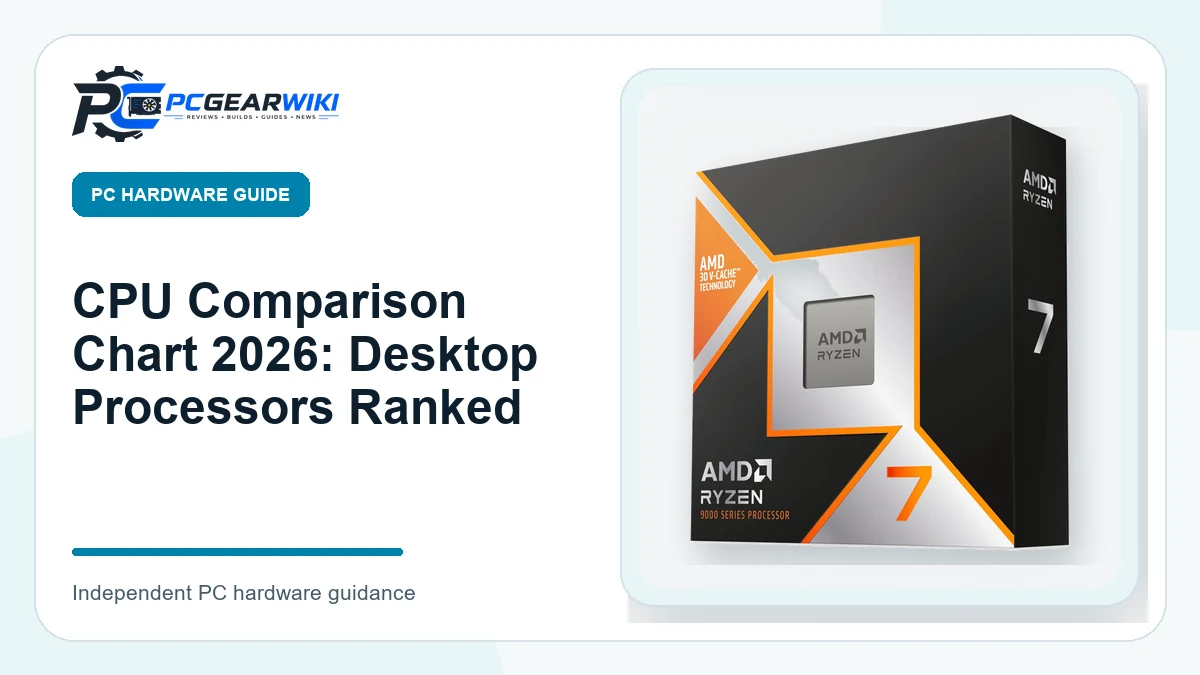
This guide focuses on eligible desktop CPUs from the supplied product data and excludes items that are not processors, such as CPU education books. We compare available specifications, platform requirements, unlocked tuning support, cache configuration where provided, and practical fit for gamers, creators, programmers, streamers, and enthusiast builders. For more CPU-focused buying advice, see our CPU Reviews hub.
We do not present these processors as hands-on tested in this article. Instead, our recommendations are based on manufacturer specifications, available product data, stated compatibility, and editorial assessment of where each CPU makes sense in a modern build.

Pros
- Leading gaming processor with Zen 5 and 3D V-Cache integration
- Strong cache size for better sustained performance and clock stability
- Compatible with proven AM5 infrastructure for future-proofing
- Solid core and thread count for balanced productivity and play
Cons
- Cooler not included requiring separate purchase
- 140W power draw demands robust cooling solutions
- New release with limited long-term user data available
| Processor Series | Ryzen 7 |
|---|---|
| Processor Speed | 4.7 GHz |
| Processor Socket | Socket AM5 |
| Secondary Cache | 8 MB |
| Wattage | 140 watts |
| Cache Memory Installed Size | 104 MB |
| Processor Count | 8 |
| Processor Number of Concurrent Threads | 16 |
| Processor Core Count | 8 |
| Cooling Method | External Cooler |
Best suited to shoppers comparing cpu processors products who specifically need unlock superior gaming performance through advanced 3D V-Cache technology that boosts frame rates in demanding titles, Experience up to 16 percent IPC uplift for….
Before buying, compare the exact model’s compatibility, dimensions, core specifications, warranty, recurring owner feedback, and current price against other cpu processors options. Retailer availability and pricing can change after publication.
Pros
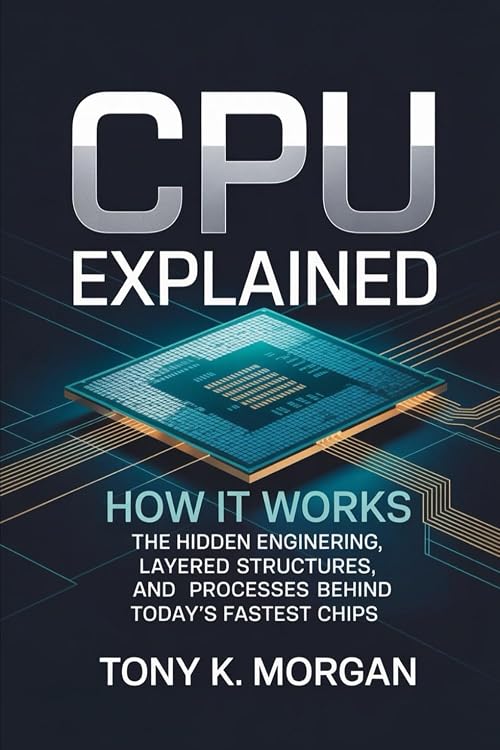
- Emphasizes verified real-world manufacturing techniques over speculation
- Organized as a step-by-step journey through chip production stages
- Appeals to multiple audiences including students and professionals
- Highlights tangible engineering achievements in semiconductor fabrication
Cons
- No customer reviews available to confirm content effectiveness
- Listed under Control Systems which may not align with all search expectations
- Relies on text descriptions without confirmed visual diagrams or aids
| ASIN | B0G1KG9S9R |
|---|---|
| Publisher | Independently published |
| Publication date | November 9, 2025 |
| Language | English |
| Print length | 111 pages |
| ISBN-13 | 979-8273710375 |
| Item Weight | 7.8 ounces |
| Dimensions | 6 x 0.25 x 9 inches |
| Book 10 of 13 | Technology and Science History books |
| Best Sellers Rank | #835,083 in Books (See Top 100 in Books) #47 in Computer Hardware Control Systems #50 in Computer Performance Optimization #115 in Microprocessor Design |
Best suited to shoppers comparing control systems products who specifically need develop a clear understanding of how semiconductor processes create reliable computing power, Explore the precise engineering steps that enable billions of components to function….
Before buying, compare the exact model’s compatibility, dimensions, core specifications, warranty, recurring owner feedback, and current price against other control systems options. Retailer availability and pricing can change after publication.

Pros
- Clear focus on comparing laptop specifications
- Relevant to a wide range of buyers and use cases
- Designed to help readers avoid mismatched features and unnecessary upgrades
- Updated for the 2026 laptop-buying landscape
Cons
- The available product data does not list specific chapters, examples, or supported laptop brands
- Readers seeking detailed hands-on laptop testing may need an additional product review source
- The guide may be less useful to experienced buyers who already understand laptop specifications
| Formats | Kindle eBook |
|---|---|
| Product Group | Digital Ebook Purchas |
| Binding | Kindle Edition |
Best suited to shoppers comparing personal computers products who specifically need simplifies the laptop buying process for shoppers with different needs and budgets, Explains key specifications in practical, easy-to-understand terms.
Before buying, compare the exact model’s compatibility, dimensions, core specifications, warranty, recurring owner feedback, and current price against other personal computers options. Retailer availability and pricing can change after publication.

Pros
- Focuses on the key laptop specifications most buyers need to understand
- Written for both students and working professionals
- Useful for comparing laptops before making a purchase
- Addresses practical study and remote work requirements
Cons
- The available product data does not include a detailed chapter outline or sample content
- It is a buying guide rather than a laptop, so it does not provide hardware performance itself
- No brand or additional specifications are provided
| Formats | Kindle eBook |
|---|---|
| Product Group | Digital Ebook Purchas |
| Binding | Kindle Edition |
Best suited to shoppers comparing personal computers products who specifically need helps students match laptop features to coursework, research, and everyday study needs, Guides professionals toward practical choices for remote work and productivity.
Before buying, compare the exact model’s compatibility, dimensions, core specifications, warranty, recurring owner feedback, and current price against other personal computers options. Retailer availability and pricing can change after publication.

Pros
- Focused specifically on CPU performance and software optimization
- Covers important concepts including processors, caches, and pipelines
- Connects low-level hardware behavior to real programming decisions
- Accessible topic choice for developers seeking stronger systems knowledge
Cons
- The available product data does not provide a detailed chapter list or technical specifications
- Readers seeking hands-on exercises, benchmarks, or language-specific examples may need additional resources
- Its low-level focus may be more advanced than necessary for beginners interested only in application-level programming
| Formats | Kindle eBook |
|---|---|
| Product Group | Digital Ebook Purchas |
| Binding | Kindle Edition |
Best suited to shoppers comparing business technology products who specifically need explains modern processor behavior in practical terms for programmers, Clarifies how CPU caches affect application speed and responsiveness.
Before buying, compare the exact model’s compatibility, dimensions, core specifications, warranty, recurring owner feedback, and current price against other business technology options. Retailer availability and pricing can change after publication.

Pros
- Unlocked design allows easy overclocking for enthusiasts
- Strong core configuration handles multiple tasks simultaneously
- Modern socket and memory support ensures longevity
- High turbo frequency improves real-time responsiveness
Cons
- Requires a new LGA1851 motherboard for installation
- Higher power draw during peak loads compared to prior generations
- Air cooling may need upgrading for maximum overclocking stability
| Processor Series | Intel Core Ultra 7 |
|---|---|
| Processor Speed | 3.7 GHz |
| Processor Socket | LGA1851 |
| Secondary Cache | 36 MB |
| Wattage | 125 watts |
| Cache Memory Installed Size | 40 MB |
| Processor Count | 24 |
| Processor Number of Concurrent Threads | 24 |
| Processor Core Count | 24 |
| Cooling Method | Air |
Best suited to shoppers comparing cpu processors products who specifically need delivers fast responsiveness for gaming and multitasking with up to 5.5 GHz boost clocks, Supports high-speed DDR5 memory and PCIe 5.0 for smoother data….
Before buying, compare the exact model’s compatibility, dimensions, core specifications, warranty, recurring owner feedback, and current price against other cpu processors options. Retailer availability and pricing can change after publication.
Pros
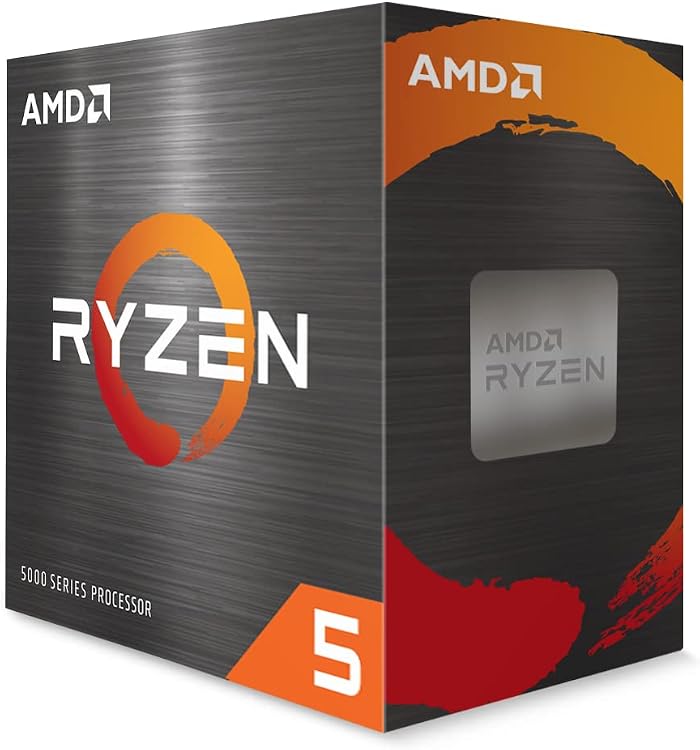
- 6 cores and 12 threads enable strong multi-threaded performance
- Unlocked multiplier allows user-driven overclocking
- Included cooler reduces need for separate purchases
- 19 MB cache aids quick access to frequently used data
- 65W TDP supports efficient operation in standard builds
Cons
- Requires a discrete graphics card for gaming use
- Restricted to the aging Socket AM4 platform
- No integrated graphics limits options in basic systems
| Processor Series | Ryzen 5 |
|---|---|
| Processor Speed | 4.2 GHz |
| Processor Socket | Socket AM4 |
| Secondary Cache | 16 MB |
| Wattage | 65 watts |
| Cache Memory Installed Size | 19 MB |
| Processor Count | 6 |
| Processor Number of Concurrent Threads | 12 |
| Processor Core Count | 6 |
| Cooling Method | air cooling |
Best suited to shoppers comparing cpu processors products who specifically need delivers smooth high-FPS gaming in popular titles when paired with a discrete graphics card, Supports efficient multitasking and productivity workloads with 12 processing threads.
Before buying, compare the exact model’s compatibility, dimensions, core specifications, warranty, recurring owner feedback, and current price against other cpu processors options. Retailer availability and pricing can change after publication.

Pros
- Gaming-focused 3D V-Cache technology
- Strong 8-core, 16-thread performance for gaming and multitasking
- Supports PCIe 4.0 on compatible X570 and B550 motherboards
- Well suited to AM4 upgrade builds using DDR4 memory
Cons
- CPU cooler is not included and a high-performance cooler is recommended
- Requires a compatible Socket AM4 motherboard and DDR4 memory platform
- May offer less upgrade flexibility than newer processor platforms
| Color | Ceramic Gray |
|---|---|
| Size | XX |
| Dimensions | 1.57 x 1.57 x 0.1 Inches |
| Weight | 0.21875 pounds |
| Product Group | Personal Computer |
| Binding | Personal Computers |
Best suited to shoppers comparing cpu processors products who specifically need 3D V-Cache technology helps deliver strong gaming performance in compatible titles, 8 cores and 16 threads provide capable multitasking and modern gaming performance.
Before buying, compare the exact model’s compatibility, dimensions, core specifications, warranty, recurring owner feedback, and current price against other cpu processors options. Retailer availability and pricing can change after publication.

Pros
- Expert compilation of performance tuning strategies from industry leaders
- Structured in two parts covering both analysis fundamentals and optimization techniques
- Focuses on practical application for real software development challenges
- Emphasizes software tuning as a key driver for future performance improvements
Cons
- Expects readers to have C/C++ programming experience and basic architecture knowledge
- Content is from the first edition and does not include updates from the second edition
- Demands familiarity with x86 assembly for full comprehension of examples
| ASIN | B08R6MTM7K |
|---|---|
| Publisher | Independently published |
| Publication date | November 16, 2020 |
| Language | English |
| Print length | 237 pages |
| ISBN-13 | 979-8575614234 |
| Item Weight | 9.9 ounces |
| Dimensions | 5.5 x 0.54 x 8.5 inches |
| Best Sellers Rank | #2,127,594 in Books (See Top 100 in Books) #180 in Computer Performance Optimization #2,162 in Software Design & Engineering #3,882 in Software Development (Books) |
Best suited to shoppers comparing performance optimization products who specifically need unlock deeper insights into CPU behavior to boost your application's speed and efficiency, Apply targeted optimizations like vectorization and loop improvements for measurable gains.
Before buying, compare the exact model’s compatibility, dimensions, core specifications, warranty, recurring owner feedback, and current price against other performance optimization options. Retailer availability and pricing can change after publication.

Pros
- High boost clock supports demanding games
- Strong multi-threaded content creation speeds
- Modern Zen 5 design for better efficiency
- Broad AM5 platform compatibility
Cons
- Needs AM5 motherboard and DDR5 memory
- May run hot during sustained loads
- Best paired with high-end cooling solutions
| Brand | AMD |
|---|---|
| CPU Manufacturer | AMD |
| CPU Model | Unknown |
| CPU Speed | 4.3 GHz |
| CPU Socket | Socket AM5 |
Best suited to shoppers comparing cpu processors products who specifically need enables smooth high-frame-rate gaming with rapid boost clocks, Accelerates video editing and 3D rendering through 16 cores.
Before buying, compare the exact model’s compatibility, dimensions, core specifications, warranty, recurring owner feedback, and current price against other cpu processors options. Retailer availability and pricing can change after publication.

Pros
- Clearly focused on computer architecture and high-performance systems
- Covers both hardware structures and computational engineering
- Suitable for students and technically minded readers
- Current 2025-2026 edition positioning
Cons
- The available product data does not provide a table of contents, sample pages, or detailed coverage information
- The format, length, illustrations, and supporting resources are not specified
- The limited review history makes long-term reader satisfaction difficult to evaluate
| Formats | Kindle eBook |
|---|---|
| Product Group | Digital Ebook Purchas |
| Binding | Kindle Edition |
Best suited to shoppers comparing computer science products who specifically need explores core computer architecture concepts through hardware structures and system design, Focuses on computational engineering for high-performance computing environments.
Before buying, compare the exact model’s compatibility, dimensions, core specifications, warranty, recurring owner feedback, and current price against other computer science options. Retailer availability and pricing can change after publication.

Pros
- Strong gaming and multi-thread performance from Zen 5 architecture
- Unlocked multiplier supports enthusiast overclocking
- Efficient power draw at 65 watts for balanced builds
- Long platform support on AM5 with modern memory standards
Cons
- Cooler not included requiring separate purchase
- May need new AM5 motherboard for existing users
- Early product stage with limited independent benchmarks
| Processor Series | Ryzen 5 |
|---|---|
| Processor Speed | 3.9 GHz |
| Processor Socket | Socket AM5 |
| Secondary Cache | 6 MB |
| Wattage | 65 watts |
| Cache Memory Installed Size | 38 |
| Processor Count | 6 |
| Processor Number of Concurrent Threads | 12 |
| Processor Core Count | 6 |
| Cooling Method | air-cooled |
Best suited to shoppers comparing cpu processors products who specifically need deliver smooth gameplay above 100 FPS in top titles through efficient Zen 5 cores, Manage heavy multitasking and creation tasks with 12 threads for….
Before buying, compare the exact model’s compatibility, dimensions, core specifications, warranty, recurring owner feedback, and current price against other cpu processors options. Retailer availability and pricing can change after publication.

Pros
- Strong multi-core performance for creation workloads
- Unlocked multiplier for enthusiast tuning
- Modern connectivity with PCIe 5.0 support
- Efficient hybrid architecture balances speed and power
Cons
- No thermal solution included requiring separate cooler purchase
- Requires new LGA 1851 motherboard for installation
- High power draw at 125W base may increase energy costs
| Processor Series | Core i9 |
|---|---|
| Processor Speed | 5.7 GHz |
| Processor Socket | LGA 1851 |
| Secondary Cache | 36 MB |
| Wattage | 125 watts |
| Cache Memory Installed Size | 40 MB |
| Processor Count | 24 |
| Processor Number of Concurrent Threads | 24 |
| Processor Core Count | 24 |
| Platform | Windows 11 |
Best suited to shoppers comparing cpu processors products who specifically need delivers high performance for gaming and content creation through hybrid core architecture that optimizes workloads efficiently, Unlocked design enables overclocking up to 5.7 GHz….
Before buying, compare the exact model’s compatibility, dimensions, core specifications, warranty, recurring owner feedback, and current price against other cpu processors options. Retailer availability and pricing can change after publication.

Pros
- Strong cache size improves real-world gaming speeds
- High thread count handles streaming alongside gameplay
- Modern AM5 socket supports long-term platform use
Cons
- Requires new AM5 motherboard and DDR5 memory
- Integrated graphics suit light tasks only
- Higher power use under full load compared to prior generations
| Processor Series | Ryzen 7 |
|---|---|
| Processor Speed | 4.2 GHz |
| Processor Socket | Socket AM5 |
| Secondary Cache | 8 MB |
| Wattage | 120 watts |
| Cache Memory Installed Size | 104 |
| Processor Count | 1 |
| Processor Number of Concurrent Threads | 16 |
| Processor Core Count | 8 |
| Platform | Windows 10, Windows 11 |
Best suited to shoppers comparing cpu processors products who specifically need delivers smooth multitasking for gaming and content creation with 16 threads, Large 104 MB cache boosts game loading and frame rates in demanding titles.
Before buying, compare the exact model’s compatibility, dimensions, core specifications, warranty, recurring owner feedback, and current price against other cpu processors options. Retailer availability and pricing can change after publication.

Pros
- Strong multi-core capability for demanding tasks
- Unlocked for performance tuning
- Modern high-speed connectivity options
- Good base power efficiency for its class
Cons
- Requires purchase of new LGA1851 motherboard
- High turbo power draw may need advanced cooling
- New platform may face early compatibility hurdles
| Processor Series | Intel Core Ultra 5 |
|---|---|
| Processor Speed | 3.3 GHz |
| Processor Socket | LGA1851 |
| Secondary Cache | 30 MB |
| Wattage | 125 watts |
| Cache Memory Installed Size | 30 MB |
| Processor Count | 18 |
| Processor Number of Concurrent Threads | 36 |
| Processor Core Count | 16 |
| Cooling Method | Air |
Best suited to shoppers comparing cpu processors products who specifically need maximizes gaming and multitasking with 18 cores for faster workload handling, Enables overclocking on Z-series chipsets for enthusiasts seeking peak speeds.
Before buying, compare the exact model’s compatibility, dimensions, core specifications, warranty, recurring owner feedback, and current price against other cpu processors options. Retailer availability and pricing can change after publication.
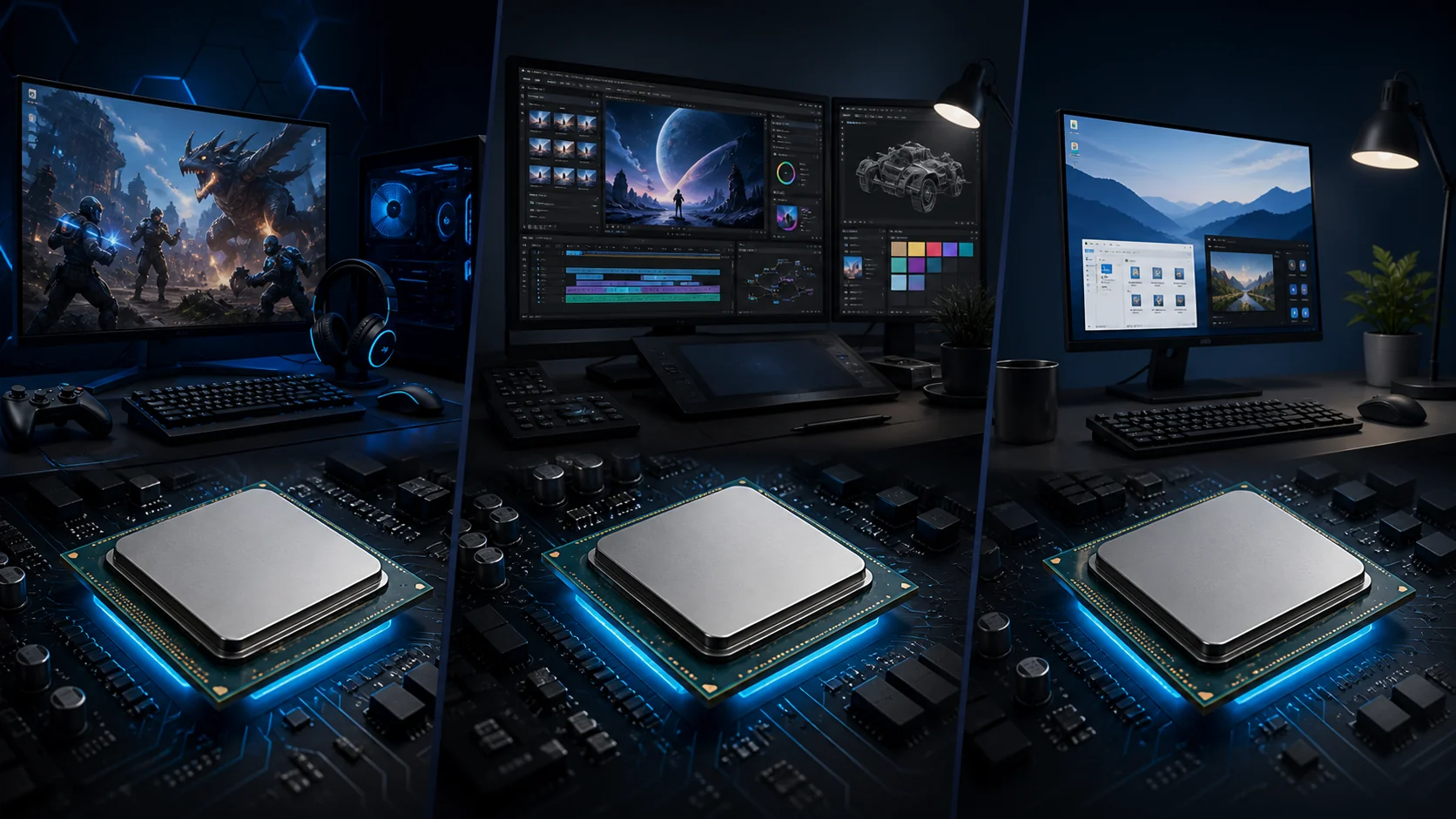
How to Choose the Right CPU Comparison Chart 2026
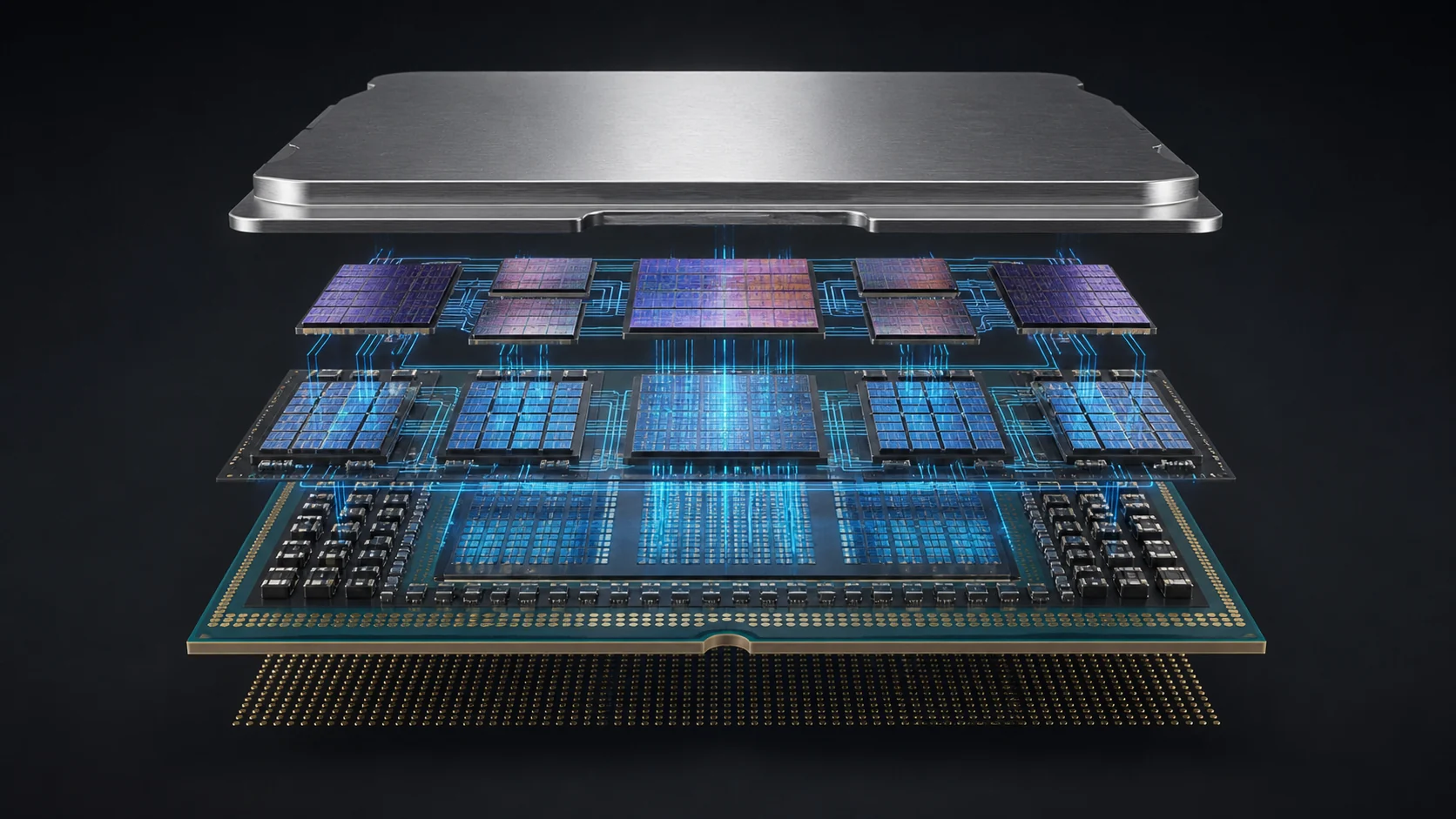
The right CPU in a CPU comparison chart 2026 depends on your workload first and the spec sheet second. A gaming-first build benefits from strong per-core performance and, in many titles, large last-level cache. A creator or workstation-style PC often benefits more from additional cores, more threads, and sustained boost behavior under long renders, exports, or development workloads.
Gaming Performance
For gaming, the CPU must feed the graphics card quickly enough to avoid frame pacing issues, especially at high refresh rates. The AMD Ryzen 7 9800X3D and AMD Ryzen 7 7800X3D stand out in the supplied data because both use large 3D V-Cache configurations, with the Ryzen 7 9800X3D listed as an 8-core, 16-thread Zen 5 processor with 96MB L3 cache and boost clocks up to 5.2GHz.
The Ryzen 7 7800X3D remains relevant for gaming-focused AM5 systems because it is also an 8-core processor with a large cache configuration. If your main workload is competitive shooters, simulation games, MMORPGs, or CPU-sensitive esports titles, these X3D models are usually more targeted gaming choices than simply choosing the highest core count.
For GPU-heavy builds, the CPU decision should also match the graphics card tier. If you are building around an extreme GPU, our CPU guide for RTX 5090 builds can help you think through bottlenecks, resolution, and platform balance.
Productivity Performance
Productivity workloads scale differently from games. Video editing, code compilation, 3D rendering, virtual machines, and heavy multitasking can benefit from more cores and threads when the software is built to use them. In the supplied data, the AMD Ryzen 9 9950X3D offers 16 cores on the Zen 5 architecture with a listed boost clock up to 5.7GHz, making it a strong candidate for mixed gaming and content creation systems.
The Intel Core Ultra 7 Processor 270K Plus and Intel Core Ultra 9 Desktop Processor 285K use a hybrid architecture with P-cores and E-cores. The Core Ultra 7 270K Plus is listed with 24 cores, arranged as 8 P-cores and 16 E-cores, while the Core Ultra 9 285K is also listed as a 24-core unlocked desktop processor with up to 5.7GHz boost and 40MB cache. These models make the most sense when your workload can benefit from parallel background tasks, encoding, compiling, or creator applications.
If your system is primarily for software development, scripting, local containers, or compiler-heavy work, also compare platform cost, memory capacity, and motherboard features. Our CPU guide for programming covers workload-specific considerations beyond raw core count.
Core Count and Thread Count
Core count is important, but it is not a universal ranking system. A 6-core processor such as the AMD Ryzen 5 9600X can still be a smart choice for a gaming PC or everyday desktop when paired with an appropriate GPU, enough DDR5 memory, and a motherboard that supports the features you need. According to the supplied data, it offers 6 cores, 12 threads, Zen 5 architecture, DDR5-5600 support, and boost clocks up to 5.4GHz.
An 8-core CPU is often the comfortable middle ground for gaming, streaming with GPU encoding, multitasking, and general enthusiast use. The Ryzen 7 9800X3D and Ryzen 7 7800X3D both fit this role, while the Ryzen 9 9950X3D moves into a higher multitasking and creator tier with 16 cores.
Intel’s hybrid desktop CPUs should be read differently because P-cores and E-cores are designed for different scheduling roles. The Intel Core Ultra 5 Processor 250K Plus is listed with 18 cores arranged as 6 P-cores and 12 E-cores, while the Core Ultra 7 270K Plus and Core Ultra 9 285K step up to 24-core configurations. For gaming alone, more cores may not always translate into better value, but for simultaneous gaming, recording, browser tabs, chat apps, and background workloads, extra cores can improve responsiveness.
Platform Compatibility
Platform compatibility is one of the biggest reasons to use a CPU comparison chart 2026 before buying. AMD AM5 processors such as the Ryzen 7 9800X3D, Ryzen 9 9950X3D, Ryzen 7 7800X3D, and Ryzen 5 9600X require compatible AM5 motherboards and DDR5 memory. The Ryzen 5 5500 is different: it uses the older AM4 platform and DDR4-3200 support according to the supplied data.
Intel Core Ultra 250K Plus, 270K Plus, and 285K processors require Intel 800 Series chipset-based motherboards with the LGA1851 socket. Their platform support includes PCIe 5.0 and PCIe 4.0, DDR5 memory support, and unlocked tuning when paired with the appropriate Z-series chipset on eligible models. Do not assume compatibility with older Intel motherboards, even if the cooler mounting or board size looks familiar.
Motherboard selection also affects memory speed support, PCIe lane availability, BIOS features, storage layout, and power delivery. If you are comparing processors and boards together, our Motherboard Reviews category is a useful next stop.
Power, Cooling, and Sustained Boost
Power behavior matters because a CPU that looks excellent on paper still needs enough cooling and motherboard power delivery to sustain performance. The Intel Core Ultra 5 250K Plus and Core Ultra 7 270K Plus are listed with 125W processor base power and 250W max turbo power. That makes cooler selection and case airflow important, especially if you plan to unlock power limits or tune performance.
Several supplied processors do not include a cooler. The Ryzen 7 9800X3D, Ryzen 5 9600X, and Intel Core Ultra 9 285K are explicitly listed without a thermal solution or cooler in the provided data. That does not make them poor choices, but it does mean the total build cost must include a capable air cooler or liquid cooler.
The AMD Ryzen 5 5500 is the exception in the supplied list because it includes a Wraith Stealth cooler. That makes it easier to complete a budget AM4 build, although buyers should still verify case airflow and fan noise expectations before choosing the bundled cooler for long gaming sessions.
Price-to-Performance Value
Value is not the same as the lowest checkout price. A good-value CPU delivers enough performance for your actual workload while avoiding unnecessary platform cost, cooling cost, and upgrade limitations. For a new DDR5 gaming build, the Ryzen 5 9600X can be a value-minded option if you do not need X3D cache or high-end creator performance.
For a budget upgrade on an existing AM4 system, the Ryzen 5 5500 is the most practical low-cost option in the supplied data because it supports DDR4 and includes a cooler. However, it is not the right pick for a new high-end gaming PC or an enthusiast GPU build where AM5 or LGA1851 gives you a more current platform.
For premium mixed-use builds, the Ryzen 9 9950X3D and Intel Core Ultra 9 285K target users who want more than basic gaming performance. The better choice depends on whether you prioritize 3D V-Cache and AM5, or Intel’s hybrid core design, LGA1851 platform, and unlocked tuning support.
Upgrade Path and Build Longevity
Upgrade path should be considered before you buy the CPU, not after. AM5 processors in this guide use DDR5 and a current AMD desktop platform. That makes them better suited to new builds than older AM4 processors when you want a modern motherboard, newer memory support, and stronger forward-looking platform features.
Intel LGA1851 processors in the supplied data require Intel 800 Series chipset-based motherboards. If you choose the Intel Core Ultra 5 250K Plus, Core Ultra 7 270K Plus, or Core Ultra 9 285K, verify BIOS support, cooler compatibility, and whether your motherboard supports the memory speeds and tuning features you expect.
If you are unsure how many cores you actually need, avoid overbuying for hypothetical workloads. Our guide on how many CPU cores you need for gaming explains where extra cores help and where GPU choice usually matters more.
CPU Comparison Table
The table below includes only eligible desktop CPUs from the supplied data. It excludes CPU books and non-processor items because they do not satisfy the essential product requirement for a CPU comparison chart 2026.
| Model | Platform | Core Configuration | Key Specification | Best For | Main Trade-Off |
|---|---|---|---|---|---|
| AMD Ryzen 7 9800X3D | AM5 | 8 cores / 16 threads | Zen 5, 96MB L3 cache, up to 5.2GHz | Gaming-first AM5 builds | Cooler not included |
| AMD Ryzen 9 9950X3D | AM5 | 16 cores | Zen 5, up to 5.7GHz boost | Gaming and content creation | Premium-class CPU for users who need the extra cores |
| Intel Core Ultra 9 285K | LGA1851 / Intel 800 Series | 24 cores: 8 P-cores + 16 E-cores | Unlocked, up to 5.7GHz, 40MB cache | Enthusiast Intel builds | No thermal solution included |
| Intel Core Ultra 7 270K Plus | LGA1851 / Intel 800 Series | 24 cores: 8 P-cores + 16 E-cores | Up to 5.5GHz, DDR5 up to 7200 MT/s listed | Creators and heavy multitaskers | Requires strong cooling for high turbo power behavior |
| Intel Core Ultra 5 250K Plus | LGA1851 / Intel 800 Series | 18 cores: 6 P-cores + 12 E-cores | Unlocked, PCIe 5.0/4.0, DDR5 support | Balanced Intel gaming and productivity builds | New platform cost may be higher than reuse builds |
| AMD Ryzen 7 7800X3D | AM5 | 8 cores | 8MB L2 plus 96MB L3 cache, Radeon Graphics listed | Gaming-focused AM5 systems | Older Zen 4 generation than Ryzen 9000 models |
| AMD Ryzen 5 9600X | AM5 | 6 cores / 12 threads | Zen 5, up to 5.4GHz, DDR5-5600 support | Mainstream gaming and everyday builds | Cooler not included |
| AMD Ryzen 5 5500 | AM4 | 6 cores / 12 threads | Up to 4.2GHz, DDR4-3200, Wraith Stealth cooler | Budget AM4 upgrades | Older platform with less forward-looking upgrade potential |
Why You Should Trust PCGearWiki
PCGearWiki evaluates CPU recommendations by separating verified specifications from editorial judgment. We check socket compatibility, platform requirements, memory support, core configuration, boost behavior where listed, cooling requirements, and whether a processor makes sense for the workload it is being recommended for.
We do not invent benchmark numbers, temperatures, power measurements, or frame rates when they are not present in the source data. Our process is designed to help you compare processors realistically, and you can read more about our approach in the PCGearWiki review methodology.
Some links may be affiliate links, which can support our work if you purchase through them. Affiliate availability does not change our compatibility checks, product eligibility filtering, or workload-based recommendations.
Final Thoughts
Best Overall: AMD Ryzen 7 9800X3D. The Ryzen 7 9800X3D is the most broadly compelling choice for gaming-first builders in this CPU comparison chart 2026 because it combines Zen 5 architecture, 8 cores, 16 threads, and 96MB L3 cache. It is ideal for high-refresh gaming PCs where CPU-sensitive performance matters, but you must budget for a separate cooler.
Best Value: Intel Core Ultra 5 Processor 250K Plus. The Core Ultra 5 250K Plus offers an 18-core hybrid design, unlocked tuning support, DDR5, PCIe 5.0/4.0 support, and compatibility with Intel 800 Series chipset-based motherboards. It is a strong fit for builders who want a modern Intel platform without jumping straight to the most expensive enthusiast tier.
Best Budget: AMD Ryzen 5 5500. The Ryzen 5 5500 is the practical budget choice when you are upgrading or building around AM4 and DDR4. Its included Wraith Stealth cooler helps reduce total build cost, but it is not the best fit for a new high-end build or a top-tier GPU pairing.
Best Premium or Enthusiast Pick: AMD Ryzen 9 9950X3D. The Ryzen 9 9950X3D is the strongest premium recommendation for users who want a high-end AM5 processor for both gaming and content creation. Its 16-core Zen 5 design and listed boost clock up to 5.7GHz make it better suited to mixed heavy workloads than a pure budget or mainstream gaming CPU.
If you are building a PC for simultaneous play, streaming, and content creation, compare your shortlist with our CPU guide for gaming and streaming before finalizing the build.
Frequently Asked Questions
What is the best CPU comparison chart 2026 pick in 2026?
For most gaming-focused builds, the AMD Ryzen 7 9800X3D is the strongest overall pick from the eligible supplied processors because it combines Zen 5, 8 cores, 16 threads, and 96MB L3 cache. For mixed gaming and creator workloads, the AMD Ryzen 9 9950X3D is the better premium choice.
How much should I spend on a CPU comparison chart 2026 option?
Spend based on the total platform, not just the processor. A CPU that requires a new motherboard, DDR5 memory, and a stronger cooler may cost more in the final build than a lower-priced processor for an existing platform.
Is it worth upgrading your CPU in 2026?
It is worth upgrading if your current CPU limits your GPU, causes poor frame pacing, slows your editing workflow, or lacks the platform features you need. If your games are GPU-bound and your system is otherwise responsive, a graphics card, SSD, or monitor upgrade may produce a more noticeable improvement.
Which CPU platform should I choose for a new gaming PC?
For a new build, AM5 and Intel LGA1851 are the most relevant platforms in the supplied eligible CPU data. AM4 still makes sense for budget reuse builds, but a new high-end system generally benefits from a newer platform, DDR5 memory support, and stronger upgrade flexibility.
Do more CPU cores always improve gaming performance?
No. Many games benefit more from strong per-core performance, cache design, and overall latency than from very high core counts. If you want a deeper explanation, read our guide on how many CPU cores gaming actually needs.
Related guide: AMD vs Intel CPUs in 2026: Gaming, Productivity and Value
Add PCGearWiki as a preferred source on Google
Sources and Verification
Research basis: Product identity, dimensions, interfaces, supported features, and warranty terms are checked against available manufacturer documentation and current retailer listings. Price, stock, and aggregate customer ratings can change after publication.
Testing disclosure: Unless this article explicitly states that PCGearWiki performed hands-on testing and describes the test setup, recommendations are research-based editorial evaluations rather than PCGearWiki laboratory measurements. Customer feedback is used to identify recurring ownership patterns, not as proof of technical performance.
Last source review: August 30, 2026. See our Review Methodology, Editorial Policy, and Corrections Policy.


Write Your Review
No reviews yet. Be the first to share your experience!