

Last updated: September 22, 2026
Quick picks
- Top Pick: Shure MV7+ USB-C XLR Dynamic Microphone 9.5 Outstanding
- Highest Score: FIFINE K688 USB/XLR Dynamic Podcast Microphone Kit 9.8 Outstanding
Choosing the best microphone for streaming requires balancing capsule sensitivity against room acoustics and interface complexity. Dynamic microphones excel at rejecting ambient keyboard chatter in untreated rooms, while condenser capsules deliver higher treble detail at the risk of capturing unwanted room reflections. USB interfaces offer instant plug-and-play operation for standard streaming rigs, whereas XLR setups require discrete audio interfaces that increase cost but provide analog headroom.
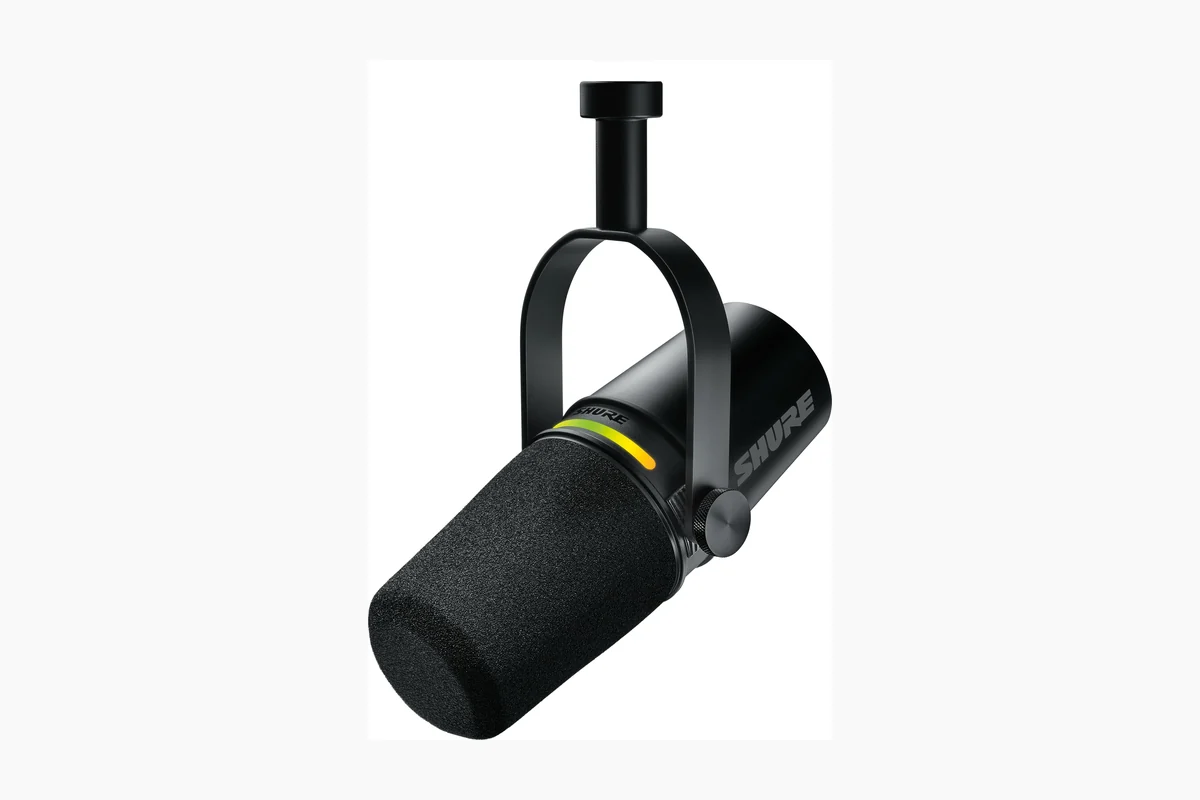
In this guide for September 2026, we evaluated 10 leading models across brands including FIFINE, MAONO, Shure and more. Whether upgrading from a headset or building an enthusiast broadcast desk alongside peripherals like hall effect keyboards, matching polar pattern, capsule design, and connection standard ensures clean voice capture without digital clipping. We analyzed available specifications, mounting hardware, and acoustic isolation across price points spanning $44.98 – $299.00 to identify setups that minimize post-processing friction.
Compare at a Glance
| # | Product | Editorial Score | Connectivity Technology | Connector Type |
|---|---|---|---|---|
| 1 | Shure MV7+ USB-C XLR Dynamic Microphone | 9.5 Outstanding | USB, XLR | USB Type-C, XLR |
| 2 | HyperX QuadCast 2 USB Gaming Microphone | 9.5 Outstanding | USB | USB Type-C |
| 3 | FIFINE K688 USB/XLR Dynamic Podcast Microphone Kit | 9.8 Outstanding | USB, XLR | USB, XLR |
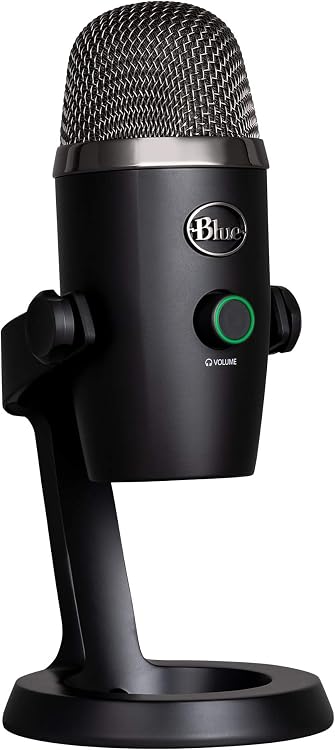
| 4 | Logitech Blue Yeti Nano USB Microphone | 9.5 Outstanding | USB | USB |
| 5 | Logitech Blue Yeti USB Microphone Blackout | 9.4 Excellent | USB | USB |
| 6 | FIFINE AM8 USB/XLR Dynamic Microphone | 9.7 Outstanding | XLR | USB, XLR |
| 7 | Audio-Technica AT2035 Cardioid Condenser | 9.5 Outstanding | XLR | XLR |
| 8 | HyperX SoloCast 2 USB Condenser Gaming Microphone | 9.5 Outstanding | USB | USB Type-C |
| 9 | MAONO PD200XS USB/XLR Dynamic Microphone Kit | 9.5 Outstanding | USB, USB Type C, XLR | USB, USB Type-C, XLR |
| 10 | Sennheiser Profile USB Microphone Streaming Set | 9.5 Outstanding | USB | USB |

Pros
- Hybrid USB-C and XLR outputs support both beginners and advanced studio users
- Auto level and denoising features reduce manual adjustments during sessions
- Durable construction with intuitive LED controls enhances live streaming workflows
- Built-in reverb adds creative options without extra software processing
Cons
- Higher price point compared to basic USB microphones
- XLR integration requires separate audio interface or mixer purchases
- Frequency response prioritizes voice and may limit full music instrument capture
| Connectivity Technology | USB, XLR |
|---|---|
| Connector Type | USB Type-C, XLR |
| Special Feature | LED Light, Mute Function |
| Compatible Devices | Personal Computer, Windows 10, macOS 12 |
| Polar Pattern | Unidirectional |
| Audio Sensitivity | 40 Decibels |
| Microphone Form Factor | Handheld |
| Power Source | Corded Electric |
| Signal-to-Noise Ratio | 60 dB |
| Hardware Platform | Camera |
Best suited to shoppers comparing vocal products who specifically need maintain consistent professional audio levels automatically as auto mode adjusts in real time to your distance and speaking volume, Capture clear focused vocals in….
Before buying, compare the exact model’s compatibility, dimensions, core specifications, warranty, recurring owner feedback, and current price against other vocal options. Retailer availability and pricing can change after publication.

Pros
- High-resolution 24-bit 96kHz audio provides excellent vocal clarity
- Onboard controls minimize workflow interruptions during live sessions
- Versatile polar patterns and improved shock mount support varied recording setups
- Durable aluminum construction offers a premium build feel
- Broad compatibility across computers and gaming consoles
Cons
- Wired USB-C design restricts mobility compared to wireless microphones
- Full lighting customization requires installation of companion software
- Advanced mounting may still need separate stands or boom arms
| Connectivity Technology | USB |
|---|---|
| Connector Type | USB Type-C |
| Special Feature | Mute Function, Noise Reduction, Volume Control |
| Compatible Devices | Personal Computer |
| Polar Pattern | cardioid, omnidirectional, bi-directional, stereo |
| Impedance | 32 Ohms |
| Microphone Form Factor | Boundary |
| Power Source | Corded Electric |
| Signal-to-Noise Ratio | 65 dB |
| Hardware Platform | Laptop, PC |
Best suited to shoppers comparing multipurpose products who specifically need deliver studio-quality 24-bit 96kHz recordings that capture clear vocal detail for streaming and podcasting, Adjust gain, playback volume, monitoring and polar patterns instantly using….
Before buying, compare the exact model’s compatibility, dimensions, core specifications, warranty, recurring owner feedback, and current price against other multipurpose options. Retailer availability and pricing can change after publication.

FIFINE K688 USB/XLR Dynamic Podcast Microphone Kit
Pros
- Versatile USB and XLR connections for varied setups
- Includes durable boom arm with shock mount and windscreen
- Intuitive onboard controls available in USB mode
- Strong noise rejection from dynamic cardioid design
Cons
- All function keys disabled during XLR connection
- C-clamp fits only desks under 2 inches thick
- Non-standard XLR cable may cause noise or incompatibility
| Connectivity Technology | USB, XLR |
|---|---|
| Connector Type | USB, XLR |
| Special Feature | Mute Function, Noise Reduction, Stand, Volume Control |
| Compatible Devices | Audio Interface, Audio Mixer, Laptop, Personal Computer |
| Polar Pattern | Unidirectional |
| Microphone Form Factor | Microphone with Arm Stand |
| Power Source | Corded Electric |
| Signal-to-Noise Ratio | 80 dB |
| Hardware Platform | Laptop, Mixer/Audio Interface, PC |
| Number of Channels | 1 |
Best suited to shoppers comparing instrument products who specifically need experience natural, distortion-free audio reproduction ideal for clear podcasting and vocal recordings., Benefit from dual USB and XLR connectivity to easily adapt to different….
Before buying, compare the exact model’s compatibility, dimensions, core specifications, warranty, recurring owner feedback, and current price against other instrument options. Retailer availability and pricing can change after publication.
Pros
- Clear 24-bit audio performance for content creation
- Compact size fits small setups while remaining camera-ready
- Built-in monitoring prevents recording errors
- Versatile patterns handle both solo and group use
- Driver-free USB operation on both Mac and PC
Cons
- Advanced effects require separate desktop software
- No onboard gain control limits quick level tweaks
- USB-only design restricts direct connection to pro mixers
| Connectivity Technology | USB |
|---|---|
| Connector Type | USB |
| Special Feature | Stand |
| Compatible Devices | Camera, Conferencing, Notebook, Podcasting |
| Polar Pattern | Unidirectional |
| Audio Sensitivity | 120 Decibels |
| Microphone Form Factor | Desktop |
| Power Source | Usb Microphone,Usb Condenser |
| Number of Batteries | 1 Lithium Ion batteries required. |
| Signal-to-Noise Ratio | 80 dB |
Best suited to shoppers comparing multipurpose products who specifically need deliver broadcast-quality 24-bit audio that gives streams and recordings professional presence without extra gear, Switch between cardioid and omni patterns to capture solo vocals….
Before buying, compare the exact model’s compatibility, dimensions, core specifications, warranty, recurring owner feedback, and current price against other multipurpose options. Retailer availability and pricing can change after publication.

Pros
- Four versatile pickup patterns for various recording needs
- Easy plug and play installation on multiple platforms
- Built-in controls for immediate audio management
- Real-time no-latency monitoring capability
Cons
- Requires Logitech G HUB software for accessing all voice effects
- Limited to USB connectivity rather than professional XLR outputs
- Basic desktop stand may benefit from additional accessories for optimal placement
| Connectivity Technology | USB |
|---|---|
| Connector Type | USB |
| Special Feature | Stand |
| Compatible Devices | Headphone, Personal Computer |
| Polar Pattern | Multipattern |
| Audio Sensitivity | 120 Decibels |
| Impedance | 16 Ohms |
| Microphone Form Factor | Tri-Capsule Array |
| Power Source | Corded Electric |
| Signal-to-Noise Ratio | 100 |
Best suited to shoppers comparing multipurpose products who specifically need capture broadcast-quality sound with a three-capsule array for professional results in streaming and recording, Customize your voice with Blue VO!CE effects including modulation and….
Before buying, compare the exact model’s compatibility, dimensions, core specifications, warranty, recurring owner feedback, and current price against other multipurpose options. Retailer availability and pricing can change after publication.

Pros
- Dual USB and XLR options provide setup flexibility across devices
- Onboard controls enable quick adjustments without software reliance
- Effective noise rejection supports clear vocal performance
- RGB customization enhances visual appeal in gaming spaces
- Real-time monitoring improves recording accuracy
Cons
- RGB lighting and onboard controls work only in USB mode
- XLR connection requires a separate cable not included in the box
- Best results demand speaking within 2 to 6 inches of the mic
| Connectivity Technology | XLR |
|---|---|
| Connector Type | USB, XLR |
| Special Feature | Headphones Jack, Monitoring Volume Control, Buitin 3/8" and 5/8” Threads, Mute Function, RGB Lights, RGB Control Key, Volume Control, XLR/USB Connection See more |
| Compatible Devices | Desktop, Laptop, Mixer, Sound Card, Audio Interface, Personal Computer |
| Polar Pattern | Unidirectional |
| Microphone Form Factor | Desktop Mcirophone |
| Power Source | Corded Electric |
| Signal-to-Noise Ratio | 80 dB |
| Hardware Platform | Laptop, Desktop, Mixer, Sound Card, Audio Interface, PC |
| Number of Channels | 1 |
Best suited to shoppers comparing multipurpose products who specifically need switch between simple USB plug-and-play and professional XLR output to match any recording environment without extra adapters., Control RGB lighting in multiple colors and….
Before buying, compare the exact model’s compatibility, dimensions, core specifications, warranty, recurring owner feedback, and current price against other multipurpose options. Retailer availability and pricing can change after publication.

Pros
- Natural detailed sound reproduction suitable for critical applications
- Rugged construction for reliable studio and live use
- Effective isolation features including shock mount and cardioid pattern
- Versatile controls like filter and pad for varied recording needs
- Low noise performance enhances overall audio clarity
Cons
- Requires phantom power and an audio interface for XLR connection
- May need extra accessories such as cables or boom arms for full setups
- Best performance achieved in treated acoustic spaces
| Connectivity Technology | XLR |
|---|---|
| Connector Type | XLR |
| Special Feature | Designed for critical home/project/professional studio applications and live performance this side-address cardioid studio condenser delivers exceptional detail and low noise. Equipped with a switchable 80 Hz high-pass filter and 10 dB pad the AT2035 handles high sound pressure levels with ease. Along with its rugged construction and high-performance specifications the AT2035 provides an exceptional level of consistency from model to model. It comes equipped with a protective pouch and a custom See more |
| Compatible Devices | Audio Mixer |
| Polar Pattern | Unidirectional |
| Audio Sensitivity | 33 Decibels |
| Microphone Form Factor | Large Diaphragm |
| Power Source | Corded Electric |
| Number of Batteries | 1 Nonstandard Battery batteries required. |
| Signal-to-Noise Ratio | 70 dB |
Best suited to shoppers comparing vocal products who specifically need captures clear vocals with focused isolation from background sounds using the cardioid pattern, Produces smooth natural audio with minimal noise for professional quality recordings.
Before buying, compare the exact model’s compatibility, dimensions, core specifications, warranty, recurring owner feedback, and current price against other vocal options. Retailer availability and pricing can change after publication.

Pros
- All-in-one construction removes the need for separate accessories.
- High-resolution audio delivers focused and clean vocal recordings.
- Software customization allows personalized filters stored on the mic itself.
- Compact stable design fits easily into gaming or streaming setups.
- Simple tap-to-mute operation provides quick reliable control.
Cons
- No headphone jack is included for real-time audio monitoring.
- Only a single cardioid polar pattern is available with no multi-pattern options.
- Lighting remains basic with a fixed red LED rather than customizable RGB.
| Connectivity Technology | USB |
|---|---|
| Connector Type | USB Type-C |
| Special Feature | Volume Control |
| Compatible Devices | Laptop |
| Impedance | 1 Ohms |
| Microphone Form Factor | Desktop |
| Power Source | USB Powered |
| Hardware Platform | PC |
| Number of Channels | 1 |
| Frequency Response | 20 KHz |
Best suited to shoppers comparing multipurpose products who specifically need record immediately with plug-and-play USB-C connectivity that requires no drivers or setup., Achieve studio-grade vocal clarity through 24-bit depth and 96kHz sampling in a….
Before buying, compare the exact model’s compatibility, dimensions, core specifications, warranty, recurring owner feedback, and current price against other multipurpose options. Retailer availability and pricing can change after publication.

Pros
- Dual USB and XLR connectivity supports both beginners and pro interfaces
- Real-time monitoring and one-click mute improve workflow efficiency
- RGB lighting and software controls add creative personalization
- Complete kit with boom arm reduces need for extra purchases
Cons
- Software features unavailable in XLR mode
- XLR cable must be purchased separately
- RGB effects may distract in minimalist setups
| Recommended Uses For Product | Audiobooks, Content Creation, Gaming, Music Production, Online Teaching, Podcasting, Recording, Singing, Streaming, Voice Over, Youtube See more |
|---|---|
| Brand | MAONO |
| Model Name | MAONO PD200XS |
| Connectivity Technology | USB, USB Type C, XLR |
| Connector Type | USB, USB Type-C, XLR |
| Special Feature | Controlled RGB Lighting, Dual Mode USB/XLR, MAONO Link Software(Download For Windows&Mac&Android), Mic Gain and Volume Control, Mute Function and 0-latency Monito See more |
| Compatible Devices | Audio Interface, Laptop, MAC OS, Personal Computer, Smartphone |
| Color | Black |
| Included Components | 2.5m USB-C to USB-A/C Cable, Dynamic Microphone, Microphone boom arm, Shock Mount, User Manual |
| Polar Pattern | Unidirectional |
Best suited to shoppers comparing vocal products who specifically need capture clear vocals with reduced background noise thanks to the cardioid pattern for focused podcast and stream audio, Customize sound effortlessly via software with….
Before buying, compare the exact model’s compatibility, dimensions, core specifications, warranty, recurring owner feedback, and current price against other vocal options. Retailer availability and pricing can change after publication.

Pros
- German-engineered cardioid capsule provides strong off-axis noise rejection
- Broad device compatibility including MacOS, Windows, iPadOS, and Android
- Self-locking tilt joint and LED indicators support stable and visible operation
- All essential accessories included for immediate flexible setup
Cons
- Fixed cardioid pattern only with no option to switch polar patterns
- Requires close placement within six inches for best vocal warmth and clarity
- No software options for digital effects or EQ adjustments
| Connectivity Technology | USB |
|---|---|
| Connector Type | USB |
| Special Feature | USB |
| Compatible Devices | スマートフォン, タブレット, ノートパソコン, パソコン |
| Polar Pattern | Unidirectional |
| Audio Sensitivity | 125 Decibels |
| Microphone Form Factor | Table Array |
| Power Source | Corded Electric |
| Signal-to-Noise Ratio | 25 dB |
| Hardware Platform | PC, Smartphone, Tablet |
Best suited to shoppers comparing multipurpose products who specifically need achieve clear professional vocals instantly through simple USB-C plug-and-play setup across multiple devices, Enhance audience engagement with warm natural sound from the cardioid condenser….
Before buying, compare the exact model’s compatibility, dimensions, core specifications, warranty, recurring owner feedback, and current price against other multipurpose options. Retailer availability and pricing can change after publication.
How to Choose the Best Microphone For Streaming
Dynamic vs Condenser Capsules
Microphone capsule architecture determines sensitivity and off-axis isolation. Dynamic microphones use a moving coil attached to a diaphragm placed within a magnetic field. Sound waves vibrate the diaphragm, moving the coil to generate electrical current. Because moving-coil assemblies have higher physical mass, dynamic capsules require higher acoustic pressure to actuate. This mechanical resistance makes dynamic microphones naturally resistant to low-energy transient sounds such as mechanical switch clatter, distant air conditioning hum, and room reverb. Options like the Shure MV7+ Dynamic Microphone, FIFINE K688 Podcast Microphone Kit, and FIFINE USB/XLR Dynamic Microphone for Podcast operate on this principle, isolating spoken vocals within an optimal working distance of 2 to 6 inches.
Condenser microphones utilize an electrostatic design featuring an ultralight conductive diaphragm positioned adjacent to a fixed metal backplate. Changes in capacitance convert acoustic energy into electrical signals. This low-mass design yields rapid transient response and flat frequency reproduction up to 20 kHz. However, high sensitivity causes condenser models to capture room reflections, mouse clicks, and PC chassis fan intake. Models such as the HyperX SoloCast 2 – Gaming USB Condenser Mic, Logitech Creators Blue Yeti USB Microphone for PC, and Sennheiser Professional Profile USB Microphone offer studio-grade clarity but perform best when positioned close to the speaker inside acoustically treated spaces or paired with software expansion gates.
Connection Standard: USB Simplicity vs XLR Expansion
Connection interface impacts budget, signal chain flexibility, and latency. Native USB microphones integrate an analog-to-digital converter (ADC), internal preamplifier, and headphone monitoring amplifier directly onto internal circuit boards. This architecture allows direct connection to PC, macOS, and PS5 systems without external audio gear. The HyperX QuadCast 2 – USB Microphone for and Logitech for Creators Blue Yeti Nano USB provide instant zero-latency monitoring and plug-and-play driver compliance, lowering initial costs for gaming streamers.
XLR interfaces output balanced analog audio over 3-pin cabling, requiring an audio interface or dedicated mixer equipped with preamplifiers and 48V phantom power. Dedicated XLR hardware prevents digital ground loop noise originating from computer motherboards and enables analog hardware expansion including inline preamps, optical compressors, and physical EQ strips. The Audio-Technica AT2035 Cardioid Condenser relies exclusively on XLR, catering to professional studio routing. Hybrid solutions like the MAONO XLR/USB Dynamic Microphone Kit and Shure MV7+ feature dual USB-C and XLR outputs, allowing creators to start on USB and migrate to an analog mixer setup later.
Polar Pattern Selection and Ambient Noise Attenuation
Polar patterns define capsule sensitivity across three dimensions. A cardioid polar pattern captures sound directly in front of the capsule while rejecting acoustic energy arriving from 180 degrees off-axis at the rear. For solo gaming streams, cardioid remains the essential standard because pointing the rear null angle toward the keyboard minimizes typing clatter in the broadcast mix. Fixed cardioid designs like the HyperX SoloCast 2 – Gaming USB Condenser Mic optimize capsule geometry specifically for single-source voice capture.
Multi-pattern microphones integrate capsule arrays to generate switchable patterns. The Logitech Creators Blue Yeti USB Microphone for PC employs a three-capsule array providing cardioid, omnidirectional, bidirectional (figure-8), and stereo modes. Omnidirectional patterns capture sound equally from 360 degrees, suitable for multi-person roundtable discussions. Bidirectional patterns capture front and rear signals while cancelling side noise, matching face-to-face interview formats. Stereo patterns record discrete left and right channels for ASMR or acoustic instruments. For dedicated solo streaming desks, multi-pattern capabilities introduce unnecessary capsule complexity unless multi-host formats are actively planned.
Sampling Rates, Bit Depth, and Audio Fidelity
Digital conversion quality dictates post-processing headroom. Standard broadcast streaming operates at 16-bit / 48kHz, which provides 96 dB of dynamic range, sufficient for compressed Twitch and YouTube live feeds. However, 24-bit recording increases theoretical dynamic range to 144 dB, lowering the digital noise floor and preventing harsh digital clipping when vocal volume spikes during intense competitive moments. The HyperX SoloCast 2 – Gaming USB Condenser Mic and Logitech for Creators Blue Yeti Nano USB provide 24-bit conversion natively up to 96kHz.
Frequency response curves alter voice presentation. Standard vocal reproduction spans 50 Hz to 16 kHz. Microphones with extended bottom-end response down to 20 Hz, such as the HyperX QuadCast 2 – USB Microphone for, capture sub-bass chest resonance but require acoustic isolation or high-pass filtering to prevent desk bump rumble from overwhelming audio submixes. Microphones optimized for voice articulation often roll off sub-50Hz frequencies and introduce slight presence boosts between 2 kHz and 6 kHz to improve speech intelligibility over game sound effects.
Mechanical Isolation: Shock Mounts and Pop Filters
Physical handling noise and plosives degrade broadcast quality faster than capsule limitations. Plosive bursts—caused by sudden air blasts from ‘p’ and ‘b’ sounds striking the diaphragm—generate low-frequency audio spikes. Integrated foam windscreens and dual-layer pop filters disperse these pressure waves before reaching the transducer. The FIFINE K688 Podcast Microphone Kit and MAONO XLR/USB Dynamic Microphone Kit bundle dedicated windscreens and suspension mounts directly in the box.
Shock mounts suspend the microphone chassis in elastic bands or molded rubber isolators, decoupling the capsule from desk vibrations caused by mechanical keystrokes, mouse repositions, and desk impacts. Compact desktop stands supplied with budget microphones transfer surface vibrations directly into the housing. Upgrading to a boom arm with standard 3/8-inch or 5/8-inch threading elevates the microphone off the desk surface, allowing ideal positioning close to the mouth while isolating the chassis from desk resonance.
DSP Processing and Onboard Hardware Controls
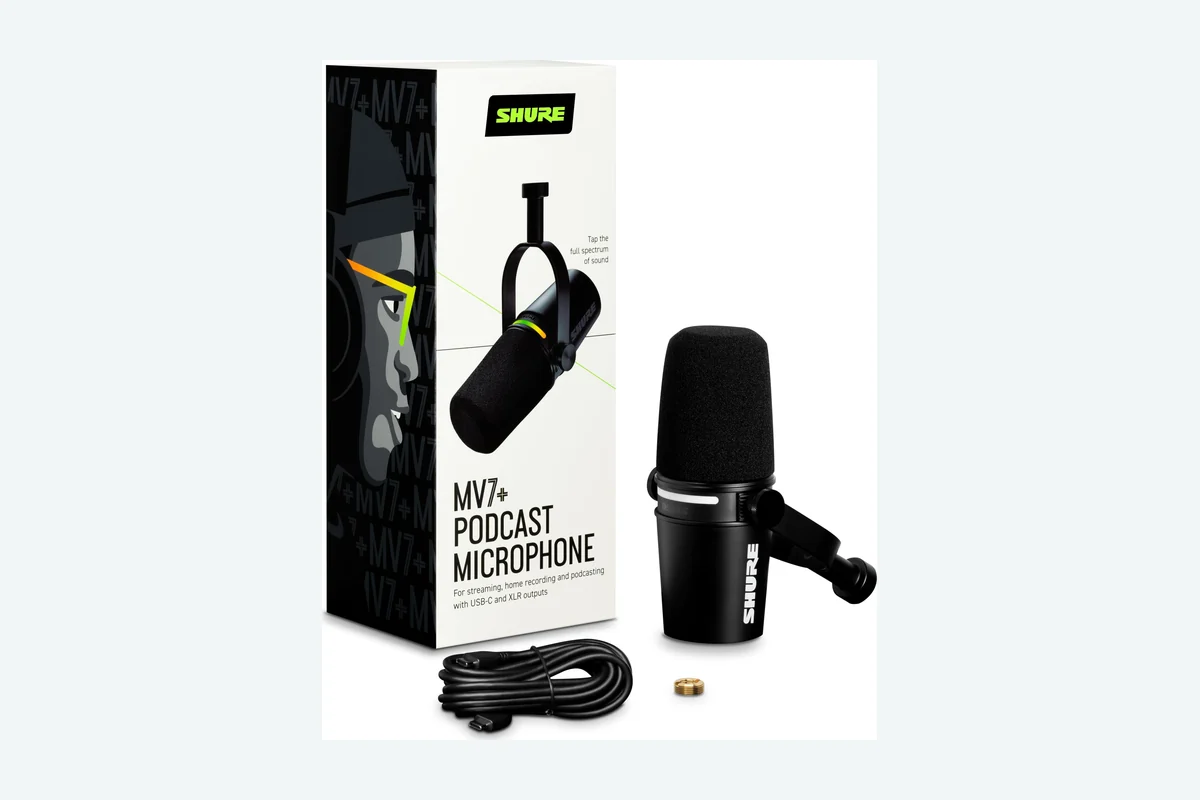
Modern streaming microphones increasingly utilize onboard digital signal processors (DSP) to offload real-time audio tasks from host CPU cores. DSP units apply hardware-level noise suppression, automatic level matching, equalization presets, and brickwall limiters before the signal enters broadcasting software. The Shure MV7+ Dynamic Microphone features OBS certification, real-time denoising, digital pop filtration, and built-in studio reverb models directly on hardware, ensuring consistent output even if OBS audio filters experience software crashes.
Physical controls provide tactile responsiveness during live broadcasts. Capacitive tap-to-mute sensors with distinct status LEDs allow instant muting without transmitting mechanical switch clicks across the audio stream. Analog gain knobs, headphone monitoring dials, and physical pattern switches minimize time spent alt-tabbing away from competitive games. The Sennheiser Professional Profile USB Microphone utilizes front-facing analog dials for gain, mix balancing, and volume, eliminating software dependency entirely.
Technical Comparison
| Model | Transducer Type | Interface | Polar Pattern | Primary Advantage |
|---|---|---|---|---|
| Shure MV7+ | Dynamic | USB-C & XLR | Cardioid | OBS-certified DSP & Auto Level Mode |
| HyperX QuadCast 2 | Condenser | USB-C | Stereo, Omni, Cardioid, Bidirectional | 20Hz-20kHz range & Quad-pattern flexibility |
| FIFINE K688 | Dynamic | USB & XLR | Cardioid | All-in-one kit with metal boom arm |
| Logitech Blue Yeti | Condenser | USB | Stereo, Omni, Cardioid, Bidirectional | Tri-capsule array & Blue VO!CE software |
| Logitech Blue Yeti Nano | Condenser | USB | Cardioid, Omnidirectional | Compact desktop footprint with 24-bit audio |
| Audio-Technica AT2035 | Condenser | XLR | Cardioid | Switchable 80Hz high-pass filter & 10dB pad |
| FIFINE AmpliGame AM8 | Dynamic | USB & XLR | Cardioid | Budget dual-interface with customizable RGB |
| HyperX SoloCast 2 | Condenser | USB-C to USB-A | Cardioid | 24-bit/96kHz recording & internal suspension |
| MAONO PD200XS | Dynamic | USB & XLR | Cardioid | 2-in-1 smart knob & included boom arm |
| Sennheiser Profile | Condenser | USB-C | Cardioid | Sleek integrated boom arm & hardware controls |
Why You Should Trust PCGearWiki
At PCGearWiki, our hardware evaluations rely on technical specification analysis, acoustic architecture comparisons, interface protocol verifications, and cross-referencing documented hardware implementations. We examine capsule design, maximum sound pressure level (SPL) tolerances, dynamic range ceilings, and ADC bit-depth capabilities to ensure recommendations reflect measurable engineering performance.
We analyze user reports across diverse hardware ecosystems, verifying driver stability, software bloat, long-term potentiometer durability, and structural stability of mounting brackets. When assessing hybrid and USB audio components, we check platform compatibility across Windows, macOS, and consoles to prevent deployment issues. To understand our comprehensive hardware review standards and analytical criteria, read our review methodology guide.
Final Thoughts
Choosing the best microphone for streaming depends on your room environment, technical expertise, and upgrade roadmap. Dynamic capsules remain the superior recommendation for untreated rooms with background computer fan noise or loud keyboard switches, while condenser microphones provide unmatched vocal warmth when placed in quiet environments. Dual-interface USB and XLR microphones offer the best long-term investment by enabling plug-and-play simplicity today with analog interface expansion tomorrow.
For creators seeking absolute vocal fidelity and integrated broadcast automation, the Shure MV7+ Dynamic Microphone is our Best Overall pick. Its onboard DSP, auto level tuning, and dual USB-C/XLR ports deliver pristine voice isolation without taxing CPU cycles. Creators outfitting desktop workstations alongside external displays like Thunderbolt and USB-C monitors can connect directly via a single bus-powered cable.
The FIFINE K688 Podcast Microphone Kit earns our Best Value distinction, bundling a sturdy metal boom arm, shock mount, and dynamic USB/XLR capsule under $80. Streamers working under strict financial constraints should select the HyperX SoloCast 2 – Gaming USB Condenser Mic as the Best Budget option, delivering clean 24-bit/96kHz cardioid capture and internal vibration suspension at an entry-level $44.98 price point. For studio professionals with dedicated mixers, the Audio-Technica AT2035 Cardioid Condenser stands as the top dedicated analog XLR choice.
Frequently Asked Questions
What is the best microphone for streaming in untreated rooms?
Dynamic microphones with cardioid polar patterns perform best in untreated rooms. Models such as the Shure MV7+ Dynamic Microphone and FIFINE K688 Podcast Microphone Kit require close proximity and reject low-energy reflections, preventing room echo and mechanical keyboard clicks from muddying your livestream audio mix.
Do USB microphones cause stream lag or system latency?
Modern USB microphones process digital conversion on onboard chipsets, introducing negligible latency under 5 milliseconds. Hardware direct monitoring jacks allow real-time vocal feedback with zero latency, bypassing OS driver buffers and rendering audio delay undetectable during live broadcasts.
Is an XLR microphone better than a USB microphone for streaming?
XLR microphones do not inherently sound better than USB models, but they connect to discrete preamplifiers and audio interfaces that provide cleaner analog gain, tactile faders, and zero risk of ground-loop hum. USB microphones offer superior convenience, while hybrid USB/XLR units bridge both approaches effectively.
How much should I spend on a streaming microphone?
Streamers can achieve broadcast-grade voice capture between $45 and $110 using quality USB condensers or entry dynamic kits. Investing between $150 and $300 is recommended for creators requiring dual XLR connectivity, advanced onboard DSP processing, or dedicated studio condenser hardware.
Do I need a microphone boom arm for streaming?
A boom arm is highly recommended because standard desktop stands transmit keyboard clatter, mouse clicks, and desk bumps into the microphone capsule. Clamping a boom arm elevates the mic, isolates vibrations, and maintains the ideal 2-to-6-inch speaking distance without blocking monitor visibility or desk space.
Add PCGearWiki as a preferred source on Google
Sources and Verification
Research basis: Product identity, dimensions, interfaces, supported features, and warranty terms are checked against available manufacturer documentation and current retailer listings. Price, stock, and aggregate customer ratings can change after publication.
Testing disclosure: Unless this article explicitly states that PCGearWiki performed hands-on testing and describes the test setup, recommendations are research-based editorial evaluations rather than PCGearWiki laboratory measurements. Customer feedback is used to identify recurring ownership patterns, not as proof of technical performance.
Last source review: September 22, 2026. See our Review Methodology, Editorial Policy, and Corrections Policy.



Write Your Review
No reviews yet. Be the first to share your experience!