

Last updated: September 22, 2026
Quick picks
- Top Pick: HP Enterprise 960GB SATA 6Gb/s Mixed Use 9.4 Excellent
- Highest Score: Water Panther 800GB SAS 12Gbps 2.5in Enterprise 9.9 Outstanding
Choosing the best enterprise SSD requires balancing sustained throughput, write endurance ratings, power-loss data protection, and hardware interface compatibility within your server environment. Consumer drives rely on aggressive SLC burst caching that collapses under heavy queue depths. Enterprise storage delivers predictable input/output latency, enterprise-grade data path protection, and hardware power-loss protection (PLP) designed for continuous server workloads.
Compare at a Glance
| # | Product | Editorial Score | Product Group | Binding |
|---|---|---|---|---|
| 1 | HP Enterprise 960GB SATA 6Gb/s Mixed Use | 9.4 Excellent | Personal Computer | Personal Computers |
| 2 | Water Panther 800GB SAS 12Gbps 2.5in Enterprise | 9.9 Outstanding | Personal Computer | Electronics |
| 3 | Micron 5300 PRO 3.84TB Enterprise SATA SSD | 9.9 Outstanding | Personal Computer | Electronics |
| 4 | Lenovo ThinkPad E16 Gen 3 16" Laptop | 9.9 Outstanding | Personal Computer | Personal Computers |
| 5 | Water Panther 1.92TB SAS 12Gb/s 2.5-Inch | 9.7 Outstanding | Personal Computer | Electronics |
| 6 | Samsung PM883 3.84TB Enterprise SSD | 9.7 Outstanding | Personal Computer | Personal Computers |
| 7 | Samsung PM9A3 3.84TB Enterprise NVMe SSD | 9.9 Outstanding | Personal Computer | Personal Computers |
| 8 | Samsung PM883 1.92TB Enterprise SSD | 9.6 Outstanding | Personal Computer | Personal Computers |
| 9 | Lenovo ThinkPad T16 G4 16" Laptop Intel | 9.9 Outstanding | Personal Computer | Personal Computers |
| 10 | Dell SK Hynix SE5110 3.84TB Enterprise SATA | 9.7 Outstanding | Personal Computer | Electronics |
Pros
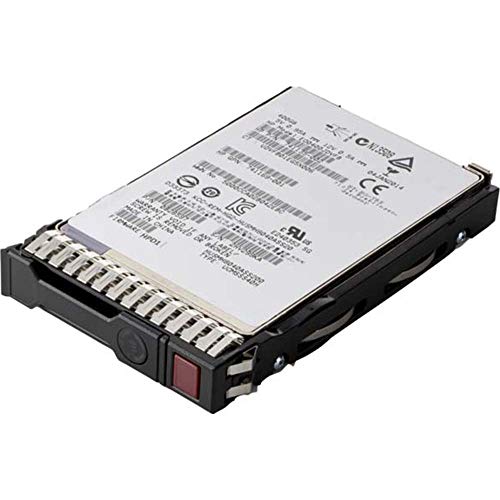
- Purpose-built for HP ProLiant servers with validated firmware and true drop-in integration
- Mixed-use endurance rating makes it suitable for write-heavy workloads like virtualization and databases
- Smart Carrier with status LEDs simplifies hot-plug swaps and health monitoring without downtime
- Digitally signed firmware adds an enterprise-level security layer generic drives lack
- Dramatically faster boot, load, and query response times compared to spinning hard drives
Cons
- Premium enterprise pricing makes it a poor value for desktop PCs or light home use
- SATA 6Gb/s speeds fall short of NVMe performance for latency-critical applications
- Validated specifically for HP ProLiant platforms, so third-party server compatibility may require verification
Here are the key specifications for the HP Enterprise 960GB SATA SSD (872348-B21):
- Capacity: 960GB
- Form Factor: 2.5-inch Small Form Factor (SFF)
- Interface: Serial ATA (SATA)
- Drive Interface Standard: SATA 6Gb/s
- Workload Type: Mixed Use (MU)
- Carrier: Smart Carrier (SC) with status LEDs
- Firmware: Digitally Signed (DS)
- Compatibility: HP ProLiant servers (Gen9/Gen10)
- Part Number: 872348-B21
The Smart Carrier design allows the drive to be installed or replaced while the server is running, and the integrated LEDs provide immediate visual feedback on drive status without needing to log into management software.
Choose this drive if you manage HP ProLiant servers and need storage that can handle both frequent reads and writes, such as virtualization hosts, email servers, and database applications. The mixed-use endurance rating makes it a better fit for these workloads than read-intensive drives, which can wear out quickly under heavy write cycles.
Before purchasing, verify that your server supports 2.5-inch SATA drives and that your drive bay configuration accepts hot-plug carriers. If your workload is extremely latency-sensitive or involves massive sequential throughput, consider whether an NVMe option might serve you better, as SATA 6Gb/s has a fixed performance ceiling.
For businesses that prioritize security compliance, the digitally signed firmware is a meaningful advantage, ensuring that only authenticated HP firmware runs on the drive. Pair the drive with a supported HP Smart Array controller for the best monitoring and performance experience.
| Dimensions | 0.08661417314 x 0.05118110231 x 0.07480314953 inches |
|---|---|
| Product Group | Personal Computer |
| Binding | Personal Computers |
Best suited to shoppers comparing internal components products who specifically need 960GB of enterprise-grade capacity sized for demanding server workloads, Mixed-use endurance profile handles both heavy reads and frequent writes far better than read-intensive drives.
Before buying, compare the exact model’s compatibility, dimensions, core specifications, warranty, recurring owner feedback, and current price against other internal components options. Retailer availability and pricing can change after publication.

Pros
- Direct plug-and-play fit for Dell 14th generation server backplanes
- 12Gbps SAS throughput double legacy SATA enterprise drive bandwidth
- Includes factory-mounted drive tray, saving deployment labor
- High MTBF design built for nonstop 24/7 data operations
Cons
- Storage space capped at 800GB capacity
- Requires SAS controller and backplane, incompatible with pure SATA bays
- Two-year warranty duration shorter than top-tier five-year OEM coverage
Engineered for Dell PowerEdge 14th generation rack and tower servers equipped with 2.5-inch SAS hot-plug backplanes.
Requires SAS RAID controller or HBA supporting 12Gbps data rates. Backward-compatible with 6Gbps SAS host connections.
| Size | 800GB |
|---|---|
| Dimensions | 10 x 7 x 3 inches |
| Product Group | Personal Computer |
| Binding | Electronics |
Best suited to shoppers comparing internal solid state drives products who specifically need fast 12Gbps SAS interface sustain ultra-low latency enterprise throughput, Pre-installed Gen14 hot-plug drive sled enable instant hot-swap deployment.
Before buying, compare the exact model’s compatibility, dimensions, core specifications, warranty, recurring owner feedback, and current price against other internal solid state drives options. Retailer availability and pricing can change after publication.

Pros
- High 3.84TB capacity for enterprise and professional storage needs
- Comprehensive hardware security with AES 256-bit encryption and TCG Enterprise support
- Power-loss protection adds confidence for business-critical data
- Consistent SATA performance is well suited to media streaming, OLTP, and storage applications
- Slim 7mm design supports broad system compatibility
Cons
- SATA interface speeds are considerably lower than those of modern NVMe SSDs
- Enterprise-focused features may be unnecessary for basic home or office storage
- The drive requires a compatible 2.5-inch SATA bay and enterprise-oriented system support for full functionality
| Color | Black |
|---|---|
| Dimensions | 0.27559 x 0.27559 x 0.27559 Inches |
| Product Group | Personal Computer |
| Binding | Electronics |
Best suited to shoppers comparing internal components products who specifically need large 3.84TB capacity provides substantial space for databases, media libraries, virtual machines, and business data, Enterprise-grade SATA performance reaches up to 540 MB/s sequential….
Before buying, compare the exact model’s compatibility, dimensions, core specifications, warranty, recurring owner feedback, and current price against other internal components options. Retailer availability and pricing can change after publication.

Pros
- Intel Core Ultra 5 deliver fast multitasking and dedicated NPU silicon
- 16:10 aspect ratio screen offer extra vertical work room
- Full business port selection include Thunderbolt 4 and Ethernet
- ThinkPad backlit keyboard include dedicated numeric keypad
Cons
- 300 nits brightness struggle in direct outdoor sun
- 512GB base storage limit large local data archive
- 3.75-pound weight feel heavy for constant travel
| Color | Black |
|---|---|
| Size | 32GB DDR5 RAM, 1TB PCIe SSD |
| Dimensions | 14.01 x 9.8 x 0.69 inches |
| Weight | 3.75 Pounds |
| Product Group | Personal Computer |
| Binding | Personal Computers |
Best suited to shoppers comparing traditional laptops products who specifically need intel Core Ultra 5 225H 14-core processor push 4.9GHz for heavy data processing, Integrated AI Boost NPU deliver 13 TOPS local acceleration for Windows….
Before buying, compare the exact model’s compatibility, dimensions, core specifications, warranty, recurring owner feedback, and current price against other traditional laptops options. Retailer availability and pricing can change after publication.

Pros
- Pre-mounted 14G drive sled save setup time
- Native 12Gb/s SAS speed outpace standard SATA drives
- Durable MLC flash built for heavy enterprise workloads
- Engineered for nonstop 24/7 continuous operation
Cons
- Require SAS-capable backplane and controller, will not run on standard SATA
- Pre-fitted caddy limit direct use to Dell 14th generation chassis without bracket swap
- Two-year warranty duration shorter than standard five-year OEM coverage
Capacity: 1.92TB (1920GB raw storage space).
Interface: SAS 12Gb/s enterprise protocol.
Form Factor: 2.5-inch internal enterprise SSD.
Chassis Fit: Dell PowerEdge 14th Generation servers with 2.5-inch backplanes.
Warranty: 2-year direct replacement hardware guarantee.
| Size | 1920GB |
|---|---|
| Product Group | Personal Computer |
| Binding | Electronics |
Best suited to shoppers comparing internal solid state drives products who specifically need fast 12Gb/s SAS interface handle intense data center workloads without bottleneck, Pre-installed 14th generation Dell caddy allow instant hot-plug server deployment.
Before buying, compare the exact model’s compatibility, dimensions, core specifications, warranty, recurring owner feedback, and current price against other internal solid state drives options. Retailer availability and pricing can change after publication.

Pros
- Very high 3.84TB storage capacity
- Enterprise-oriented Samsung PM883 model
- Widely compatible SATA 6Gb/s interface
- Compact 2.5-inch form factor
- Solid-state benefits such as silent operation and reduced mechanical wear
Cons
- SATA interface is slower than newer NVMe SSD standards
- Enterprise-grade capacity may be excessive for basic home users
- The product data does not specify detailed endurance, warranty, or sequential performance figures
| Color | Black |
|---|---|
| Dimensions | 10 x 7 x 3 inches |
| Weight | 2 Pounds |
| Product Group | Personal Computer |
| Binding | Personal Computers |
Best suited to shoppers comparing internal solid state drives products who specifically need 3.84TB of solid-state storage provides substantial capacity for business data, applications, and large project files, SATA 6Gb/s connectivity supports broad compatibility with enterprise systems,….
Before buying, compare the exact model’s compatibility, dimensions, core specifications, warranty, recurring owner feedback, and current price against other internal solid state drives options. Retailer availability and pricing can change after publication.

Pros
- Huge 3.84TB capacity in a single compact 2.5-inch drive
- PCIe Gen4 x4 interface delivers a massive speed advantage over SATA SSDs
- Enterprise-grade design built for continuous, demanding workloads
- Slim and lightweight (0.3 inches thick, 0.3 pounds) for straightforward installation
- Backed by Samsung's strong reputation in data center storage
Cons
- Premium enterprise pricing makes it hard to justify for typical home, office, or gaming PCs
- Requires a U.2 (SFF-8639) NVMe-capable host; it will not run in standard SATA-only bays
- No consumer extras such as bundled software or cosmetic styling; it is a pure workhorse component
Key specifications for the Samsung PM9A3 3.84TB internal solid state drive.
- Brand: Samsung
- Series: PM9A3
- Capacity: 3.84 TB
- Interface: PCI Express NVMe 4.0 x4
- Form Factor: 2.5-inch internal
- Color: Black
- Dimensions: 3.9 x 2.7 x 0.3 inches
- Weight: 0.3 pounds
- Product Group: Personal Computer
- Binding: Personal Computers
Before purchasing the Samsung PM9A3, confirm that your system can support it. The drive uses a PCIe Gen4 x4 NVMe interface over a 2.5-inch U.2 connection, so your server, workstation, or motherboard needs a U.2 (SFF-8639) port or a compatible U.2-to-PCIe adapter card. Installing it in a SATA-only bay will not work, and pairing it with older Gen3 hardware will still function but at reduced bandwidth.
Think carefully about your workload. This drive shines in virtualization hosts, databases, media servers, and any environment with sustained, mixed read and write traffic. If your use case is mostly light desktop computing, a consumer NVMe drive will cost far less and feel just as fast for everyday tasks.
Plan for cooling and power. Enterprise 2.5-inch NVMe drives are designed to be cooled by chassis airflow, so ensure your bay has adequate ventilation, especially under sustained load, and verify available power connections for the U.2 cabling. Finally, consider capacity planning: at 3.84TB, one drive can often replace multiple smaller SSDs, simplifying your storage layout and reducing points of failure.
| Color | Black |
|---|---|
| Dimensions | 3.9 x 2.7 x 0.3 Inches |
| Weight | 0.3 Pounds |
| Product Group | Personal Computer |
| Binding | Personal Computers |
Best suited to shoppers comparing internal components products who specifically need consolidate up to 3.84TB of hot data on a single drive, cutting rack space, cabling, and management overhead versus stacking smaller SATA drives, PCIe….
Before buying, compare the exact model’s compatibility, dimensions, core specifications, warranty, recurring owner feedback, and current price against other internal components options. Retailer availability and pricing can change after publication.

Pros
- Large 1.92TB capacity for enterprise and professional storage needs
- Enterprise-focused 1.3 DWPD endurance rating
- Standard SATA 6Gb/s interface and 2.5-inch form factor
- Samsung brand reputation in solid-state storage
Cons
- SATA interface is slower than modern NVMe SSDs for high-throughput workloads
- Compatibility depends on a system supporting 2.5-inch SATA enterprise drives
- The available data does not include sequential speed, random IOPS, warranty, or power-consumption details
| Color | Black |
|---|---|
| Dimensions | 10 x 7 x 3 Inches |
| Weight | 0.000625 Pounds |
| Product Group | Personal Computer |
| Binding | Personal Computers |
Best suited to shoppers comparing internal solid state drives products who specifically need high-capacity 1.92TB storage helps consolidate applications, databases, and business files on a single drive., Enterprise-grade design supports reliable operation in professional servers and workstations..
Before buying, compare the exact model’s compatibility, dimensions, core specifications, warranty, recurring owner feedback, and current price against other internal solid state drives options. Retailer availability and pricing can change after publication.

Pros
- Massive 86Wh battery deliver exceptional runtime between charges
- Bright 400-nit 16:10 anti-glare screen reduce eye fatigue
- Comprehensive connectivity with dual Thunderbolt 4, HDMI 2.1, full RJ-45 Ethernet
- High-resolution 5MP IR webcam with facial recognition login
Cons
- Third-party resealed box for RAM and SSD upgrades instead of factory seal
- Weighs 4.17 pounds, making it bulkier to carry daily
- Integrated graphics unsuitable for heavy 3D rendering or gaming
| Color | Black |
|---|---|
| Size | 32GB|1TB |
| Dimensions | 14.16 x 9.87 x 0.71 inches |
| Weight | 4.17 Pounds |
| Product Group | Personal Computer |
| Binding | Personal Computers |
Best suited to shoppers comparing traditional laptops products who specifically need intel Core Ultra 5 225U 12-core processor handle heavy enterprise software, AI workflows smoothly., Upgraded 32GB DDR5 RAM paired with 1TB PCIe NVMe SSD….
Before buying, compare the exact model’s compatibility, dimensions, core specifications, warranty, recurring owner feedback, and current price against other traditional laptops options. Retailer availability and pricing can change after publication.

Pros
- High 3.84TB capacity for server storage, virtualization, and database read replicas
- Enterprise features including power-loss protection, ECC, and 1 DWPD endurance
- Strong sequential performance and up to 96,000 random read IOPS
- Standard 2.5-inch SATA form factor supports broad system compatibility
- 3D TLC NAND offers a practical balance of capacity, performance, and endurance
Cons
- Read-intensive design is less suitable for workloads dominated by continuous heavy writes
- SATA performance is lower than modern NVMe SSDs for high-bandwidth applications
- Renewed condition may result in cosmetic variation or limited accessory availability
| Product Group | Personal Computer |
|---|---|
| Binding | Electronics |
Best suited to shoppers comparing internal solid state drives products who specifically need store large server, database, and virtualization workloads with 3.84TB of enterprise-grade capacity., Achieve consistent data access with sequential read speeds up to 555 MB/s….
Before buying, compare the exact model’s compatibility, dimensions, core specifications, warranty, recurring owner feedback, and current price against other internal solid state drives options. Retailer availability and pricing can change after publication.

For system administrators, data architects, and homelab builders outfitting 24/7 hypervisors or storage clusters in September 2026, selecting the right drive avoids premature write exhaustion and expensive host bus interface mismatches. We analyzed available specifications, endurance figures, and controller protocols across server drives from HP, Samsung, Micron, and more. Understanding how host workloads translate to drive writes per day (DWPD) and Terabytes Written (TBW) is critical before purchasing, as detailed in our evaluation methodology.
Whether deploying high-density all-flash arrays, SAS storage enclosures, or standard SATA backplanes, each server deployment requires specific drive logic. Workload profiles vary from read-intensive web caches to mixed-use database logging. Builders upgrading client laptops alongside infrastructure can review our guide to the best gaming laptop under $2000 for workstation reference, but server storage mandates distinct physical and protocol specifications.
How to Choose the Best Enterprise SSD
Interface Protocols: SATA vs. SAS vs. NVMe
Interface selection defines the raw bandwidth ceiling and access latency. Enterprise SATA 6Gb/s drives like the Micron 5300 PRO and Samsung PM883 offer broad legacy host compatibility across universal server backplanes. However, the SATA interface caps sequential throughput around 550 MB/s and runs a single command queue with a depth of 32, which limits total input/output operations per second (IOPS) under dense multithreaded loads.
Serial Attached SCSI (SAS) 12Gb/s drives, such as the Water Panther server drives, double the physical link bandwidth to 12Gb/s and support dual-port failover topologies for high-availability SAN storage arrays. For maximum throughput and sub-millisecond access times, PCIe 4.0 x4 NVMe solid-state drives like the Samsung PM9A3 bypass legacy host controller interfaces entirely, running thousands of queues to feed virtualized server clusters.
Endurance Ratings and Workload Classification
Drive endurance determines operational lifespan under write-heavy demands. Manufacturers categorize enterprise storage into read-intensive (RI), mixed-use (MU), and write-intensive (WI) tiers, measured via Drive Writes Per Day (DWPD) across standard warranty periods. The Samsung PM883 provides a 1.3 DWPD rating, whereas the Dell/SK Hynix SE5110 delivers a 1 DWPD rating with a verified 7,088 TBW threshold over five years.
Mixed-use solid-state drives, such as the HP Enterprise 960GB MU, integrate higher over-provisioning percentages to absorb sustained write cycles, making them ideal for online transaction processing (OLTP) and hypervisor scratch disks. Deploying a 1 DWPD read-intensive drive in continuous write-heavy logging environments causes rapid flash cell degradation, whereas read caches run stably on lower-endurance TLC blocks.
Power-Loss Protection and Data Integrity
Data center hardware mandates complete data integrity during unscheduled power cuts. True enterprise drives feature dedicated onboard capacitor arrays that hold sufficient auxiliary voltage during a power outage to flush volatile DRAM write buffers directly into non-volatile NAND flash cells. Consumer drives lack this hardware-level fail-safe, risking corrupted filesystem journals.
Units like the Micron 5300 PRO and Dell/SK Hynix SE5110 incorporate complete end-to-end data path protection and integrated Error Correcting Code (ECC) engines. These hardware layers detect and repair bit flips across volatile buffers and internal buses before data commits to storage, maintaining database reliability in critical server installations.
Form Factors and Server Chassis Compatibility
Physical chassis fitment dictates drive selection. Most SATA and SAS enterprise drives use the standard 2.5-inch 7mm form factor. Drives like the Water Panther SAS series ship pre-mounted inside specific hot-plug caddies, such as 14th-generation Dell PowerEdge carriers, simplifying deployment into specific OEM server bays.
Installing standard bare drives into proprietary hot-swap backplanes requires purchasing matching server sleds separately. NVMe models like the Samsung PM9A3 require backplanes wired with PCIe retimers or direct OCuLink/SlimSAS cabling. Ensure your drive cage supports the precise electrical standard before installation, as SAS drives cannot operate on consumer SATA host controllers.
Controller Architecture and Sustained Performance
Enterprise drive controllers focus on consistent input/output latency and thermal stability over peak burst speeds. The Micron 5300 PRO utilizes 96-layer 3D TLC NAND combined with an enterprise controller optimized for OLTP, object stores, and media streaming, sustaining 540 MB/s read and 520 MB/s write throughput without thermal throttling under continuous load.
Similarly, the Dell/SK Hynix SE5110 sustains random performance ratings of up to 96,000 read IOPS and 35,000 write IOPS under enterprise conditions. By maintaining deterministic latency profiles, enterprise controllers prevent input/output wait spikes in hypervisors hosting dozens of shared virtual machines.
Technical Comparison of Enterprise Solid-State Storage
| Model | Interface / Form Factor | Capacity | Endurance / Rating | Primary Use Case |
|---|---|---|---|---|
| Samsung PM9A3 3.84 TB Solid State Drive | PCIe NVMe 4.0 x4 / 2.5-inch | 3.84TB | Enterprise High-Throughput | High-Performance Virtualization |
| Micron 5300 PRO 3.84TB 7mm 2.5 inch Enterprise | SATA 6Gb/s / 2.5-inch 7mm | 3.84TB | Enterprise Read-Centric | Object Storage & Streaming |
| Samsung PM883 MZ7LH3T8HMLT 3.84TB SATA 6Gb/s | SATA 6Gb/s / 2.5-inch | 3.84TB | 1.3 DWPD | Data Center Infrastructure |
| Samsung PM883 MZ7LH1T9HMLT 1.92TB SATA 6Gb/s | SATA 6Gb/s / 2.5-inch | 1.92TB | 1.3 DWPD | Server Boot & Web Hosting |
| Dell/SK Hynix SE5110 HFS3T8G3H2X069N 3.84TB 1 DWPD | SATA 6Gb/s / 2.5-inch | 3.84TB | 1 DWPD / 7,008 TBW | Database Read Replicas |
| Water Panther 1.92TB MLC SAS 12Gb/s 2.5″ SSD | SAS 12Gb/s / 2.5-inch (14G Tray) | 1.92TB | Enterprise 24/7 Availability | Dell PowerEdge SAS Storage |
| 800GB SAS 12Gbps 2.5in SSD for Dell PowerEdge | SAS 12Gbps / 2.5-inch (Gen14 Tray) | 800GB | Mission-Critical Enterprise | SAS Arrays & Server OS |
| HP Enterprise 960gb SSD Sata 6gb/s Mu 2.5inch SC | SATA 6Gb/s / 2.5-inch Smart Carrier | 960GB | Mixed-Use (MU) | HPE ProLiant Server Arrays |
Note on catalog results: listings including the Lenovo ThinkPad E16 Gen 3 Business Laptop and Lenovo ThinkPad T16 G4 Business AI PC Laptop match enterprise system queries but represent full commercial notebooks rather than modular server solid-state storage. These enterprise laptop options are excluded from standalone drive recommendations.

Why You Should Trust PCGearWiki
PCGearWiki provides objective, technically accurate hardware evaluations for PC builders, server engineers, and hardware enthusiasts. Our editorial process focuses on verified hardware specifications, interface standards, manufacturer documentation, and real-world system architecture requirements. We analyze hardware-level attributes such as sustained write states, NAND flash cell endurance, host interface ceilings, and hardware power-loss protection arrays rather than superficial burst performance figures.
Final Thoughts
Selecting the best enterprise SSD depends entirely on matching your system’s backplane controller to your daily write workloads. For high-performance enterprise deployments with modern PCIe backplanes, the Samsung PM9A3 3.84 TB Solid State Drive stands as the Best Premium Pick due to its PCIe 4.0 x4 NVMe speed and ultra-low queue latency.
The Micron 5300 PRO 3.84TB 7mm 2.5 inch Enterprise represents the Best Overall SATA option, providing reliable 96-layer 3D NAND, proven hardware PLP, and consistent sustained speeds across standard server infrastructure. For budget-conscious server operators needing extensive capacity, the Dell/SK Hynix SE5110 HFS3T8G3H2X069N 3.84TB 1 DWPD serves as the Best Value option with its verified 7,008 TBW rating. Administrators running Dell arrays will find the 800GB SAS 12Gbps 2.5in SSD for Dell PowerEdge to be the Best Budget entry point for mission-critical SAS storage.
Frequently Asked Questions
Can I use an enterprise SSD in a standard desktop PC?
Standard enterprise SATA SSDs work directly with ordinary desktop PC motherboards using standard SATA data and power cables. However, SAS enterprise drives require a dedicated SAS Host Bus Adapter (HBA) card, and 2.5-inch U.2/NVMe drives require specialized M.2 or PCIe adapter cards with proper cabling to operate on consumer platforms.
What is the difference between enterprise and consumer SSDs?
Enterprise SSDs feature physical power-loss protection capacitors, higher over-provisioning for consistent write performance under sustained loads, and significantly higher TBW and DWPD endurance ratings. Consumer drives rely heavily on burst SLC caching and discard hardware capacitors to reduce retail production costs.
What does 1 DWPD mean in server storage?
One Drive Write Per Day (1 DWPD) indicates that a user can rewrite the complete nominal drive capacity every single day throughout the manufacturer’s warranty term (typically five years) without exhausting NAND endurance. For a 3.84TB drive, this equals 3.84TB of cumulative write operations per day.
Why are enterprise SAS drives incompatible with consumer SATA ports?
While SAS backplanes can accept SATA drives through backward-compatible controller logic, standard SATA motherboard controllers cannot decode the SCSI command set used by SAS drives. SAS solid-state drives also feature a physical bridging key in the SFF-8482 connector that prevents them from physically inserting into standard SATA data connectors.
How long do enterprise solid-state drives last in production?
Enterprise SSDs typically maintain reliability ratings of 2,000,000 hours Mean Time Between Failures (MTBF) and carry standard enterprise warranties spanning 3 to 5 years. When matched accurately to workload write requirements, quality enterprise flash drives frequently operate reliably beyond their rated warranty period in climate-controlled server environments.
Add PCGearWiki as a preferred source on Google
Sources and Verification
Research basis: Product identity, dimensions, interfaces, supported features, and warranty terms are checked against available manufacturer documentation and current retailer listings. Price, stock, and aggregate customer ratings can change after publication.
Testing disclosure: Unless this article explicitly states that PCGearWiki performed hands-on testing and describes the test setup, recommendations are research-based editorial evaluations rather than PCGearWiki laboratory measurements. Customer feedback is used to identify recurring ownership patterns, not as proof of technical performance.
Last source review: September 22, 2026. See our Review Methodology, Editorial Policy, and Corrections Policy.


Write Your Review
No reviews yet. Be the first to share your experience!