

Last updated: September 30, 2026
Choosing the best PC case for water cooling depends on radiator support, pump-reservoir clearance, and internal airflow routing. Dual-chamber layouts offer maximum clearance for multiple 360mm radiators but consume more desk space. Compact enclosures reduce footprint at the cost of radiator size limits and tighter component tolerances for power supplies and graphics cards.

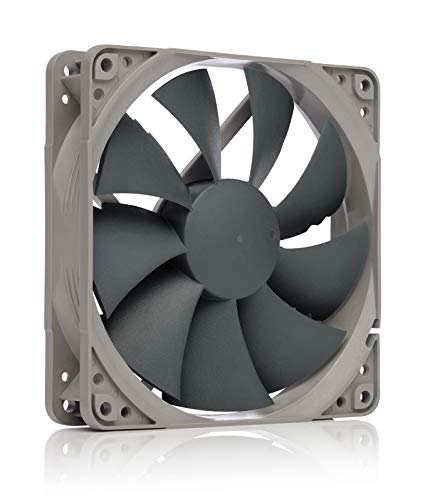
Noctua NF-P12 redux-1700 PWM 120mm Case Fan


As an Amazon Associate we earn from qualifying purchases. Product prices and availability are accurate as of the date/time indicated.
In the Cooling & PSU category, picking chassis hardware for liquid setups requires balancing radiator placement against GPU length. Builders planning liquid loops must confirm clearance for radiator tanks and fan thicknesses before assembling hardware. Learning how to choose a liquid cooler for your PC build helps match your radiator size to the right chassis frame.
Quick Verdict
Based on available product data, the HYXN H1 HYXN ATX PC Case serves high-end multi-radiator liquid setups best. It supports up to two 360mm radiators simultaneously and includes seven pre-installed fans. The Cooler Master Q300L V1 Micro-ATX PC Case fits entry-level, budget builds needing a 240mm liquid cooler in a smaller footprint. Builders needing full custom loops should skip the Q300L due to its 240mm limit, while builders with tight desk space should skip the bulky H1.
Key Specifications
According to manufacturer specifications, these dimensions and thermal support thresholds define the evaluated enclosures and cooling accessories:
| Product | Form Factor & Dimensions | Radiator Support | Hardware Clearance |
|---|---|---|---|
| HYXN H1 HYXN ATX PC Case | ATX Mid-Tower Dual Cavity (420 x 285 x 430mm) | Up to 2x 360mm simultaneously (top and side) | GPU: 400mm, CPU Cooler: 170mm, PSU: 200mm |
| Cooler Master Q300L V1 Micro-ATX PC Case | Micro-ATX Mini Tower | Up to 1x 240mm radiator | GPU: 360mm, CPU Cooler: 159mm, PSU: 160mm |
| Noctua NF-P12 redux-1700 PWM | 120 x 120 x 25mm Radiator Fan | Mounts to 120mm / 240mm / 360mm radiators | Standard 25mm thickness, 4-pin PWM header |
Design and Build Quality
The HYXN H1 HYXN ATX PC Case uses a dual-chamber structure with dual tempered glass panels providing a 270-degree viewing angle. The wide dual-chamber layout moves the power supply unit and storage drives behind the motherboard tray. This isolates power heat and frees the primary compartment for uninterrupted tubing runs, pumps, and radiators. Top and bottom dust filters protect the internal hardware from debris.
The Cooler Master Q300L V1 Micro-ATX PC Case uses fully perforated steel panels on the top, front, and bottom to maximize ventilation. Patterned magnetic dust filters cover these surfaces for easy removal and cleaning. The case features an edge-to-edge transparent acrylic side panel and a modular I/O panel that repositions to six different locations across the chassis edges.
Performance and Real-World Use
Thermal dissipation in liquid-cooled cases depends on uninhibited intake flow and direct exhaust pathways. The HYXN H1 uses vertical intake channels with three bottom 120mm fans and three side 120mm reverse-blade intake fans, exhausting heat out the top and rear. This allows cool air intake directly across bottom-mounted components while exhausting radiator exhaust upward. Its spacious layout comfortably fits long graphics cards up to 400mm alongside large liquid reservoirs.
The Cooler Master Q300L relies on continuous passive perforation. Front mounting a 240mm radiator restricts long graphics card clearance slightly, but total GPU room remains functional at 360mm with standard fan configurations. Builders pairing this case with high-wattage power hardware should check the best compact ATX cases with good airflow to see how compact airflow chambers compare against micro-ATX frames.
Compatibility
Verifying clearance thresholds prevents assembly mismatches before mounting liquid loops:
- Motherboard Standards: The HYXN H1 accepts ATX, Micro-ATX, and Mini-ITX boards. The Cooler Master Q300L accepts Micro-ATX and Mini-ITX motherboards only.
- Radiator Thickness & Dimensions: The HYXN H1 fits two 360mm radiators simultaneously at the top and side brackets. The Cooler Master Q300L supports a single 240mm radiator at the front intake.
- Power Supply Clearance: The HYXN H1 accommodates ATX power supplies up to 200mm in length. The Q300L limits power supplies to 160mm.
- Graphics Card Length: The HYXN H1 provides 400mm clearance. The Q300L provides 360mm clearance, which narrows if thick radiators are installed at the front panel.
Pros and Cons
HYXN H1 HYXN ATX PC Case
- Supports dual 360mm radiators simultaneously for advanced liquid cooling
- Includes seven pre-installed ARGB PWM fans right out of the box
- Dual-chamber design provides 400mm GPU clearance and 200mm PSU clearance
- Front I/O includes a dedicated Type-C port
- Wide footprint occupies significant desk space
- Tempered glass panels limit direct front ventilation
Cooler Master Q300L V1 Micro-ATX PC Case
- Low cost and accessible entry point for small builds
- Compact exterior footprint fits small desks
- Perforated frame provides open ventilation across all sides
- Flexible modular I/O panel shifts to multiple orientations
- Limited to a single 240mm liquid cooler
- Acrylic window scratches more easily than tempered glass
- Restricted to 160mm power supply units
Who Should Buy It?
The HYXN H1 fits PC builders building full custom liquid loops or pairing 360mm all-in-one liquid coolers with high-TDP processors and large graphics cards. The dual-chamber structure provides space for cable routing, tube routing, and fan hubs. Builders needing high power delivery can look into the best ATX 3.1 power supply under $150 to match the chassis PSU chamber.
The Cooler Master Q300L fits budget builders running mid-range hardware on Micro-ATX motherboards who plan to cool the CPU with an entry-level 240mm radiator. Its compact frame suits smaller desk arrangements where standard mid-towers prove too wide.
Who Should Skip It?
Skip the Cooler Master Q300L if you plan to liquid-cool both a high-end processor and a dedicated graphics card, as a single 240mm mount cannot dissipate combined extreme thermal loads. Skip the HYXN H1 if desk real estate is minimal or if you prefer pure mesh front panels over panoramic tempered glass enclosures.
Alternatives to Consider
Liquid cooling builds require complementary fans and coolers. The Noctua NF-P12 redux-1700 PWM operates up to 1700 RPM with pressure-optimized blades, making it an upgrade alternative for pushing airflow through dense radiator fins. For closed-loop cooling solutions, the ARCTIC Liquid Freezer III Pro 360 and ARCTIC Liquid Freezer III Pro 360 A-RGB offer 38mm thick radiators and integrated VRM cooling fans that fit inside 360mm-ready cases like the HYXN H1. Builders seeking a compact dual-fan cooler can evaluate the Thermalright Aqua Elite 240 V3 Water Cooling CPU, which fits smaller mounts like the Q300L front bracket.
Why You Should Trust PCGearWiki
PCGearWiki evaluates computer hardware through technical specification analysis, chassis dimension audits, and component clearance verifications. We examine physical mounting layouts, airflow channels, and component clearance thresholds across verified manufacturer documentation. Read our full testing criteria and analysis framework in our review methodology. Editorial opinions remain completely independent of retail merchant partnerships.
Final Verdict
The deciding factor when picking the best PC case for water cooling comes down to thermal volume and radiator capacity. For multi-radiator setups and complete liquid loops, the HYXN H1 HYXN ATX PC Case is the top recommendation due to its dual 360mm mounting zones and spacious 400mm GPU clearance. For tight budgets and simple builds, the Cooler Master Q300L V1 Micro-ATX PC Case offers a practical micro-ATX alternative supporting a single 240mm unit.
Frequently Asked Questions
Is a dual-chamber PC case better for water cooling?
Yes. Dual-chamber cases isolate the power supply and storage drives into a rear compartment. This leaves the front chamber open for liquid cooling tubing, large radiators, water pumps, and unobstructed airflow paths.
Can a 240mm radiator adequately cool a high-end gaming processor?
A 240mm radiator can handle mainstream gaming processors under stock configurations. High-TDP processors with sustained multi-core workloads benefit more from larger 360mm radiators to maintain lower fluid temperatures and quieter fan speeds.
What clearances should I check before buying a water cooling case?
Check maximum radiator support at top, front, and side brackets. Measure combined radiator plus fan thickness to ensure they clear motherboard VRM heatsinks and tall memory modules, and check GPU length clearance with the front radiator installed.
Do I need high-pressure fans for PC case water cooling?
Yes. Radiators feature tight fin densities that create resistance. High static pressure fans, such as the Noctua NF-P12 redux-1700 PWM, drive air through fin stacks more effectively than standard airflow-focused case fans.
Add PCGearWiki as a preferred source on Google
Sources and Verification
Research basis: Product identity, dimensions, interfaces, supported features, and warranty terms are checked against available manufacturer documentation and current retailer listings. Price, stock, and aggregate customer ratings can change after publication.
Testing disclosure: Unless this article explicitly states that PCGearWiki performed hands-on testing and describes the test setup, recommendations are research-based editorial evaluations rather than PCGearWiki laboratory measurements. Customer feedback is used to identify recurring ownership patterns, not as proof of technical performance.
Last source review: September 30, 2026. See our Review Methodology, Editorial Policy, and Corrections Policy.


Write Your Review
No reviews yet. Be the first to share your experience!