

Last updated: September 30, 2026
Choosing hardware for the best high end PC for sim racing requires balancing raw system throughput against structural cockpit rigidity and peripheral interface bandwidth. Running physics engines across triple screens or high-resolution VR headsets demands uncompromising GPU power alongside a chassis that completely eliminates flex under heavy direct-drive torque loads.
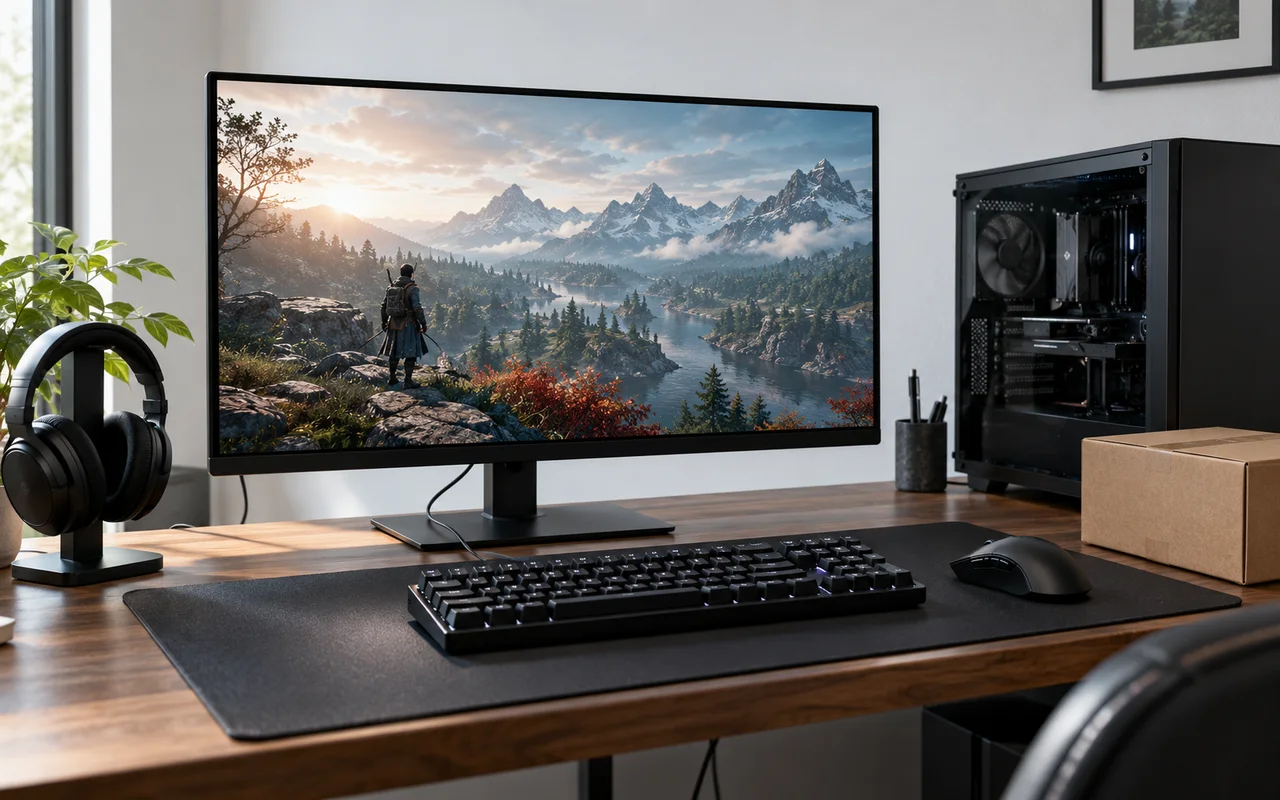
Modern racing simulators place extreme demands on PC gaming ecosystems. High frame rates require low system latency, robust USB controller bandwidth, and rigid cockpits that withstand aggressive braking forces and direct-drive wheel feedback without chassis flex.

ARES WING Sim Racing Cockpit with Seat


As an Amazon Associate we earn from qualifying purchases. Product prices and availability are accurate as of the date/time indicated.
Quick Verdict
High-end simulation setups succeed or fail based on structural integrity and input precision. Direct-drive wheelbases deliver detailed force feedback, but flimsy cockpits absorb those forces as flex rather than transmitting them to the driver. Dedicated rigs, responsive steering controls, and dedicated inputs transform an ordinary high-performance computer into a true simulation platform. Skip these dedicated accessories if racing casually with a desk-clamped wheel or standard gamepad.
Key Specifications
| Component / Product | Primary Technical Details | Why It Matters |
|---|---|---|
| ARES WING Sim Racing Cockpit with Seat | Powder-coated steel frame, 7.1-inch seat slider, 90°–180° seat tilt, 6 non-slip feet | Prevents chassis flex and seat shifting under aggressive pedal pressure and steering torque. |
| ARES WING Adjustable Sim Racing Cockpit with Seat | Square-tube frame rated for up to 16Nm direct drive bases, 220-lb capacity | Handles heavy torque spikes from mid-to-high-end wheelbases without metal fatigue. |
| ASETEK Sim Racing Forte Formula Pro Steering Wheel | Glassfiber reinforced chassis, RaceView 60Hz display, 78 input options | Delivers instant telemetry readouts and granular button mapping directly on the steering rim. |
| CNRAQR PC Racing Game USB Handbrake for 16Bit SIM | Low-carbon steel build, 16-bit non-contact sensor, USB plug-and-play | Provides linear analog braking input essential for rally and drift precision control. |
| Turtle Beach VelocityOne Multi-Shift Sim Racing | 7-speed H-gate plus reverse, sequential toggle, Hall-effect sensors | Eliminates potentiometer wear and provides versatile shifting modes for road and race cars. |
| SIM-PANEL PC Sim Racing Gen 2 Button Box | Horizontal ergonomics, customizable multi-mode buttons, PC-exclusive USB | Keeps engine maps, brake bias, and pit controls within arms reach during intense racing. |
Design and Build Quality
Rigid materials determine simulation fidelity. The ARES WING Adjustable Sim Racing Cockpit with Seat utilizes reinforced square tubing engineered to resist torsional twisting up to 16Nm of direct-drive force. Cheap tubular designs deflect under load, dulling force-feedback detail. High-end cockpits eliminate this through thick gauge steel and reinforced pedal deck plates.
Peripherals follow matching build requirements. The ASETEK Sim Racing Forte Formula Pro Steering Wheel combines glassfiber-reinforced composite structures with aluminum switches, minimizing rotational weight while maximizing rigidity. Non-contact sensors featured in the CNRAQR PC Racing Game USB Handbrake for 16Bit SIM and Turtle Beach VelocityOne Multi-Shift Sim Racing replace friction-prone potentiometers with Hall-effect magnetic mechanisms to prevent sensor degradation over millions of cycles.
Performance and Real-World Use
Pairing high-end PCs with specialized simulation hardware uncovers distinct performance advantages. Telemetry rendering across ultra-wide monitors or VR headsets demands high frame rates. Rendering fast response times prevents motion sickness, making visual performance paramount. Enthusiasts often consult displays like the best OLED monitor for gaming to achieve near-instantaneous pixel transitions around tight corners.
Low input latency matters equally. Integrated telemetry displays, such as the 60Hz RaceView screen on the Forte Formula Pro, communicate over USB to deliver tire data and engine RPMs without taxing game rendering loops. When executing quick maneuvers, 16-bit handbrake inputs prevent lockup errors by sending fine-grained positional data directly to Windows input handlers.
Compatibility
Sim racing rigs require careful compatibility verification across mechanical mounts, operating systems, and USB host controller configurations:
- Platform Architecture: Dedicated gear like the SIM-PANEL PC Sim Racing Gen 2 Button Box and CNRAQR PC Racing Game USB Handbrake for 16Bit SIM operate exclusively on Windows PC ecosystems without console support.
- Mounting Patterns: The ARES WING Sim Racing Cockpit with Seat provides pre-drilled brackets compatible with Fanatec, Moza, Thrustmaster, and Logitech wheelbases and pedals.
- USB Bandwidth: Connecting wheels, pedal sets, shifters, telemetry screens, and button panels simultaneously requires dedicated motherboard USB root hubs to avoid input drops or signal disconnects.
- Physical Footprint: Adjustable chassis configurations extend up to 78.3 inches in length, requiring dedicated floor space cleared of obstacles.
Pros and Cons
Evaluating specialized hardware ecosystems reveals key trade-offs in complexity, cost, and realism:
- Rigid steel chassis eliminate flex under heavy direct-drive torque loads.
- Integrated displays and button panels provide rapid access to essential telemetry.
- Non-contact magnetic sensors provide high durability without potentiometer wear.
- Extensive ergonomics accommodate formula, GT, and rally driving postures.
- Modular USB integration allows mixing equipment from different hardware manufacturers.
Notable drawbacks:
- Cockpit frames require substantial floor space and extended assembly times.
- High-end accessories increase setup complexity with multiple driver software suites.
- Several high-precision components strictly lack console compatibility.
- Premium steering wheels with onboard telemetry carry substantial price tags.
Who Should Buy It?
Dedicated chassis and high-end peripherals serve sim racers transitioning from entry-level gear to direct-drive systems. Enthusiasts driving in competitive iRacing, Assetto Corsa Competizione, or rally leagues benefit directly from rigid cockpits, dedicated button panels, and linear analog handbrakes. Drivers who require custom seating ergonomics for multi-hour endurance sessions will find reinforced steel cockpits essential.
Who Should Skip It?
Casual racing fans playing arcade titles with a gamepad or basic desk clamp should skip bulky dedicated cockpits. Gamers operating with limited room space cannot easily stow 78-inch steel frames. Additionally, drivers playing primarily on PlayStation or Xbox consoles should bypass PC-exclusive button boxes and specialized USB handbrakes.
Alternatives to Consider
Rigs and accessories offer different trade-offs depending on driving style and budget. Between chassis options, the ARES WING Sim Racing Cockpit with Seat delivers an accessible entry point with wide seat reclining, while the ARES WING Adjustable Sim Racing Cockpit with Seat steps up to reinforced square-tube construction rated specifically for 16Nm direct-drive bases.
For auxiliary controls, shifting between manual and sequential setups is covered well by the Turtle Beach VelocityOne Multi-Shift Sim Racing. Meanwhile, racers needing button mappings can choose between the horizontal SIM-PANEL PC Sim Racing Gen 2 Button Box or the identical vertical variant, the SIM-PANEL PC Sim Racing Gen 2 Button Box, depending on rig frame mounting clearance.
How We Evaluated
We analyzed published technical documentation, manufacturer mechanical drawings, and verified hardware specifications to determine rigidity ratings, sensor resolutions, and interface requirements across leading racing ecosystems. We evaluated structural tube geometry, torsional strength limits, and software suite compatibility. For additional details regarding our hardware assessment criteria, review the PCGearWiki evaluation methodology.
Why You Should Trust PCGearWiki
PCGearWiki provides clear, data-driven hardware evaluations free from promotional fluff. Our technical breakdowns dissect mounting tolerances, sensor architectures, and interface standards so builders make informed decisions. We cross-reference platform compatibility constraints and manufacturer specifications, maintaining an objective approach to high-performance PC component and accessory reviews.
Final Verdict
Achieving an exceptional racing simulation setup requires matching a powerful PC with structurally sound hardware mounts and precise input gear. The ARES WING Adjustable Sim Racing Cockpit with Seat serves as the backbone for high-torque wheelbases up to 16Nm, while high-tier steering wheels like the ASETEK Sim Racing Forte Formula Pro Steering Wheel provide vital telemetry integration. Pair rigid steel framing with non-contact sensors to build a durable, high-fidelity racing rig.
Frequently Asked Questions
Is a dedicated sim racing cockpit necessary for high-end direct-drive wheels?
Yes. Direct-drive wheelbases generate high rotational torque that can bend desks and buckle light wheel stands. A reinforced steel cockpit keeps the wheelbase stable, ensuring force-feedback fidelity transmits cleanly to your hands without mechanical loss.
How much torque can reinforced tubular cockpits handle?
According to manufacturer specifications, heavy-duty square-tube cockpits like the ARES WING Adjustable Cockpit support direct-drive wheelbases up to 16Nm. Exceeding those force limits can introduce slight frame deflection during aggressive counter-steering maneuvers.
Can I use PC-specific button boxes on gaming consoles?
No. Peripherals such as the SIM-PANEL Gen 2 rely on native Windows USB interface controllers and custom software mapping routines. Consoles like PlayStation 5 or Xbox Series X do not recognize standard PC-only input arrays.
Why are Hall-effect sensors preferred over potentiometers in sim shifters and handbrakes?
Hall-effect sensors use magnetic fields rather than mechanical contact wipers to register position. Because there are no physical contacts rubbing together, the sensors resist dust, avoid electrical wear, and retain accurate positional tracking over extensive use.
Add PCGearWiki as a preferred source on Google
Sources and Verification
Research basis: Product identity, dimensions, interfaces, supported features, and warranty terms are checked against available manufacturer documentation and current retailer listings. Price, stock, and aggregate customer ratings can change after publication.
Testing disclosure: Unless this article explicitly states that PCGearWiki performed hands-on testing and describes the test setup, recommendations are research-based editorial evaluations rather than PCGearWiki laboratory measurements. Customer feedback is used to identify recurring ownership patterns, not as proof of technical performance.
Last source review: September 30, 2026. See our Review Methodology, Editorial Policy, and Corrections Policy.


Write Your Review
No reviews yet. Be the first to share your experience!