

Last updated: October 2, 2026
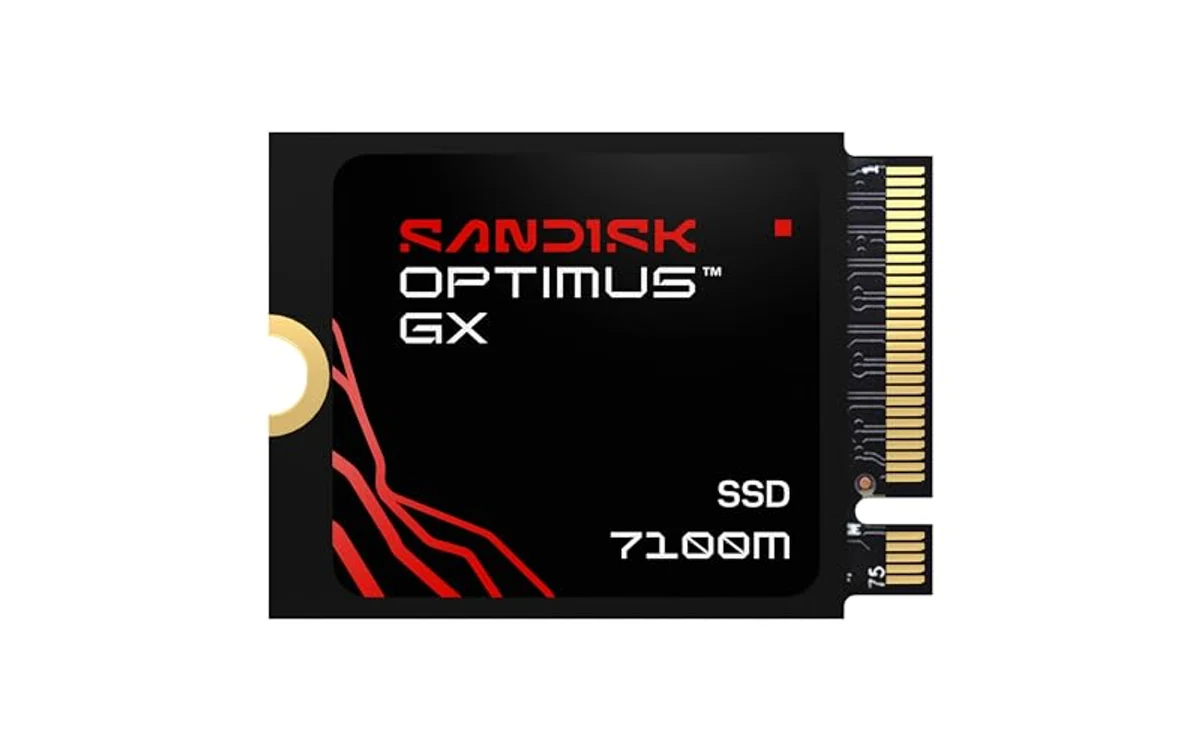
Handheld gaming PCs require compact M.2 2230 form factor drives. Steam Deck, ASUS ROG Ally, and Lenovo Legion Go demand single-sided 22mm by 30mm storage modules that clear battery bays and thermal shields. Sandisk Optimus GX 7100M 1TB NVMe SSD, PCIe 4.0 leads this category with high sustained TLC throughput, while Micron and Samsung OEM drives offer lower capacity drop-in replacements. Note: all evaluations here stem from manufacturer spec data and platform engineering requirements, not physical lab teardown benchmarks.
Handheld 2230 SSD Comparison
Handheld consoles impose strict thermal and physical size limits. Verify hardware specifications and pricing before purchase on product cards.
| Drive Model | Capacity | Interface | NAND Type | Best Use Case |
|---|---|---|---|---|
| Sandisk Optimus GX 7100M | 1TB | PCIe 4.0 x4 | BiCS TLC | High-capacity primary gaming library |
| Micron 2500 | 512GB | PCIe 4.0 x4 | 3D QLC | Budget system recovery, light game storage |
| Samsung BM9C1 Series | 512GB | PCIe 4.0 x4 | OEM TLC/V-NAND | Direct OEM replacement, everyday handheld boot drive |
Key Hardware Constraints in Handheld Storage
Upgrading handheld PC storage differs from desktop setups. Handheld enclosures lack airflow, use small batteries, and share heatsinks across system components.
Form Factor and Single-Sided Clearance
M.2 2230 standard measures 22mm wide, 30mm long. Handheld chassis tolerate zero extra length or thickness. Double-sided SSDs place NAND packages on drive underside. These press against motherboard components, Wi-Fi chips, or battery cables. Severe board warping or short circuits follow. All approved drives evaluated here feature single-sided component layouts.
Thermal Dissipation and Power Draw
Fast PCIe 4.0 SSDs consume 4W to 6W under maximum write load. Small enclosures trap heat rapidly. When controller hits 80°C, drive throttles transfer speeds to save silicon. Host systems like Steam Deck only support PCIe Gen3 speeds natively. Running a Gen4 drive in Gen3 slot drops maximum heat output without breaking compatibility. Review our analysis on running a PCIe 4.0 SSD in PCIe 3.0 slot to understand bus negotiation behavior. Storage speed variations impact load times, though users wondering if drive throughput alters frame rates can check whether SSD speed affects gaming FPS directly.
DRAMless Architecture and Host Memory Buffer
M.2 2230 circuit boards lack physical space for dedicated DRAM cache chips. Drives rely on Host Memory Buffer (HMB). HMB allocates 16MB to 64MB of system RAM over PCIe bus to store flash lookup tables. Handheld operating systems handle HMB easily, saving battery life and board space compared to standard DRAM drives. For details on controller memory design, see guide on DRAM vs DRAMless SSD for gaming.
[acms_product asin=”B0GP8YND8T”]Sandisk Optimus GX 7100M 1TB NVMe SSD: Best Overall Handheld Drive
High write speeds and TLC NAND make this drive premier option for handheld game libraries.
- Interface: PCIe 4.0 x4, NVMe
- Advertised Sequential Speed: Up to 7,250 MB/s read, 6,900 MB/s write
- Advertised Random Speed: Up to 1M read / 1.3M write IOPS
- Flash Technology: 8th generation BiCS TLC 3D CBA NAND with nCache 4.0
- Form Factor: Single-sided M.2 2230
Sandisk Optimus GX 7100M uses BiCS TLC flash. TLC delivers higher write endurance and sustained write speed during 100GB game installs compared to QLC alternatives. Drive supports Microsoft DirectStorage API, improving asset loading in modern PC titles. Single-sided package fits Steam Deck, ROG Ally, and Surface devices cleanly. Integrated nCache 4.0 balances burst write speeds to prevent early thermal throttling in compact handheld chassis. Check product card above for live price and stock updates.
[acms_product asin=”B0H9XDJ4ZF”]Micron 2500 512GB M.2 2230 NVMe SSD: Value Storage Option
Designed for mainstream mobile deployments, this unit balances system efficiency and low purchase cost.
- Interface: PCIe 4.0 x4, NVMe 1.4c
- Capacity: 512GB
- Flash Technology: Micron 3D QLC NAND
- Origin: OEM new system pull
- Form Factor: M.2 2230 single-sided
Micron 2500 provides budget-friendly storage upgrade path. 512GB storage capacity accommodates operating system and several mid-sized game installations. QLC flash density reduces manufacturing cost but slows down during long, sustained file writes once cache fills. Drive operates coolly under everyday gaming loads. Note: listing describes unit as OEM pull taken from unused factory systems. Buyers give up retail consumer box packaging for lower price point. See product card for verified pricing.
[acms_product asin=”B0H6B95SVD”]Samsung BM9C1 Series 512GB M.2 2230 NVMe SSD: Reliable OEM Replacement
Stable, enterprise-derived OEM design suited for baseline handheld replacements.
- Interface: PCIe Gen4 x4, NVMe
- Capacity: 512GB (Batch variants: BM9C1, BM9C1a, BM9C1b)
- Origin: OEM new system pull
- Form Factor: M.2 2230 single-sided
Samsung BM9C1 serves original equipment manufacturers for compact laptops and tablets. It installs directly into handheld PC slots without physical clearance issues. Single-sided board ensures thermal pads sit flush with console heat shields. 512GB size fits players upgrading from 64GB or 256GB base tier Steam Deck models. As OEM pull, retail utilities like Samsung Magician may not provide full firmware update support. Check live product card details for current price availability.
Handheld SSD Selection Guide
Use diagnostic table below to match storage drive to your specific handheld platform and use profile.
| Hardware Setup | Primary Need | Recommended Drive Choice | Key Technical Reason |
|---|---|---|---|
| Steam Deck LCD / OLED | Massive game storage, high endurance | Sandisk Optimus GX 7100M 1TB | TLC flash sustains fast large-title installs; works seamlessly on PCIe 3.0 interface. |
| ROG Ally / Ally X / Legion Go | High bus saturation, DirectStorage titles | Sandisk Optimus GX 7100M 1TB | Full PCIe 4.0 bandwidth utilization; rapid asset streaming. |
| Base model handheld (64GB/256GB) | Low-cost factory size replacement | Samsung BM9C1 512GB | Drop-in OEM reliability; low idle power draw; cheap system restoration. |
| Secondary handheld / Budget travel device | Light indie game rotation, OS drive | Micron 2500 512GB | Cost-effective QLC storage suitable for read-heavy workloads. |
Pre-Upgrade Verification Checklist
Follow strict procedures before opening handheld hardware. Skipping steps causes electrical discharge or blown power delivery components.
- Discharge Battery Below 25%: Lithium-ion cells ignite or swell if accidentally punctured during chassis disassembly. Deplete battery safely before beginning.
- Engage Battery Storage Mode: Steam Deck BIOS features dedicated battery disconnect setting. Toggle this mode on to kill motherboard standby power.
- Physically Disconnect Battery Harness: Once backplate detaches, unplug main battery cable from mainboard before touching SSD retention screw.
- Transfer EMI Thermal Shielding: Factory drive usually includes metallic shielding sleeve or thermal pad. Slide factory sleeve onto new 2230 drive before seating connector.
- Seat at 30-Degree Angle: Push M.2 2230 connector firmly into slot at angle. Secure screw without overtightening to avoid stripping small brass standoffs.
- Check BIOS Detection: Boot handheld to recovery screen before snapping rear plastic case clips together completely. Confirm system detects drive capacity.
Explore more storage categories and hardware guides inside our comprehensive internal SSDs directory.
Frequently Asked Questions
Does PCIe 4.0 2230 SSD drain handheld battery faster than PCIe 3.0 drive?
Gen4 drives pull slightly more power during active write bursts. Under gaming conditions, drive mostly performs read operations. SSD returns to low-power idle state within milliseconds. Overall handheld battery runtimes between Gen3 and Gen4 drives remain within 5 to 10 minutes of each other under identical loads.
Can M.2 2242 or 2280 drive fit handheld designed for 2230?
No. Forcing longer SSD with third-party adapter brackets stresses mainboard traces, blocks battery compartments, and bends heat dissipation copper shields. Using unauthorized drive lengths causes physical structural failure. Always use true 22mm by 30mm drives.
What is difference between retail SSD and OEM pull drive?
Retail drives like Sandisk Optimus GX come in sealed packaging with manufacturer warranty and consumer software utility access. OEM pulls like Micron 2500 and Samsung BM9C1 are extracted from unissued enterprise laptops. OEM drives cost less but rely on seller warranty and lack branded consumer update dashboards.
Is TLC flash mandatory for handheld gaming?
TLC flash is not mandatory, but preferred. QLC flash slows down significantly when writing large files once temporary SLC cache exhausts. TLC handles game downloads and file unpack operations faster, maintaining steady write rates.

Pros
- Exceptional PCIe Gen4 read/write speeds for M.2 2230 form factor
- Direct compatibility with Steam Deck, ROG Ally, and Surface devices
- Power-efficient controller design protects mobile battery runtime
- Bundled Acronis cloning software simplifies storage upgrade
Cons
- Higher cost per gigabyte than standard M.2 2280 drives
- Sustained write operations generate noticeable heat in tight enclosures
- 1TB capacity fills rapidly with modern large-install game titles
| Color | Black |
|---|---|
| Size | 1TB |
| Dimensions | 1.18 x 0.09 x 0.87 inches |
| Weight | 0.01 pounds |
| Product Group | Personal Computer |
| Binding | Personal Computers |
Best suited to shoppers comparing internal components products who specifically need pCIe 4.0 speeds reach up to 7,250 MB/s read and 6,900 MB/s write for minimal game load times, Compact M.2 2230 footprint fits handheld….
Before buying, compare the exact model’s compatibility, dimensions, core specifications, warranty, recurring owner feedback, and current price against other internal components options. Retailer availability and pricing can change after publication.

Pros
- Tiny 2230 form factor fit compact portable gaming devices
- Fast PCIe Gen4 x4 interface speed up load times
- Low power draw help preserve battery life in mobile gear
- Clean OEM pull hardware verified for reliability
Cons
- QLC NAND slow down during heavy sustained sequential writes
- OEM unit ship in generic anti-static packaging without retail accessories
- 512GB capacity limit total modern game installs
Capacity: 512GB
Form Factor: M.2 2230 (22mm x 30mm)
Interface: PCIe Gen4 x4, NVMe 1.4c
NAND Flash: Micron 3D QLC
Origin: OEM pull, tested unused
| Color | Micron2500 |
|---|---|
| Size | 512GB|2230 |
| Dimensions | 1.18 x 0.87 x 0.09 Inches |
| Product Group | Personal Computer |
| Binding | Electronics |
Best suited to shoppers comparing internal components products who specifically need compact M.2 2230 size fit handheld consoles, mini PCs, and thin laptops, PCIe Gen4 x4 interface with NVMe 1.4c speed up OS boot and….
Before buying, compare the exact model’s compatibility, dimensions, core specifications, warranty, recurring owner feedback, and current price against other internal components options. Retailer availability and pricing can change after publication.

Pros
- Gen4x4 throughput inside miniature 2230 physical footprint
- Direct drop-in upgrade for Steam Deck, ROG Ally, Surface Pro
- Single-sided layout run cool in cramped device shells
- Proven Samsung solid state controller reliability
Cons
- OEM pull ship without retail box or mounting screw
- Batch revision vary between BM9C1, BM9C1a, BM9C1b
- 512GB capacity limit large game libraries
Capacity: 512GB.
Form Factor: M.2 2230.
Interface: PCIe Gen4 x4 NVMe.
Layout: Single-sided PCB.
Device Support: Steam Deck, ROG Ally, Microsoft Surface Pro, mini PCs, compact laptops.
| Color | PCIe 4.0 2230 |
|---|---|
| Size | BM9C1|512GB |
| Dimensions | 1.18 x 0.87 x 0.09 inches |
| Product Group | Personal Computer |
| Binding | Electronics |
Best suited to shoppers comparing internal solid state drives products who specifically need pCIe Gen4x4 speed slash game load times and quicken system boot, Compact M.2 2230 form factor fit tight handheld consoles and tablets.
Before buying, compare the exact model’s compatibility, dimensions, core specifications, warranty, recurring owner feedback, and current price against other internal solid state drives options. Retailer availability and pricing can change after publication.
Sources and Verification
Research basis: Product identity, dimensions, interfaces, supported features, and warranty terms are checked against available manufacturer documentation and current retailer listings. Price, stock, and aggregate customer ratings can change after publication.
Testing disclosure: Unless this article explicitly states that PCGearWiki performed hands-on testing and describes the test setup, recommendations are research-based editorial evaluations rather than PCGearWiki laboratory measurements. Customer feedback is used to identify recurring ownership patterns, not as proof of technical performance.
Last source review: October 2, 2026. See our Review Methodology, Editorial Policy, and Corrections Policy.


Write Your Review
No reviews yet. Be the first to share your experience!