

Last updated: August 22, 2026
The best gaming headset with detachable microphone depends on whether you prioritize PC voice processing, multi-platform flexibility, or wireless freedom. The Logitech G Pro X is the strongest PC-focused option, while the EKSA E900 Pro, HyperX Cloud Alpha, JBL Quantum 100M2, FIFINE, and Razer models suit different budgets and connection needs.
A detachable microphone is useful when you want a cleaner headset for music, travel, or single-player gaming, but compatibility varies more than product names suggest. USB models may not work with controllers, 3.5mm headsets are usually more flexible, and wireless models require careful checking of supported platforms and connection modes.

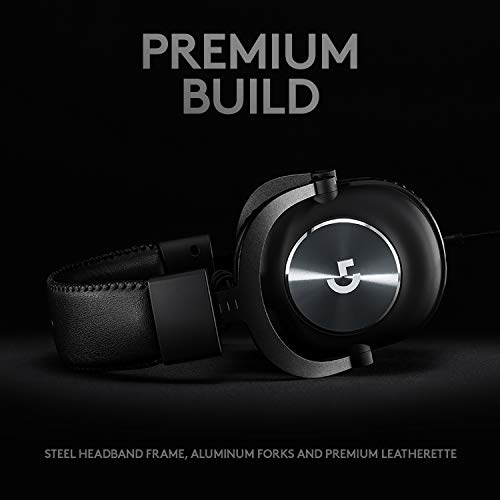
Logitech G Pro X Wired Gaming Headset with Blue



As an Amazon Associate we earn from qualifying purchases. Product prices and availability are accurate as of the date/time indicated.
Quick Verdict
The Logitech G Pro X Wired Gaming Headset is the best fit for PC players who want a detachable boom microphone, Blue VO!CE processing, a USB sound card, and configurable equalizer profiles. Its main limitation is the Windows and Logitech G HUB requirement for advanced features. Choose the HyperX Cloud Alpha or JBL Quantum 100M2 if simple 3.5mm compatibility matters more.
For a flexible wired setup, the EKSA E900 Pro is the most useful middle-ground option because it includes both USB and 3.5mm audio connections. The Razer BlackShark V3 X HyperSpeed is the better alternative for users who specifically want wireless connectivity, Bluetooth, USB operation, and a detachable microphone in one headset.
How We Evaluated
PCGearWiki evaluated the supplied manufacturer specifications, product descriptions, interfaces, platform claims, microphone designs, comfort features, included accessories, and stated warranty information. We compared each eligible headset against the actual search intent: a complete gaming headset with a detachable microphone, rather than a replacement microphone or a headset whose microphone is only adjustable.
This is research-based editorial analysis, not hands-on testing. Manufacturer claims such as surround sound, positional audio, noise cancellation, and wireless performance are treated as specifications rather than independent measurements. No review-text sample was supplied, so the listed ratings are not interpreted as a pattern of customer feedback. Read the PCGearWiki Review Methodology for more information.
Key Specifications
| Headset | Connection | Detachable microphone | Notable specification | Best fit |
|---|---|---|---|---|
| Logitech G Pro X Wired Gaming Headset | USB sound card and 3.5mm cable | Yes | Blue VO!CE, DTS 7.1, 50 mm PRO-G drivers, 35 ohms | PC gaming and voice chat |
| EKSA E900 Pro USB Gaming Headset for PC | USB and 3.5mm removable cables | Yes | Virtual 7.1 on PC through USB, 50 mm driver | Mixed PC and console use |
| FIFINE USB PC Gaming Headset with 3.5mm Audio | USB and 3.5mm | Yes | 7.1 surround sound and USB control box | Users who want physical audio controls |
| Razer BlackShark V3 X HyperSpeed Wireless | 2.4 GHz, Bluetooth, and USB | Yes | 50 mm Gen-2 drivers, cardioid mic, stated 70-hour battery | Wireless multi-device gaming |
| HyperX Cloud Alpha – Gaming Headset | 3.5mm | Yes | Dual-chamber drivers, aluminum frame, over-ear design | Simple cross-platform audio |
| JBL Quantum 100M2 Wired Gaming Headset | 3.5mm | Yes | Directional microphone, Windows Sonic compatibility | Console and PC users seeking simplicity |
The table shows why there is no single winner for every setup. Logitech offers the most extensive PC-oriented voice and equalizer features, but the EKSA E900 Pro and FIFINE provide more connection flexibility at lower listed prices. HyperX and JBL keep the setup simpler with 3.5mm connectivity, while Razer is the only shortlisted model built around multiple wireless modes.
What Matters Most When Choosing
Microphone removal and microphone type: A detachable boom is different from a microphone that merely folds or swivels. Removing the boom is useful for travel and non-voice use, but users should also check whether the mic is directional, cardioid, or described only as noise reducing. The Logitech, EKSA E900 Pro, FIFINE, Razer, HyperX, and JBL models explicitly include detachable microphones.
Connection type: USB can provide a dedicated audio control path and software features, but it needs an available USB port. A 3.5mm headset is generally easier to connect to controllers, handhelds, phones, and analog audio ports. Dual-interface models such as the EKSA E900 Pro and FIFINE are more versatile, although their enhanced surround features may depend on USB or PC software.
Platform compatibility: “Multi-platform” does not mean every feature works everywhere. The EKSA E900 Pro states that 7.1 surround sound is available only on PC through USB. The Logitech G Pro X requires the included USB external sound card, Windows PC, and Logitech G HUB for Blue VO!CE, surround, and EQ features. Always separate basic audio compatibility from advanced software compatibility.
Comfort and materials: Memory foam, leatherette, velour, fabric, and protein-leather ear cushions create different wearing experiences. The Logitech model includes leatherette or velour pad choices, HyperX uses memory foam and leatherette, JBL specifies breathable fabric cushions with memory foam, and Razer lists plush earcups with a 270 g design. These details matter more during long sessions than a driver-size comparison alone.
Control layout: Some headsets place volume and mute functions on the cable or USB control box. The FIFINE includes controls for headset volume, microphone volume, and microphone mute. The EKSA E900 Pro includes a one-key mic mute switch and volume adjustment. These controls are particularly useful when switching between games, voice chat, and streaming applications.
Comparison and Trade-Offs
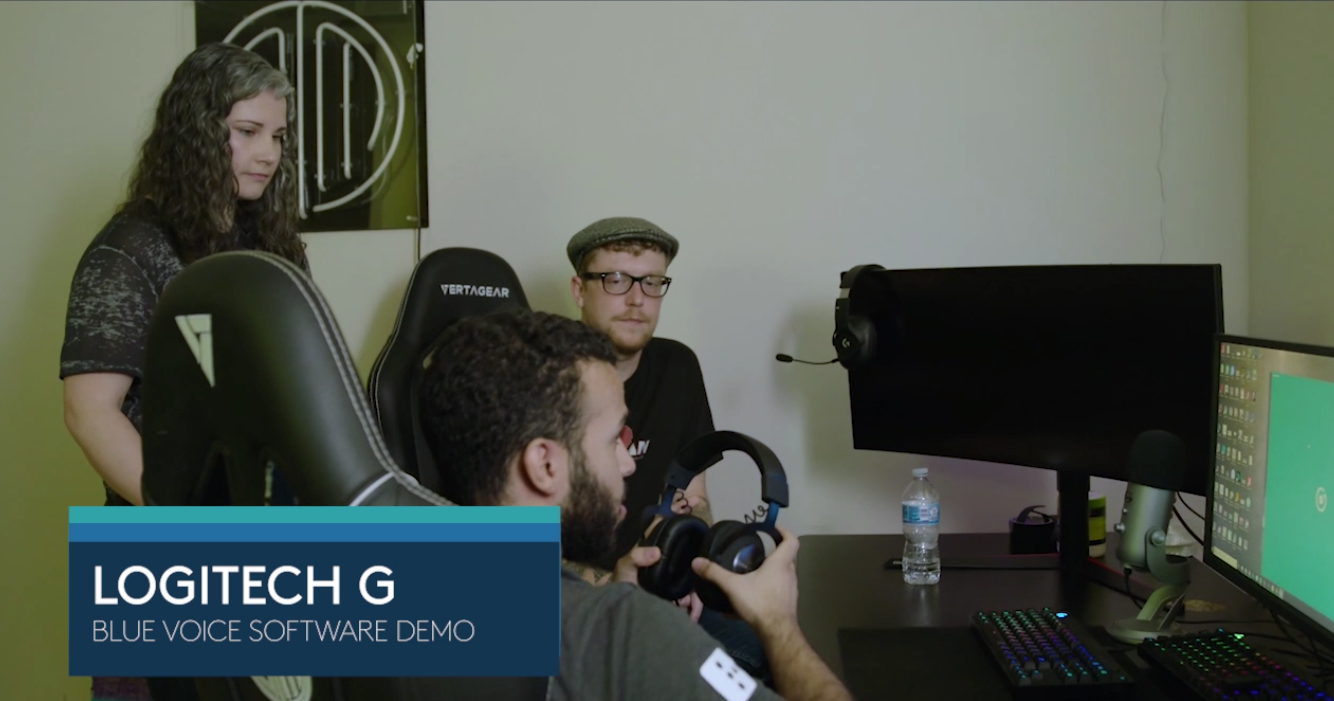
The Logitech G Pro X leads when PC voice quality customization is the deciding factor. Blue VO!CE offers software-based processing such as a noise reducer, compressor, and limiter, and the included USB sound card can store five-band EQ settings. That feature set is more specialized than the simpler plug-and-play approach of the HyperX Cloud Alpha or JBL Quantum 100M2.
The EKSA E900 Pro is the better connection compromise. Its USB and 3.5mm cables support PC, PlayStation, Xbox One, mobile devices, and other compatible equipment, while its 7.1 mode is reserved for PC over USB. Users who alternate between a PC and a console should prefer this design over a USB-only headset.
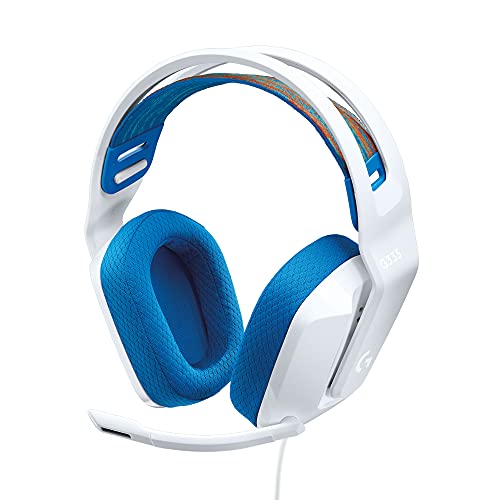
The FIFINE takes a similar dual-interface approach but emphasizes convenient physical control and a white finish. It is a practical option for users who need headset volume, microphone volume, and mute access without opening software. The supplied data does not specify its exact console-by-console feature behavior, so buyers should verify the intended connection before checkout.
The HyperX Cloud Alpha and JBL Quantum 100M2 are more straightforward. Both use 3.5mm connections and include detachable microphones, making them easier to use across platforms with a compatible port. HyperX emphasizes dual-chamber drivers and an aluminum frame, while JBL emphasizes a directional microphone, memory foam, and Windows Sonic compatibility on supported Windows and Xbox systems.
The Razer BlackShark V3 X HyperSpeed trades some wired simplicity for freedom of movement. It supports 2.4 GHz wireless, Bluetooth, and USB, and its detachable HyperClear cardioid microphone is designed to focus more on the speaker’s voice. It is the natural choice for wireless users, but buyers must confirm that the supplied wireless receiver and preferred connection mode work with their exact platform.
Design and Build Quality
The Logitech G Pro X uses an aluminum fork and steel headband, giving it a more reinforced construction than the budget-focused models in this comparison. Its replaceable ear-pad options also let users choose between passive noise-isolating leatherette and breathable velour. A carrying bag and mobile cable are included, which makes the package more adaptable for travel and non-boom-mic use.
EKSA’s E900 Pro focuses on adjustability and long-session wear through a balanced headband and soft memory protein earmuffs. Its removable audio cables reduce cable-management friction, but the detachable cable design creates another small part that must be kept with the headset. The FIFINE similarly targets extended sessions with soft headband and earcup materials, adding a USB control box for quick adjustments.
HyperX pairs memory foam and leatherette with an expanded headband and an aluminum frame. Its detachable braided cable includes in-line audio control, so the headset can remain useful without the boom microphone. JBL specifies breathable fabric ear cushions, memory foam, and a lightweight design, which should appeal to users who prefer less enclosed-feeling earcups.
Razer lists a 270 g construction and plush earcups. That weight is higher than the 198 g figure supplied for the WIRWTRU headset, but WIRWTRU is not included as a recommendation because its product data does not explicitly confirm a detachable microphone. This distinction illustrates why a low weight or attractive price cannot compensate for a missing match to the keyword.
Performance and Real-World Use
Based on the available specifications, the Logitech G Pro X is best suited to competitive PC gaming, team communication, and users who want to tune voice and game audio separately. Its 50 mm PRO-G drivers, DTS 7.1 support, USB sound card, and Blue VO!CE tools address positional audio and microphone processing, but the advanced experience depends on Windows and Logitech G HUB.
The EKSA E900 Pro fits households where one headset must move between PC and console. USB enables its stated 7.1 virtual surround mode on PC, while 3.5mm provides a more conventional connection for compatible consoles, controllers, and mobile devices. In practical use cases, its value comes from avoiding a second headset rather than from offering the most elaborate software ecosystem.
FIFINE is aimed at players, streamers, and voice-chat users who prefer hardware controls. Its USB control box handles headset volume, microphone volume, and mute, and its detachable microphone can be removed when voice communication is not needed. The supplied information supports these features, but it does not provide independent measurements of microphone clarity or sound accuracy.
HyperX’s dual-chamber driver design is intended to separate bass and reduce distortion according to the product description. That makes it a sensible wired choice for users who want a conventional 3.5mm headset with a detachable noise-cancellation microphone and a durable frame. It does not provide the Logitech’s PC voice-processing controls or Razer’s wireless options.
JBL’s Quantum 100M2 suits players who want a detachable directional microphone and one 3.5mm connection. Its stated Windows Sonic compatibility can add spatial audio on supported Windows and Xbox setups, while the analog connection keeps the headset usable on PlayStation, Nintendo Switch, mobile, Mac, and virtual-reality devices with compatible ports. The data does not establish that every spatial feature works on every platform.
Razer is the most convenient choice for users who dislike a permanent cable. Its 2.4 GHz HyperSpeed connection is positioned for gaming, Bluetooth supports compatible mobile use, and USB offers a wired fallback. The manufacturer also lists TriForce 50 mm Gen-2 drivers, 7.1 surround sound, a detachable cardioid microphone, and a stated 70-hour battery figure. Battery life should be treated as a manufacturer specification, not an independently verified endurance result.
Compatibility
PC buyers should check whether they want a USB audio device, a 3.5mm analog connection, or both. The Logitech G Pro X delivers its advanced Blue VO!CE, surround, and EQ functions through the included USB external sound card and Logitech G HUB on Windows. Basic analog use is more limited in features than the software-controlled PC configuration.
The EKSA E900 Pro supports USB and 3.5mm connections, but its 7.1 surround sound is specified only for PC with USB. The FIFINE also supports USB and 3.5mm, with USB intended for PC and 3.5mm compatibility extending to consoles, controllers, and Nintendo Switch according to the product data. Verify whether a controller requires a headset-combined jack or an adapter.
HyperX and JBL use 3.5mm connections, making them suitable for many PCs, consoles, mobile devices, Mac systems, Switch setups, and virtual-reality equipment with compatible ports. A desktop PC with separate headphone and microphone sockets may need a splitter, but the supplied product data does not confirm whether one is included. Confirm the included cable and connector arrangement before ordering.
Razer buyers should confirm the exact platform support for 2.4 GHz, Bluetooth, and USB modes. Wireless compatibility can depend on the receiver, operating system, console support, and whether Bluetooth is accepted for game audio and microphone input. Also check charging requirements and the return policy because wireless accessories are harder to troubleshoot than a basic analog headset.
Warranty information also varies. The Logitech listing states a two-year limited hardware warranty. EKSA states a two-year warranty for both the E1000 and E900 Pro, although the E1000 is excluded from this shortlist because its microphone is not identified as detachable. Buyers should confirm the current seller, warranty terms, included accessories, and return conditions at checkout.
Pros and Cons
Logitech G Pro X Wired Gaming Headset
- Detachable boom microphone with Blue VO!CE processing.
- Included USB sound card supports surround sound and stored EQ profiles on Windows PC.
- 50 mm PRO-G drivers and 35-ohm impedance are clearly specified.
- Leatherette and velour ear-pad choices improve fit flexibility.
- Aluminum fork, steel headband, carrying bag, and mobile cable add versatility.
- Advanced features require Windows PC and Logitech G HUB.
- USB sound-card features are not the same as simple plug-and-play analog use.
- It costs more than the basic 3.5mm alternatives in the supplied data.
Shortlist-wide strengths
- EKSA E900 Pro combines USB and 3.5mm connections with a detachable microphone.
- FIFINE adds separate headset-volume, microphone-volume, and mute controls through its USB box.
- HyperX Cloud Alpha provides dual-chamber drivers, memory-foam comfort, and an aluminum frame.
- JBL Quantum 100M2 offers a detachable directional microphone and broad 3.5mm platform support.
- Razer provides detachable-mic wireless flexibility through 2.4 GHz, Bluetooth, and USB.
Shortlist-wide limitations
- USB surround and software features may not transfer to consoles or mobile devices.
- 3.5mm compatibility depends on the device’s port layout and microphone support.
- The supplied data does not provide independent sound, microphone, latency, or battery measurements.
- Wireless feature support must be checked for the exact platform and connection mode.
Who Should Buy It?
Buy the Logitech G Pro X if you mainly play on a Windows PC and will actually use Blue VO!CE, the included USB sound card, or stored EQ profiles. It is also a strong fit for streamers and team-game players who want a removable boom microphone and a choice of ear-pad materials.
Choose the EKSA E900 Pro if your headset must move between PC, PlayStation, Xbox One, mobile devices, and other equipment with compatible ports. Choose the FIFINE if quick physical microphone and volume controls matter more than a mature software ecosystem.
Choose the HyperX Cloud Alpha for a sturdy, conventional 3.5mm headset with a detachable microphone and dual-chamber driver design. Choose the JBL Quantum 100M2 if a directional microphone, memory foam, and broad analog compatibility are more important than USB processing.
Choose the Razer BlackShark V3 X HyperSpeed if wireless freedom is the deciding factor. Its detachable microphone and three connection modes make it the most flexible option for users who play across PC, console, and mobile devices, provided the preferred wireless mode is supported by the target platform.
Who Should Skip It?
Skip the Logitech G Pro X if you need a headset that works identically without Windows software or if your main device lacks a suitable analog or USB connection. Its PC-focused processing is a benefit only when your setup can use it.
Skip the EKSA E900 Pro and FIFINE if you want proven wireless convenience rather than a cable-based setup. Skip the HyperX Cloud Alpha and JBL Quantum 100M2 if you require USB audio controls, wireless operation, or platform-specific surround features beyond what their 3.5mm connections provide.
Skip the Razer if you prefer a simple analog headset with no receiver, charging routine, or wireless compatibility checks. Also avoid treating a detachable microphone as a guarantee of studio-quality recording: the supplied data confirms microphone type and features, not independent audio measurements.
Alternatives to Consider
Best monitor for mac and gaming is a useful next step for readers building a broader Mac-compatible gaming setup, although monitor compatibility does not determine headset microphone support.
Best ergonomic gaming mouse under $60 may help complete a comfort-focused gaming desk. For keyboard-focused upgrades, see Best Hot-Swappable Keyboard Under $75. These are separate peripherals, so they should not be treated as substitutes for a headset with a detachable microphone.
Why You Should Trust PCGearWiki
PCGearWiki bases this comparison on the supplied product records, including exact ASINs, model names, connection types, microphone descriptions, platform claims, driver information, comfort materials, and stated warranty details. Accessories and replacement microphones were excluded because they do not satisfy the complete-headset intent.
Final Verdict
The Logitech G Pro X Wired Gaming Headset is the leading recommendation for Windows PC users who want the most complete microphone-processing and EQ feature set among the supplied products. The deciding factor is not driver size; it is whether you can use Logitech G HUB and the included USB sound card.
Buy the EKSA E900 Pro for a lower-cost USB and 3.5mm compromise, the HyperX Cloud Alpha or JBL Quantum 100M2 for uncomplicated analog compatibility, the FIFINE for accessible hardware controls, and the Razer BlackShark V3 X HyperSpeed for wireless multi-mode gaming. Readers who cannot confirm their platform’s port or wireless support should choose the simplest compatible connection rather than the most feature-heavy model.
Frequently Asked Questions
Is the best gaming headset with detachable microphone worth buying?
Yes, if you want one headset for gaming and non-voice listening. Removing the boom microphone can make the headset more convenient for music, travel, or single-player games. The value depends on whether the headset’s connection type matches your platform and whether you will use its advanced USB, software, or wireless features.
Who is the best gaming headset with detachable microphone best for?
Windows PC players who want microphone processing should consider the Logitech G Pro X. Multi-platform users should consider the EKSA E900 Pro, HyperX Cloud Alpha, or JBL Quantum 100M2. Users who prioritize wireless freedom should consider the Razer BlackShark V3 X HyperSpeed, subject to platform compatibility.
Is a detachable-microphone headset good for gaming?
A detachable-microphone headset can be very practical for gaming because it provides boom-mic voice chat when needed and a cleaner headphone configuration when it is removed. However, detachable design alone does not prove microphone quality, sound accuracy, low latency, or comfort. Those attributes must be checked separately in the product specifications.
What should I compare before buying a gaming headset with a detachable microphone?
Compare the microphone pickup pattern, whether the boom truly detaches, USB versus 3.5mm connectivity, platform support, software requirements, surround-sound limitations, comfort materials, included cables, and warranty terms. For wireless models, also confirm the supported receiver, Bluetooth behavior, USB fallback, and charging requirements.
Which shortlisted headset is easiest to use across consoles?
The HyperX Cloud Alpha and JBL Quantum 100M2 are among the simplest because they use 3.5mm connections and list broad platform compatibility. The EKSA E900 Pro and FIFINE offer more connection options, but their USB-specific features may be limited to PC. Check the console, controller, and connector requirements before purchase.
Sources and Verification
Research basis: Product identity, dimensions, interfaces, supported features, and warranty terms are checked against available manufacturer documentation and current retailer listings. Price, stock, and aggregate customer ratings can change after publication.
Testing disclosure: Unless this article explicitly states that PCGearWiki performed hands-on testing and describes the test setup, recommendations are research-based editorial evaluations rather than PCGearWiki laboratory measurements. Customer feedback is used to identify recurring ownership patterns, not as proof of technical performance.
Last source review: August 22, 2026. See our Review Methodology, Editorial Policy, and Corrections Policy.






Write Your Review
No reviews yet. Be the first to share your experience!