

Last updated: November 21, 2026
If GTA VI is your only reason to change processors, keep your current CPU. As of November 21, 2026, Rockstar lists PlayStation 5 and Xbox Series X|S, not a Windows specification or a CPU benchmark. There is no verified best processor for GTA 6 on PC. There is, however, a sensible choice between four AM5 processors if you need a PC for games you play today.
As an Amazon Associate I earn from qualifying purchases. These are desktop processors, not complete PCs. Compare the exact model and the delivered price.
Compare at a Glance
| # | Product | Editorial Score | Processor Series | Processor Speed |
|---|---|---|---|---|
| 1 | AMD Ryzen 5 7600X 6-Core 12-Thread Unlocked | - | Ryzen 5 | 5.3 GHz |
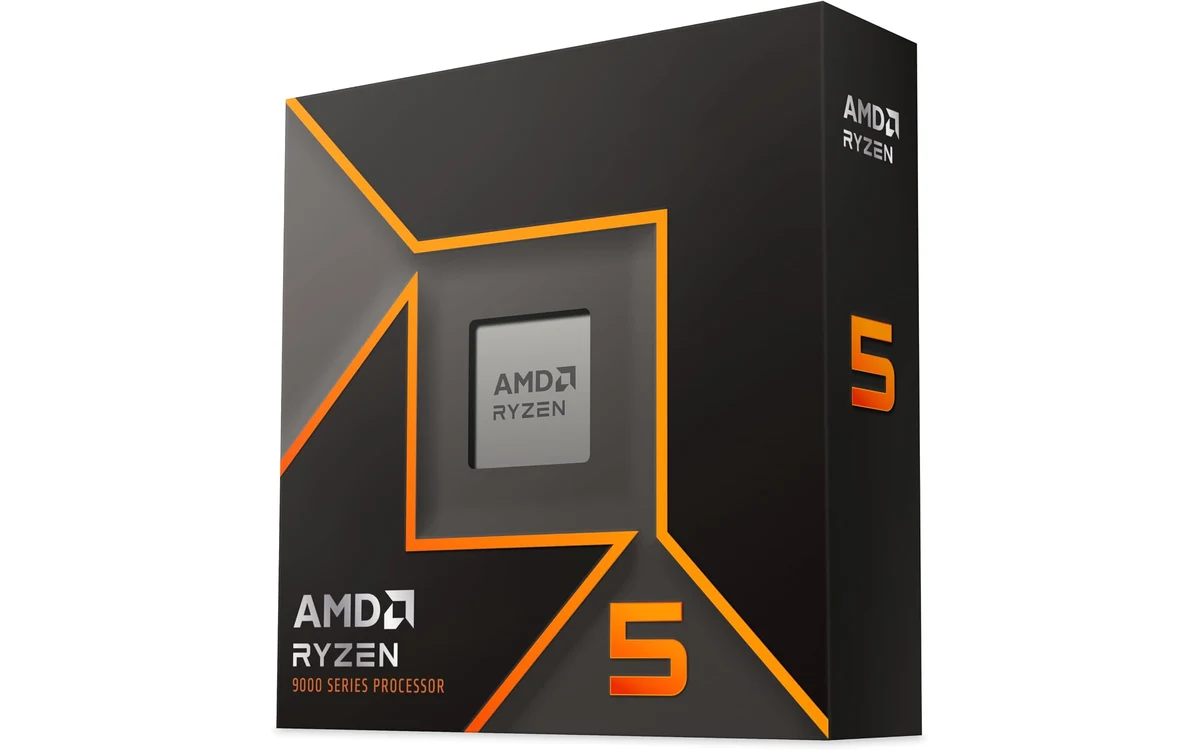
| 2 | AMD Ryzen 5 9600X 6-Core 12-Thread Zen | - | Ryzen 5 | 3.9 GHz |
| 3 | AMD Ryzen 7 9800X3D 8-Core Zen 5 | - | Ryzen 7 | 4.7 GHz |
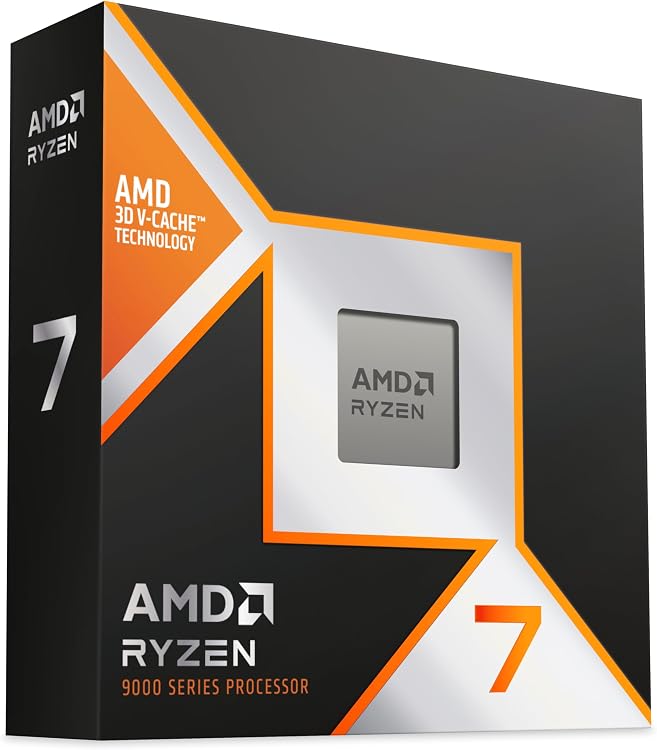
| 4 | AMD Ryzen 7 9850X3D AM5 8-Core Gaming | - | AMD Ryzen 7 | 4.7 GHz |

Pros
- Strong overclocking headroom for performance gains
- Built-in graphics reduce need for entry-level discrete GPU
- High core count handles content creation and gaming effectively
Cons
- Requires compatible AM5 motherboard and DDR5 memory
- 105 W TDP benefits from aftermarket cooling solution
- Integrated graphics unsuitable for high-end gaming
| Processor Series | Ryzen 5 |
|---|---|
| Processor Speed | 5.3 GHz |
| Processor Socket | Socket AM5 |
| Secondary Cache | 38 MB |
| Wattage | 105 watts |
| Cache Memory Installed Size | 38 |
| Processor Count | 6 |
| Processor Number of Concurrent Threads | 12 |
| Processor Core Count | 6 |
| Platform | Linux, Windows |
Best suited to shoppers comparing cpu processors products who specifically need unlocked design enables easy overclocking for higher performance in demanding tasks, 6 cores and 12 threads deliver smooth multitasking and responsive gaming.
Before buying, compare the exact model’s compatibility, dimensions, core specifications, warranty, recurring owner feedback, and current price against other cpu processors options. Retailer availability and pricing can change after publication.

Pros
- Strong gaming and multi-thread performance from Zen 5 architecture
- Unlocked multiplier supports enthusiast overclocking
- Efficient power draw at 65 watts for balanced builds
- Long platform support on AM5 with modern memory standards
Cons
- Cooler not included requiring separate purchase
- May need new AM5 motherboard for existing users
- Early product stage with limited independent benchmarks
| Processor Series | Ryzen 5 |
|---|---|
| Processor Speed | 3.9 GHz |
| Processor Socket | Socket AM5 |
| Secondary Cache | 6 MB |
| Wattage | 65 watts |
| Cache Memory Installed Size | 38 |
| Processor Count | 6 |
| Processor Number of Concurrent Threads | 12 |
| Processor Core Count | 6 |
| Cooling Method | air-cooled |
Best suited to shoppers comparing cpu processors products who specifically need deliver smooth gameplay above 100 FPS in top titles through efficient Zen 5 cores, Manage heavy multitasking and creation tasks with 12 threads for….
Before buying, compare the exact model’s compatibility, dimensions, core specifications, warranty, recurring owner feedback, and current price against other cpu processors options. Retailer availability and pricing can change after publication.

Pros
- Leading gaming processor with Zen 5 and 3D V-Cache integration
- Strong cache size for better sustained performance and clock stability
- Compatible with proven AM5 infrastructure for future-proofing
- Solid core and thread count for balanced productivity and play
Cons
- Cooler not included requiring separate purchase
- 140W power draw demands robust cooling solutions
- New release with limited long-term user data available
| Processor Series | Ryzen 7 |
|---|---|
| Processor Speed | 4.7 GHz |
| Processor Socket | Socket AM5 |
| Secondary Cache | 8 MB |
| Wattage | 140 watts |
| Cache Memory Installed Size | 104 MB |
| Processor Count | 8 |
| Processor Number of Concurrent Threads | 16 |
| Processor Core Count | 8 |
| Cooling Method | External Cooler |
Best suited to shoppers comparing cpu processors products who specifically need unlock superior gaming performance through advanced 3D V-Cache technology that boosts frame rates in demanding titles, Experience up to 16 percent IPC uplift for….
Before buying, compare the exact model’s compatibility, dimensions, core specifications, warranty, recurring owner feedback, and current price against other cpu processors options. Retailer availability and pricing can change after publication.
Pros
- Large cache size improves game loading and responsiveness
- AM5 socket ensures long-term platform compatibility
- Balanced core count suits both gaming and light content creation
Cons
- 140W TDP requires robust cooling solutions
- Only 8 cores limits heavy multi-threaded productivity tasks
- New model lacks extensive long-term reliability data
| Processor Series | AMD Ryzen 7 |
|---|---|
| Processor Speed | 4.7 GHz |
| Processor Socket | Socket AM5 |
| Secondary Cache | 8 MB |
| Wattage | 140 watts |
| Cache Memory Installed Size | 104 MB |
| Processor Count | 8 |
| Processor Number of Concurrent Threads | 16 |
| Processor Core Count | 8 |
| Item Dimensions L x W | 5"L x 5"W |
Best suited to shoppers comparing cpu processors products who specifically need accelerates gaming with massive 104 MB cache for reduced latency, Handles demanding titles at high frame rates on AM5 platforms.
Before buying, compare the exact model’s compatibility, dimensions, core specifications, warranty, recurring owner feedback, and current price against other cpu processors options. Retailer availability and pricing can change after publication.
Ryzen 5 7600X vs 9600X: start with the cost of the working system
For a first build, price two baskets: processor, a supported motherboard, a compatible cooler and the same DDR5 kit in each. Both Ryzen 5s are six-core, twelve-thread processors. The 7600X is a Zen 4 part; the 9600X uses Zen 5. Neither name establishes what an unannounced Windows version of the game would need.
If the 7600X basket saves enough to fix a known problem elsewhere, such as replacing a drive too small for your current library, take the saving. If the totals are close, compare the 9600X in the game or application you spend most time in. Already own a 7600X? That is a different decision: your baseline is a working machine that costs nothing to keep, not a shopping cart missing a CPU.
Ryzen 7 9800X3D vs 9850X3D: when is the premium useful?
These are both eight-core Ryzen 7 processors with AMD’s 3D V-Cache. The 9850X3D specification gives a maximum boost clock, not a frame rate. For a new build, compare each chip at the same GPU, memory settings and game version. For someone who already has a 9800X3D, the more important question is whether there is a repeatable slowdown worth paying to remove.
For example, take a racing sim you already own. A solo practice lap and the start of a full grid can feel quite different. Record the same grid start twice with the same weather and camera, then lower the render resolution and repeat. A large improvement points toward graphics load. Little change is a reason to investigate a CPU limit, not proof: a frame cap, shader compilation or a background task can also hide the effect. Look at slow frames as well as the average before replacing anything.
Will the processor work in your board?
- Read the board model and hardware revision from the board or its documentation. On a branded prebuilt, use the system maker’s support list rather than the page for a similar retail board.
- Find the exact processor on that list and note the earliest supported BIOS. Check your installed version while the working CPU is still in the socket.
- Check the cooler mounting hardware and case clearance. Compare complete upgrade costs, including DDR5 and a board if you are moving from AM4. An AM5 processor does not drop into an AM4 socket.
Buying a finished system instead? Use the prebuilt PC comparison. If you are choosing both parts, the CPU and GPU pairing guide explains how to split the budget. Keep the official PC requirements tracker separate from your shortlist: a compatible motherboard tells you a CPU can run in your machine, not how GTA VI will run.
Add PCGearWiki as a preferred source on Google
Sources and Verification
Research basis: Product identity, dimensions, interfaces, supported features, and warranty terms are checked against available manufacturer documentation and current retailer listings. Price, stock, and aggregate customer ratings can change after publication.
Testing disclosure: Unless this article explicitly states that PCGearWiki performed hands-on testing and describes the test setup, recommendations are research-based editorial evaluations rather than PCGearWiki laboratory measurements. Customer feedback is used to identify recurring ownership patterns, not as proof of technical performance.
Last source review: November 21, 2026. See our Review Methodology, Editorial Policy, and Corrections Policy.


Write Your Review
No reviews yet. Be the first to share your experience!